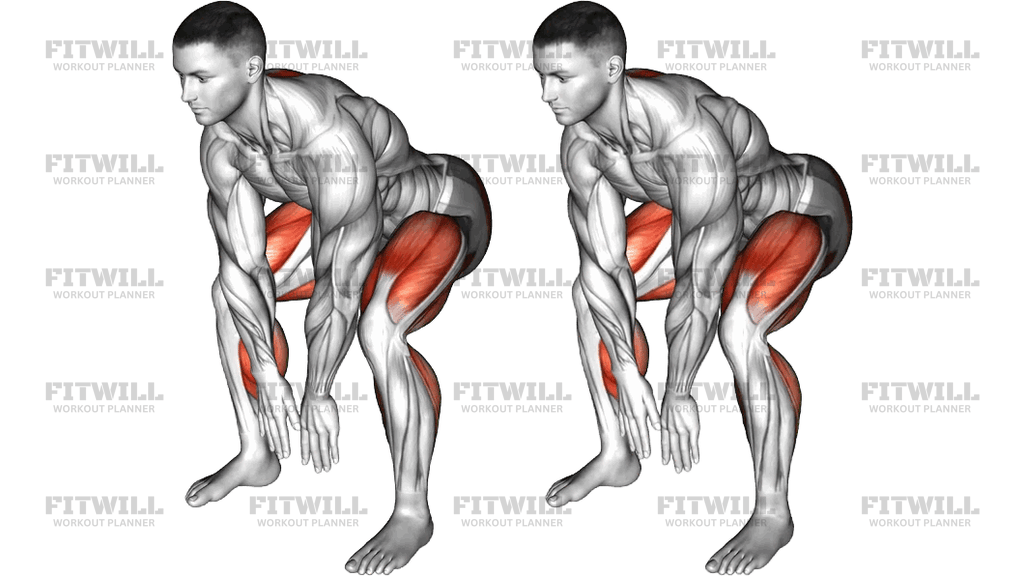
Barbell Deadlift From Deficit
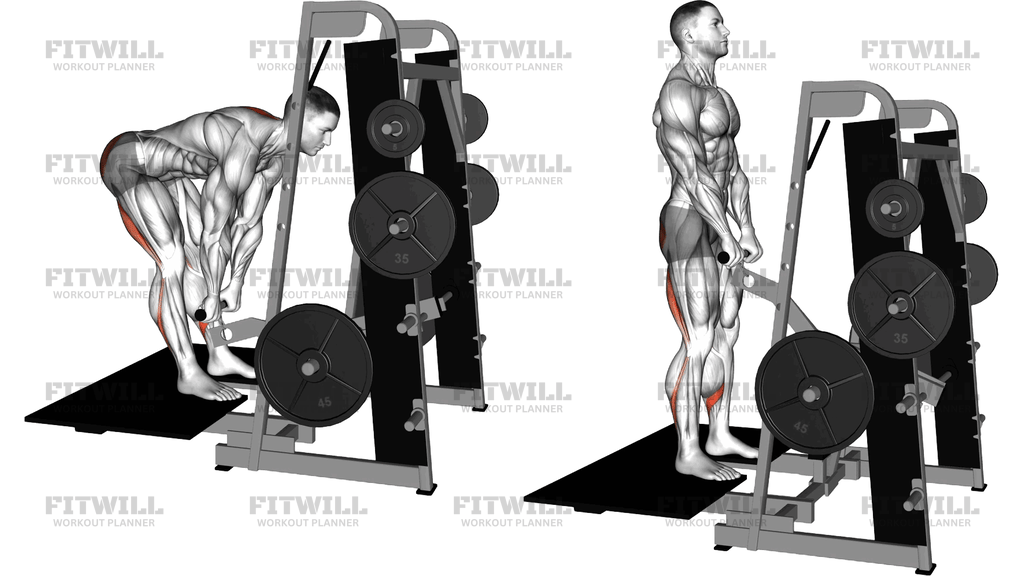
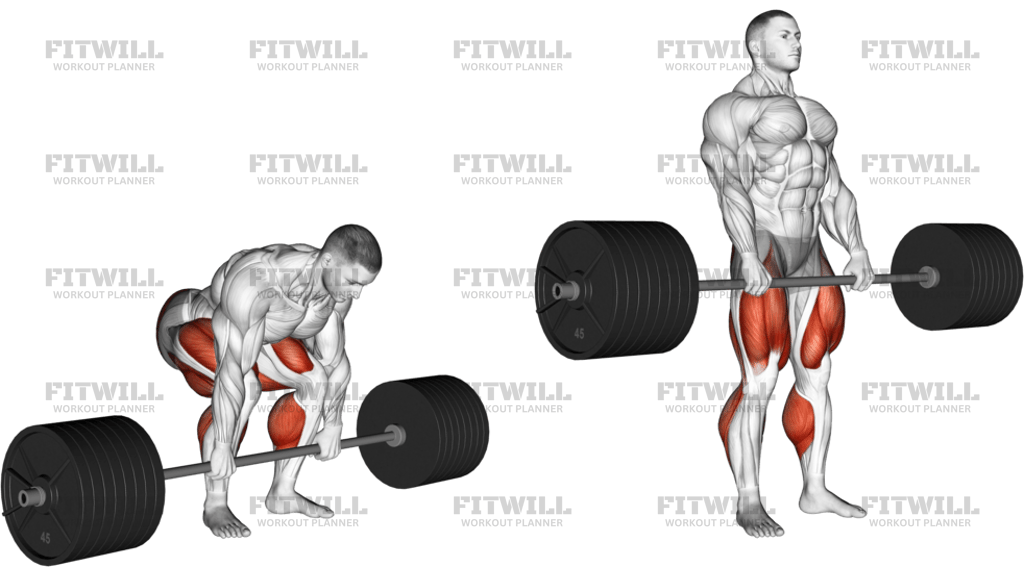
The Barbell Deadlift From Deficit is a conventional deadlift performed while standing on a low platform or weight plate, so the bar starts from a deeper position than normal. Instead of the bar resting at mid-shin height on standard plates, the elevated feet force you to reach further down, which lengthens the hamstrings and glutes at the bottom and demands a longer, harder pull to lockout. The setup looks simple — feet on a platform, barbell on the floor in front of you — but that extra few inches of range changes the character of the entire lift.
This variation is best suited to lifters who already own a solid conventional deadlift and want to build strength off the floor, improve their bottom-position positioning, or address a stubborn sticking point in the first phase of the pull. Powerlifters use it to strengthen the exact range where the bar breaks from the ground, and general strength trainees use it to load the hamstrings and glutes through a stretched position that a regular deadlift never quite reaches. It is not a beginner exercise; the deep start position rewards mobility and punishes a rounded back.
The primary work comes from the hamstrings and glutes, which extend the hips from a longer position than usual. The quads contribute significantly off the floor because the deeper knee bend in the start position, and the lower back, upper back, and grip all work hard to hold the spine rigid and the bar connected to your body through the extended range. Because the platform adds range of motion, most lifters need to use noticeably less weight than their standard deadlift — often 10 to 25 percent less.
Setup matters more here than in a normal deadlift. The platform height should be modest, typically one to three inches, enough to feel the stretch without turning the lift into a pull from the floor with a bent spine. The bar stays over the middle of the feet, your shoulders stay slightly ahead of the bar, and your hips set lower than in a conventional pull because of the deeper reach. If you have to round your lower back or shift your weight to your toes to touch the bar, the deficit is too tall for your current mobility.
To execute it well, brace hard before the bar leaves the floor, push your feet through the platform, and drag the bar up your legs in a smooth, continuous path until your hips and knees lock out together. Lower the bar under control back to the floor, let it settle briefly, re-brace, and reset your position before the next rep. Treat each rep as its own lift rather than bouncing through the bottom — the floor contact is a chance to re-establish tension, not a rebound to exploit.
Use this movement as a secondary deadlift variation on days when you can give it focused attention and fresh energy. Start light, keep reps in the three to six range, and stop the set the moment your lower back position starts to drift. Done patiently, it is one of the most effective tools for making the bottom of your deadlift feel shorter and stronger.
[ Workout Log & Planner ]
Put your next workout in Fitwill
Keep your plan and training log ready when you are.


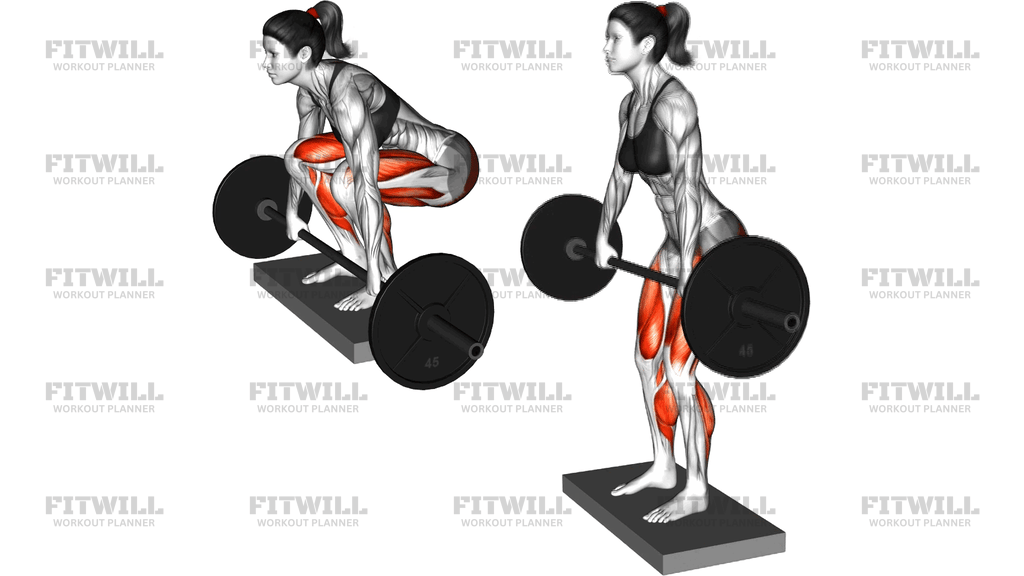
Instructions
- Place a low platform or sturdy weight plate, roughly one to three inches tall, on the floor and position your barbell over the middle of it so the bar sits on the ground in front of the platform.
- Step onto the platform with your feet about hip-width apart, toes angled slightly out, and position the bar directly over the midline of your feet, roughly an inch from your shins.
- Hinge at the hips and bend your knees until you can grip the bar just outside your legs with a double-overhand or mixed grip, letting your hips sit lower than in a standard deadlift.
- Pull your shoulder blades back and down, lift your chest, and take a deep breath into your belly, bracing your core as if bracing for a punch.
- Drive your feet down through the platform and begin the pull by extending your knees, keeping the bar in light contact with your shins and legs as it travels upward.
- Continue standing by driving your hips forward, keeping the bar close to your thighs until your hips and knees are fully extended and you are standing tall with your shoulders back.
- Reverse the movement by pushing your hips back first, letting the bar slide down your thighs under control until it returns to the floor.
- Exhale at the top or between reps, then re-brace and re-set your grip and back position before starting the next repetition.
- Reset completely on the floor between reps — do not bounce the bar off the ground, as the stretched bottom position is the point of this exercise.
Tips & Tricks
- Keep the deficit modest — one to three inches is plenty. A taller platform only helps if your back stays flat and your heels stay planted; otherwise it just teaches bad positioning.
- Expect to use less weight than your conventional deadlift. If you load your normal working weight, the first thing to give way is usually your lower back position off the floor.
- If your hips shoot up before the bar moves, your start position is too low for your proportions. Set your hips slightly higher and load more tension into the hamstrings before pulling.
- The bar drifting away from your legs is the most common fault on this lift. Cue yourself to drag the bar up your shins and thighs — the weight should feel almost scraping against you.
- Wear flat, thin-soled shoes or lift barefoot if your gym allows it, so the raised platform does not stack on top of a compressible sole and create an unstable surface.
- Warm up your hamstrings and hips with a few light conventional deadlifts or good mornings first; going straight into a deficit pull from cold makes the stretched start feel much harsher.
- If you feel the pull in your lower back instead of your glutes and hamstrings, slow the bottom half down and focus on squeezing your glutes to finish the lockout rather than leaning back.
- Straps are fair game for heavier sets since grip often fails before the posterior chain does, but do at least your warm-up sets raw to keep your grip strength developing.
- Stop the set immediately if you cannot keep your spine neutral off the floor — grinding a rep with a rounded back from a deficit is where this exercise goes from productive to risky.
Frequently Asked Questions
What does the deficit in the Barbell Deadlift From Deficit actually do?
Standing on a platform increases the distance the bar must travel because it starts lower relative to your body. This forces the hamstrings and glutes to work through a longer range and strengthens the hardest part of the pull, the break from the floor.
Which muscles does the Barbell Deadlift From Deficit work the most?
The hamstrings and glutes are the primary movers, with strong contributions from the quads off the floor. The lower back, upper back, traps, and grip work isometrically to hold your spine rigid and keep the bar close.
How tall should the platform be for a Barbell Deadlift From Deficit?
Most lifters do best with one to three inches, often just a stacked plate or thin platform. If you cannot reach the bar with a flat back and heels down, the deficit is too tall for your current mobility.
Is the Barbell Deadlift From Deficit suitable for beginners?
It is better to build a consistent conventional deadlift first, since the deficit version demands more mobility and positioning skill. Once your standard pull is technically stable, you can introduce a small deficit with light weight.
Why is my Barbell Deadlift From Deficit weaker than my regular deadlift?
That is expected. The extra range and the more stretched hamstring position reduce your leverage, so working weights typically drop 10 to 25 percent below your conventional deadlift numbers.
Should I use a double-overhand or mixed grip on this exercise?
Start with a double-overhand grip to build forearm and grip strength, then switch to a mixed or hooked grip for heavier sets. Straps are also reasonable on top sets because the long range makes grip a limiting factor before your posterior chain is done.
What can I substitute if I do not have a platform for the Barbell Deadlift From Deficit?
A sturdy weight plate, low aerobic step, or dense rubber mat can create the deficit. Any stable, non-compressible surface one to three inches tall works — just make sure it will not rock or slide under load.
How close should the bar stay to my body during this lift?
Very close — the bar should stay in contact with or nearly scraping your shins and thighs through the whole pull. Letting it drift forward is the most common fault and multiplies the stress on your lower back.
Is it safe to lower the bar quickly between reps?
A fast drop from a deficit removes the eccentric work and makes the bottom position sloppy. Lower the bar under control, let it settle, re-brace, and pull each rep from a dead stop to keep the spine protected and the stimulus intact.
How often should I program the Barbell Deadlift From Deficit?
Once per week as a secondary deadlift variation is plenty for most lifters, kept in the three to six rep range at loads below your conventional working weight. Rotate it in for training blocks targeting bottom-end pulling strength rather than running it year-round.