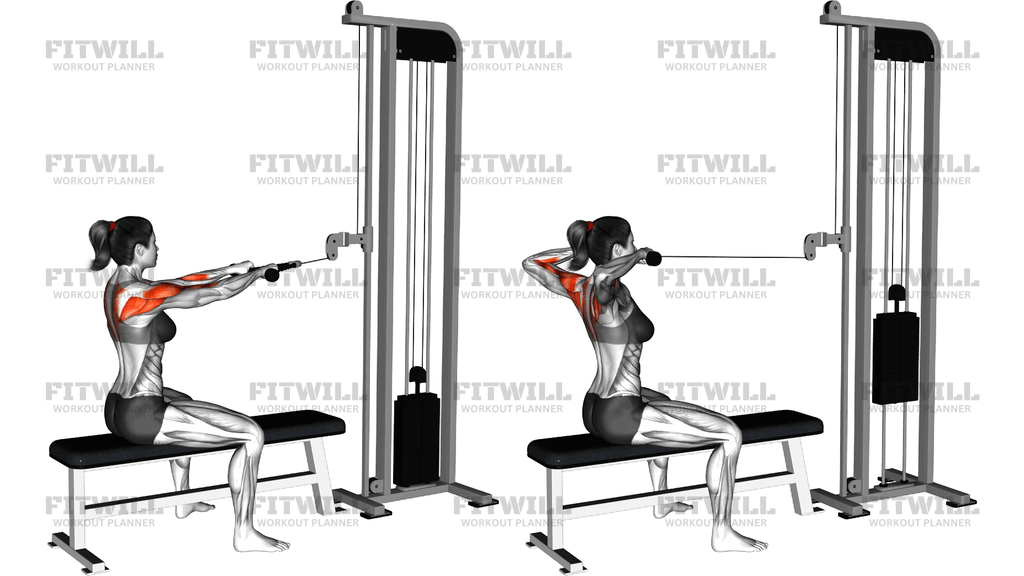
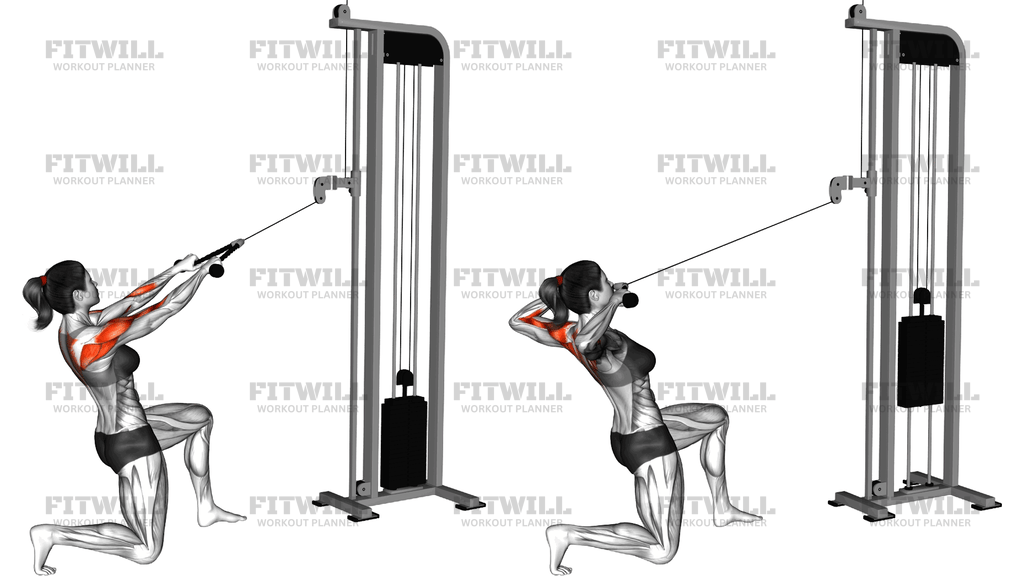
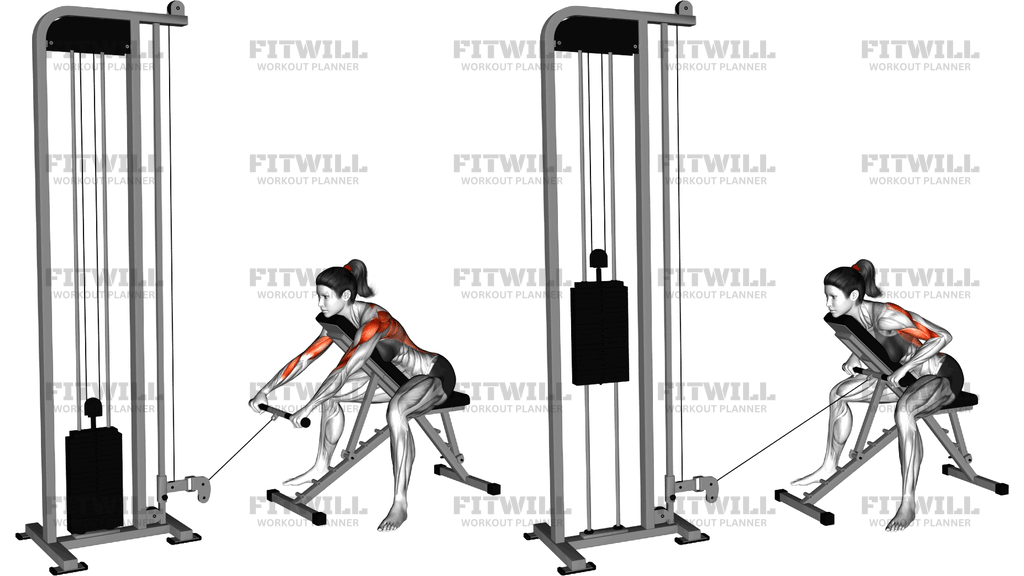
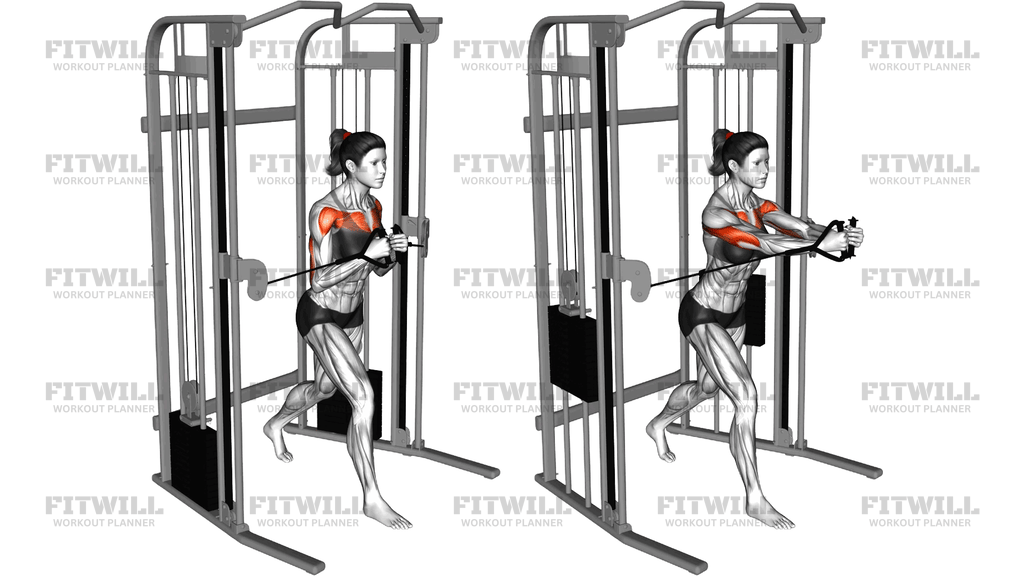
Cable Decline Close Grip Press
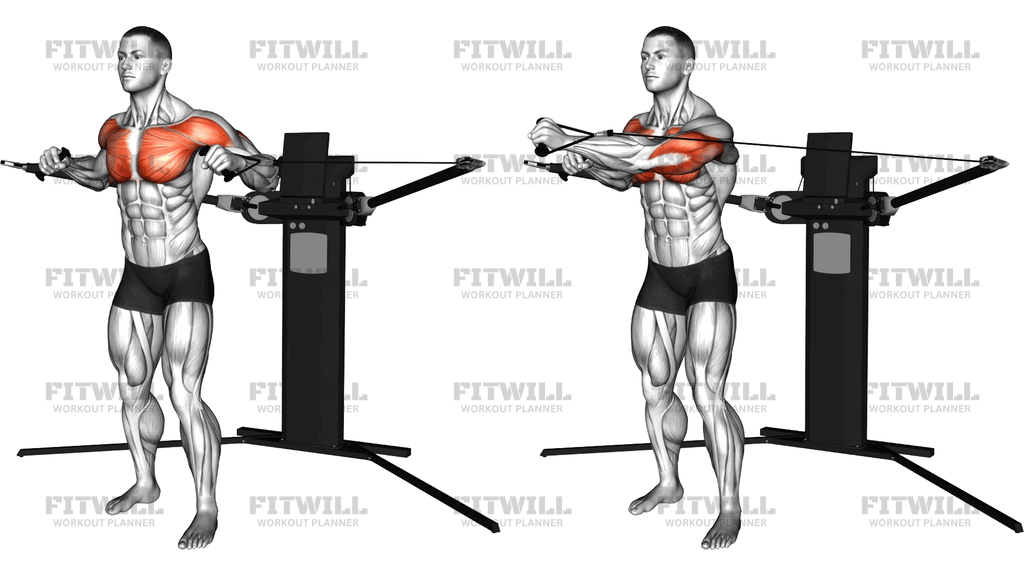
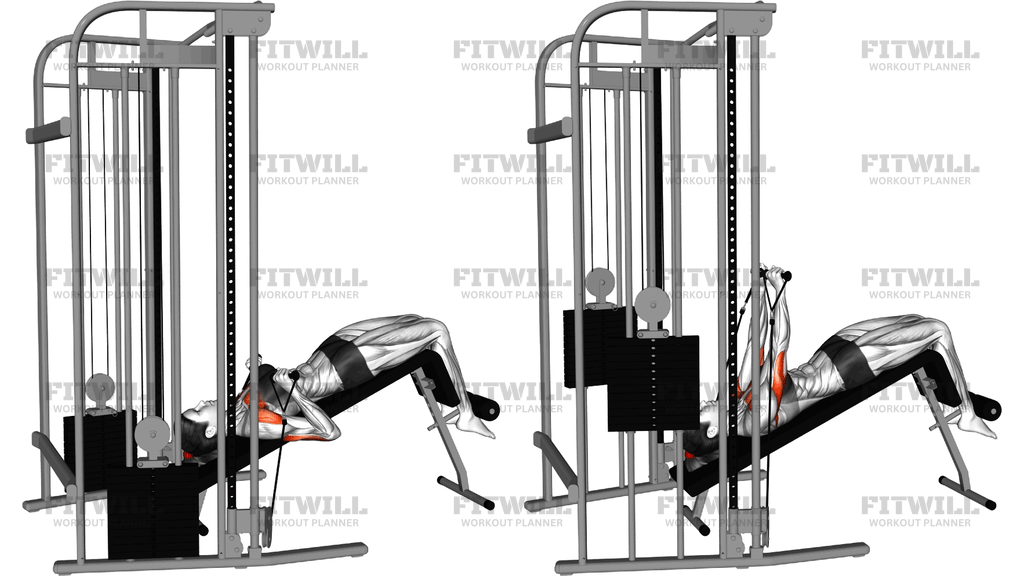
The Cable Decline Close Grip Press is a cable-based chest press performed while lying on a decline bench, with the hands set narrowly on the handles so the elbows track close to the torso. The decline angle shifts the emphasis toward the lower portion of the chest, while the close grip brings the triceps into the work far more than a standard-width press. Because the resistance comes from cables through the stacked weight plates, the tension stays consistent through the entire range instead of dropping off where a barbell or dumbbell press loses resistance.
This movement suits lifters who want to target the lower chest with a pressing pattern but find free-weight decline presses awkward or hard to set up safely. Getting into position under a loaded barbell on a decline bench can be stressful on the shoulders and usually needs a spotter; with cables, you simply lie back, take the handles, and press. The stack also makes it easy to make small, precise jumps in load, which is helpful for beginners and anyone progressing carefully after time away from training.
The primary muscles worked are the lower fibers of the chest, supported strongly by the triceps, which extend the elbows on every rep. The front delts assist the press, and the core works quietly to keep your torso settled on the angled bench. The close hand position is what tips the balance toward the triceps, so if your goal is a triceps-biased pressing movement, this setup delivers that without requiring a separate overhead extension exercise.
Setup matters more here than in a flat press. The bench needs to be positioned so the cable handles start at roughly chest level when your arms are bent, and your head and upper back should stay in contact with the pad for the whole set. Because the cables pull at an angle, drifting out of position changes the direction of resistance quickly, so take a moment before each set to check the bench height and your alignment rather than adjusting mid-set.
To execute the press well, think of driving the handles up and slightly together over the lower chest, keeping the elbows tucked rather than flared wide. Lower under control until the hands are beside the lower chest, then press back up without locking the elbows hard or letting the shoulders roll forward. The path should feel like a shallow arc, not a straight vertical shove.
You will see this exercise used as a secondary or accessory chest press after heavier compound work, or as a main lower-chest movement in cable-only and home-gym setups. Keep the weight honest: the decline position plus cable tension makes it easy to overload the shoulders if the stack is set too heavy. Two to four sets of eight to fifteen reps works well for most trainees.
[ Workout Log & Planner ]
Put your next workout in Fitwill
Keep your plan and training log ready when you are.


Instructions
- Set a decline bench inside the cable machine so the low pulleys line up beside your lower chest when you lie back, and check that the bench is stable before loading weight.
- Select a light starting weight on the stack and grip one handle in each hand using a narrow, roughly shoulder-width or slightly narrower hold with palms facing forward.
- Sit back onto the bench, place your feet securely on the leg supports, lie down with your head and upper back against the pad, and bring the handles to the sides of your lower chest with elbows bent and tucked.
- Brace your core lightly and pull your shoulder blades down and back so your upper body stays planted on the bench.
- Press both handles up and slightly inward until your arms are extended over your lower chest, stopping just short of locking the elbows.
- Pause briefly at the top, then lower the handles slowly back to the sides of your lower chest, keeping the elbows close to the ribs rather than flaring them out.
- Exhale as you press up and inhale as you lower the weight, keeping the breathing rhythm steady across all reps.
- Complete your set, then re-rack the handles carefully or let the stack settle before sitting up, keeping hold of the handles until the tension is released.
- Reset your position on the bench between sets if you have drifted, and adjust the stack before lying back down, not while holding the handles.
Tips & Tricks
- If your shoulders feel pinched at the bottom, you are probably lowering too far for the decline angle; stop the descent when your upper arms reach roughly torso level.
- Elbows flaring wide is the most common fault on this exercise and it shifts stress away from the triceps and toward the shoulder joints; cue yourself to keep the upper arms brushing your sides.
- Do not let the handles drift forward over your face as you press; aim for a line over the lower chest, which keeps the tension on the pecs and triceps.
- Because the decline bench reduces your ability to adjust position mid-set, pick a weight you can control for all planned reps rather than one that forces grinding final repetitions.
- Squeezing the chest for a half-second at the top of each press adds tension without needing more weight on the stack.
- Keep your lower back in contact with the pad; arching off the bench usually means the weight is too heavy or the feet are not secured properly.
- If one arm presses faster than the other, slow the tempo down and watch your hands, since cables will happily let the strong side do extra work.
- A narrower grip emphasizes the triceps more, but going extremely narrow just stresses the wrists and elbows; keep the hands roughly shoulder-width apart or slightly inside.
- Warm up the elbows and shoulders with a light set or two first, since close-grip pressing under cable tension loads the elbow joints directly.
Frequently Asked Questions
Which muscles does the Cable Decline Close Grip Press work?
The primary muscles are the lower fibers of the chest, with the triceps doing a large share of the elbow extension. The front delts assist the press, and the core stabilizes your torso on the declined bench.
Why use a close grip instead of a wider grip on this exercise?
A narrow grip keeps the elbows tucked beside the torso, which increases triceps involvement and still loads the lower chest effectively. It is also friendlier to many shoulders than a wide-flared press.
Is the Cable Decline Close Grip Press suitable for beginners?
Yes, as long as the weight is kept modest at first. The cable stack allows small load increases and removes the need to maneuver a barbell into position, which is the risky part of most decline pressing.
How should the decline bench be positioned relative to the cable machine?
Place the bench so the handles start at about lower-chest height with your arms bent and elbows tucked. If the handles pull too high or too low, the resistance angle changes and the set feels off from the first rep.
What is the most common mistake with this movement?
Letting the elbows flare out wide and pressing the handles up over the face or upper chest instead of the lower chest. Both errors reduce lower-chess and triceps work and place more stress on the shoulder joints.
What can I substitute if my gym has no decline bench for the cable machine?
A flat bench placed in the cable station with a close-grip cable press is the closest alternative, though it shifts some emphasis away from the lower chest. A decline dumbbell press or close-grip bench press also trains similar muscles.
How many sets and reps should I do?
Two to four sets of eight to fifteen reps fits most goals, with the higher end suiting muscle-building focus. Because cable tension is uniform, moderate loads with controlled tempo tend to work better than maximal attempts.
Is it safe to press on a decline angle without a spotter?
With cables it is, because there is no free weight hovering over you; if you fail a rep, you simply guide the handles back and release tension. This is one of the main safety advantages over a barbell decline press.
Should I lock out my elbows at the top of each rep?
Press to full extension but stop just short of a hard, joints-slamming lockout. This keeps continuous tension on the triceps and chest while protecting the elbow joint across a full set.