Kettlebell Windmill
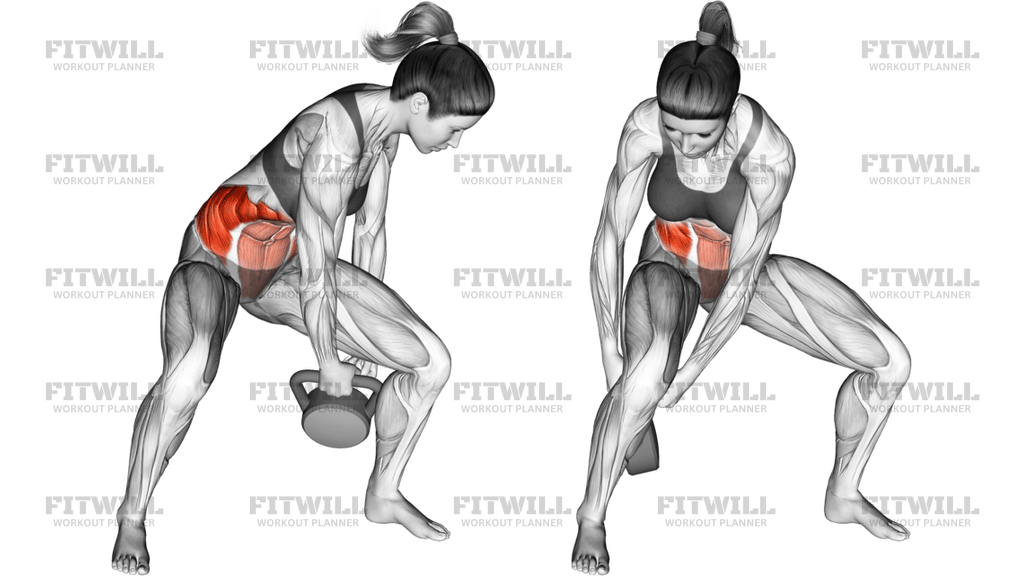
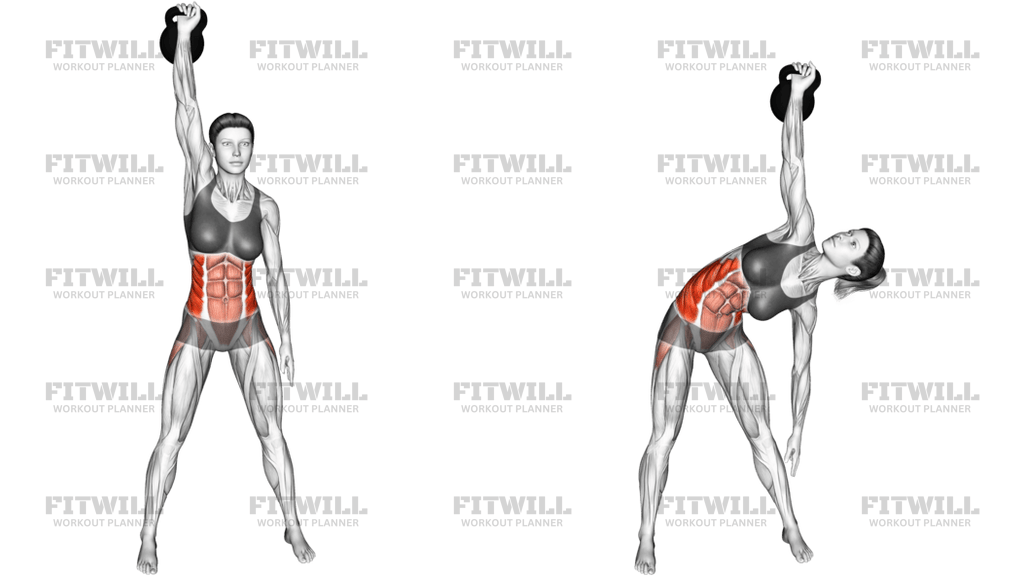
Kettlebell Windmill is a loaded side-hinge and overhead stability exercise that challenges the waist, hips, and trunk while the kettlebell stays fixed above the shoulder. In the image, one arm is locked out overhead, the feet are set in a wide stance, and the torso folds toward the grounded side as the free hand tracks down the leg. That combination makes the movement useful for building oblique strength, hip control, and shoulder stability at the same time.
The setup matters because the windmill only works well when the bell is stacked over the shoulder, the ribs stay controlled, and the feet are positioned so the hips can hinge without forcing the low back to twist. The overhead arm should feel active and vertical, not drifting in front of the head. The working side leg stays straighter, while the opposite knee bends and the hips shift back as the torso rotates just enough to keep the kettlebell balanced.
This is not a fast side bend or a crunch. The load should travel in a controlled arc while the chest opens and the free hand reaches toward the ankle, shin, or floor only as far as you can keep the shoulder packed and the spine long. The best reps feel smooth and deliberate, with the weight over the midfoot and the overhead arm remaining quiet while the torso does most of the movement.
Kettlebell Windmill is often used for core work, shoulder stability, hip mobility, and accessory strength in programs that need better control overhead or better sideways bracing. It can also expose asymmetries between sides, which is useful because each side should feel stable and repeatable on its own. The goal is not maximum depth at all costs; it is a clean hinge under load with the bell still pointed to the ceiling.
Because the position asks for coordination, timing, and mobility, the exercise rewards light to moderate loads and strict pacing more than heavy weight. If the kettlebell starts drifting forward, the lower back rounds, or the free hand can only move by collapsing the torso, the load is too heavy or the stance is too narrow. Keep the rep pain-free, finish each side with control, and treat the windmill as a precision strength drill rather than a momentum lift.
[ Workout Log & Planner ]
Put your next workout in Fitwill
Keep your plan and training log ready when you are.


Instructions
- Stand with your feet wider than hip-width and turn the working-side foot slightly outward so your hips can hinge cleanly.
- Press the kettlebell overhead on the working side and lock the elbow so the bell sits directly above the shoulder.
- Set the free arm down by your side, then fix your eyes on the kettlebell before you start the descent.
- Brace your midsection and shift your hips back toward the working-side heel while keeping the overhead arm vertical.
- Rotate the chest open as you hinge, and slide the free hand down the inside or outside of the forward leg.
- Lower only as far as you can keep the bell stacked, the spine long, and the working knee tracking steadily.
- Pause briefly at the bottom position with control, then drive the hips forward to stand back up.
- Exhale as you return to standing and reset the overhead position before starting the next rep.
- Complete all reps on one side, then switch hands and repeat on the other side.
Tips & Tricks
- Keep the kettlebell stacked over the shoulder from start to finish; if it drifts forward, shorten the range.
- Let the hips move back instead of simply leaning the torso sideways, which protects the low back and improves the hinge.
- Use a stance wide enough that your free hand can reach the leg without the knees colliding or the pelvis twisting hard.
- Keep the working-side arm straight but not shrugged; the shoulder should feel packed, not jammed upward.
- Choose a kettlebell that lets you stay smooth overhead, because a wobbling bell makes the whole rep unstable.
- Keep your gaze on the kettlebell if you tend to lose balance or let the shoulder roll forward.
- Stop the descent when the chest starts collapsing toward the floor, even if the hand has not reached as low as you hoped.
- Move slowly enough that you can breathe on purpose: inhale on the way down and exhale as you stand.
- Match the range and tempo on both sides so the easier side does not hide a stability deficit.
Frequently Asked Questions
What muscle does Kettlebell Windmill target most?
It mainly trains the obliques and deep trunk stabilizers on the side of the lowered torso, while the overhead shoulder and hips work hard to keep the body organized.
Can beginners perform this exercise?
Yes, but beginners should start with a very light kettlebell or even a bodyweight reach first so they can learn the hinge and overhead stack without wobbling.
Where should the kettlebell stay during the rep?
The bell should stay directly above the shoulder and roughly in line with the wrist, elbow, and midfoot. If it moves forward of the head, reduce the range or load.
How low should my free hand reach?
Reach only as far as you can keep the kettlebell stacked and your spine long. For many lifters that means the shin or ankle, not necessarily the floor.
Should I bend both knees or just one?
The working-side leg stays straighter while the opposite knee bends more. That asymmetry helps you hinge and rotate without turning the movement into a squat.
Why does this exercise feel so different from a side bend?
A windmill is a loaded hinge with overhead stability, not just a lateral crunch. Your hips move back and your trunk rotates to keep the bell aligned.
What should I do if my lower back feels it more than my waist?
Shorten the range, widen the stance a little, and make sure the kettlebell stays stacked overhead. Excess back feeling usually means you are twisting or reaching too far.
Can I do this with a dumbbell instead of a kettlebell?
Yes, a dumbbell can work, but the kettlebell is usually easier to balance overhead because the load hangs under the hand and gives clearer feedback.