Kettlebell Arm Bar
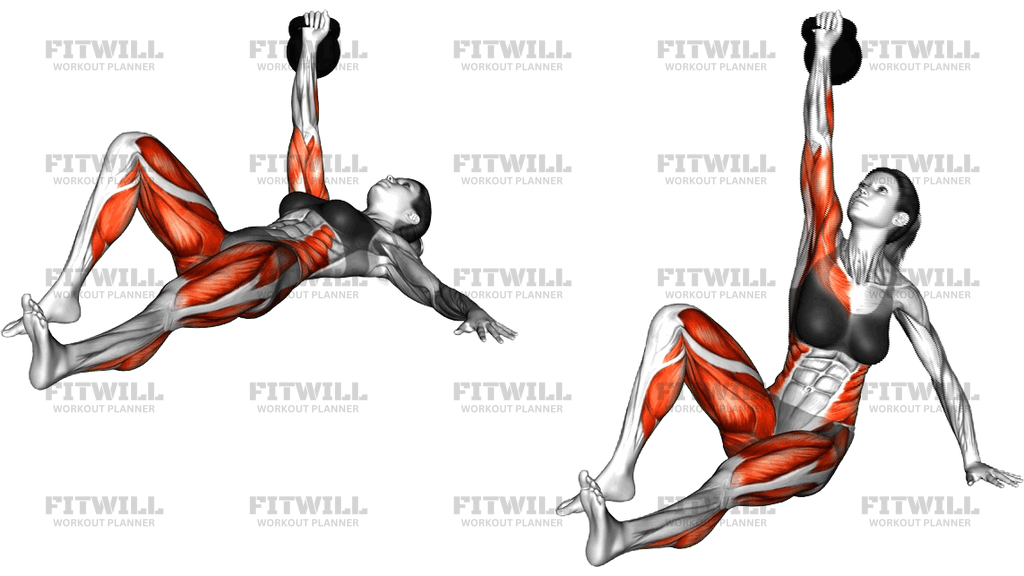
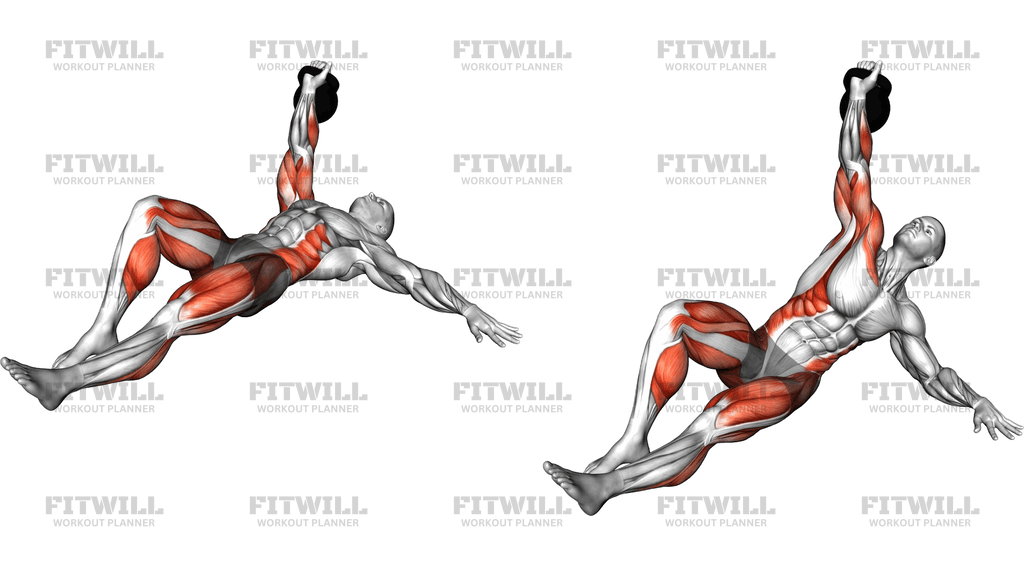
The Kettlebell Arm Bar is a ground-based shoulder exercise where you hold a kettlebell pressed vertically toward the ceiling while rotating your entire body from your back to your front. The weight stays stacked over your shoulder the whole time, so the arm does not press the bell so much as balance and stabilize it. It is one of the classic kettlebell ground drills, sitting somewhere between strength work and thoracic mobility training.
The main value comes from what the loaded rotation demands of the shoulder. As your torso turns underneath the vertical arm, the rotator cuff, particularly the muscles that externally rotate and stabilize the humeral head, has to work continuously to keep the kettlebell stacked and still. At the same time, the ribcage and thoracic spine rotate through a useful range, which is why many lifters use the arm bar as a warm-up before pressing or as a restorative finisher on lower-body days.
Because your body works on the floor and the load moves very little, the setup matters more than in most pressing exercises. Start on your back with the kettlebell already pressed up and your legs crossed, and treat the vertical arm as a fixed plumb line. The knee that ends up on the floor becomes your steering wheel: pulling it across the ground drives the rotation, while your eyes and free hand track the bell to keep it steady. Rushing this part is the most common reason people lose control of the weight.
This exercise suits intermediates who already own a stable overhead lockout, as well as throwers, grapplers, and desk-bound lifters who need rotational range under a bit of load. Beginners can absolutely do it, but they should start very light and treat the first few sessions as learning the roll rather than training the shoulder.
Execute it slowly, breathe continuously, and choose a kettlebell you could comfortably hold overhead for thirty seconds. If the weight wants to drift forward or your elbow wants to bend, that is your signal to go lighter, not to grind through it.
[ Workout Log & Planner ]
Put your next workout in Fitwill
Keep your plan and training log ready when you are.


Instructions
- Lie on your back on a mat and press a light kettlebell straight up with your right arm until the elbow is locked and the wrist is stacked directly over the shoulder.
- Bend your left knee toward your chest and hook it over your right leg so the legs are crossed, then plant your right heel into the floor with the knee bent.
- Brace your midsection gently and keep your eyes on the kettlebell for the entire movement.
- Slide your left arm out to the side at roughly shoulder height, palm down, to act as a brake and reference point during the rotation.
- Drive your right knee and right foot into the floor and pull the right knee across your body toward the left side, letting the torso roll underneath the vertical arm.
- Keep the kettlebell stacked over the shoulder the whole time; if it starts to drift forward, pause and re-stack before continuing.
- Rotate until you end on your front with the right knee bent at about ninety degrees on the floor, the right forearm or palm supporting some of your weight, and the kettlebell arm still pointing straight up.
- Hold this end position for three to five slow breaths, feeling the stretch across the chest and the rotation through the mid-back while the shoulder stays packed.
- Reverse the rotation by pushing through the right knee and hand, rolling back onto your shoulder blades with the arm still vertical.
- Lower the kettlebell with two hands to your chest, sit up, and repeat on the other side, aiming for two to four rotations per side.
Tips & Tricks
- Think of your arm as a fixed vertical post and your torso as the thing that rotates around it; trying to move the kettlebell instead of the body is the fastest way to lose the bell.
- The most common fault is letting the wrist break backward as you roll. Punch the fist toward the ceiling and keep the knuckles lined up with the forearm from start to finish.
- If your shoulder feels pinched in the end position, you are likely rotating further than your current thoracic mobility allows. Stop a few degrees short and build up the range over weeks.
- Look at the kettlebell the entire time. Losing sight of it is what causes the arm to wander off vertical, especially as you pass through the halfway point of the roll.
- Use the back of your free hand against the floor as a brake in the first half of the rotation, then switch to your front hand and knee to control the second half.
- A kettlebell that feels light when pressed from your back can feel heavy at the end range. If you have to strain your grip or bend the elbow, drop down one bell size.
- Keep the bent knee glued to the floor in the end position rather than letting the hips sag; this protects the lower back and keeps the rotation happening at the mid-back.
- Perform this drill before overhead pressing, snatching, or throwing sessions. It doubles as warm-up and skill work, so it does not need to be pushed to fatigue.
- Breathe steadily through the whole roll. Holding your breath under a rotated ribcage makes the shoulder compensate and stiffen.
Frequently Asked Questions
What muscles does the Kettlebell Arm Bar work?
The primary work is done by the rotator cuff and the muscles that stabilize the shoulder blade, with the obliques and deep core driving and controlling the rotation. The glutes and hips help hold the bent-knee position on the floor.
Is the Kettlebell Arm Bar a strength exercise or a mobility exercise?
It is genuinely both, but with a light bell it functions mostly as loaded mobility for the mid-back and stability work for the shoulder. That is why it is usually programmed for low reps or timed holds rather than heavy sets.
How heavy should the kettlebell be for an Arm Bar?
Pick a weight you could lock out overhead and hold for thirty seconds without grip strain; for many people that is far lighter than their pressing kettlebell. The bell does not move much, but the leverage at end range makes the same weight feel much harder.
Why do my legs stay crossed during the Kettlebell Arm Bar?
The crossed legs create the leverage you need to roll: pulling the top knee across the floor turns the whole torso underneath the vertical arm. Without the leg drive, you end up twisting with the lower back instead of the mid-back.
Can beginners do the Kettlebell Arm Bar?
Yes, but start with a very light bell, or even no weight with a fist extended overhead, and practice the roll pattern first. Once you can rotate smoothly without the arm drifting off vertical, add a light kettlebell.
My kettlebell drifts forward when I roll. What am I doing wrong?
This usually happens when the eyes leave the bell or the elbow bends to chase it. Pause the rotation, re-stack the weight over the shoulder, and continue more slowly, keeping your gaze fixed on the kettlebell.
What can I substitute for the Kettlebell Arm Bar?
A dumbbell can work if no kettlebell is available, though the offset handle of the bell makes balance easier to feel. For pure mobility without load, a threaded thoracic rotation or a wall slide gives a similar mid-back benefit without the shoulder stability demand.
Should I hold the end position or keep moving?
A brief hold of three to five breaths at the top of the rotation is where most of the shoulder and thoracic benefit lives. Rolling in and out without the pause turns it into a coordination drill and skips the stretch component.
Is the Kettlebell Arm Bar safe for cranky shoulders?
It can be gentle because the load stays vertical and the range is self-selected, but anyone with an active shoulder injury should get clearance first and start weightless. Sharp pinching, numbness, or tingling are signs to stop and regress the range.