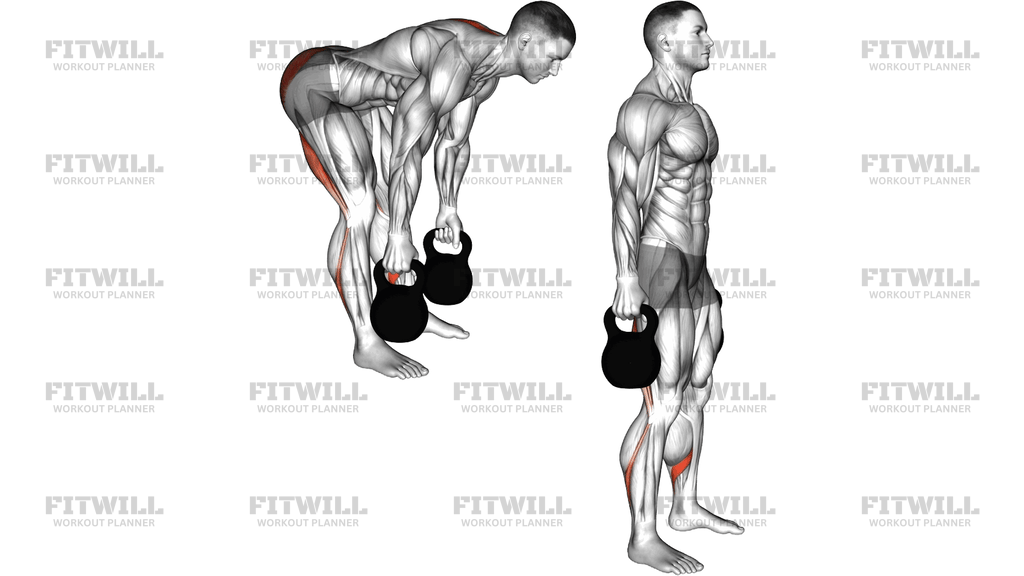
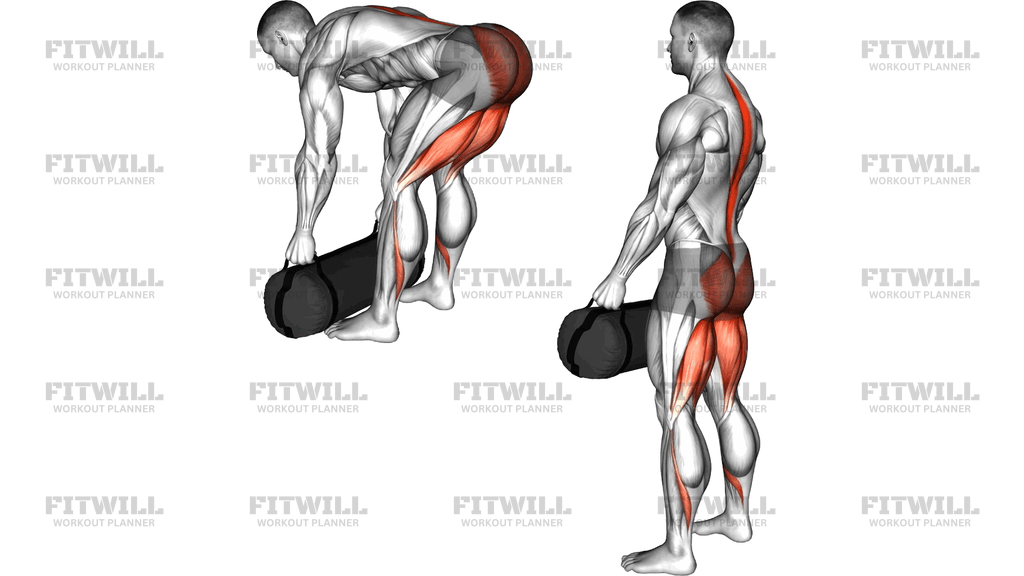
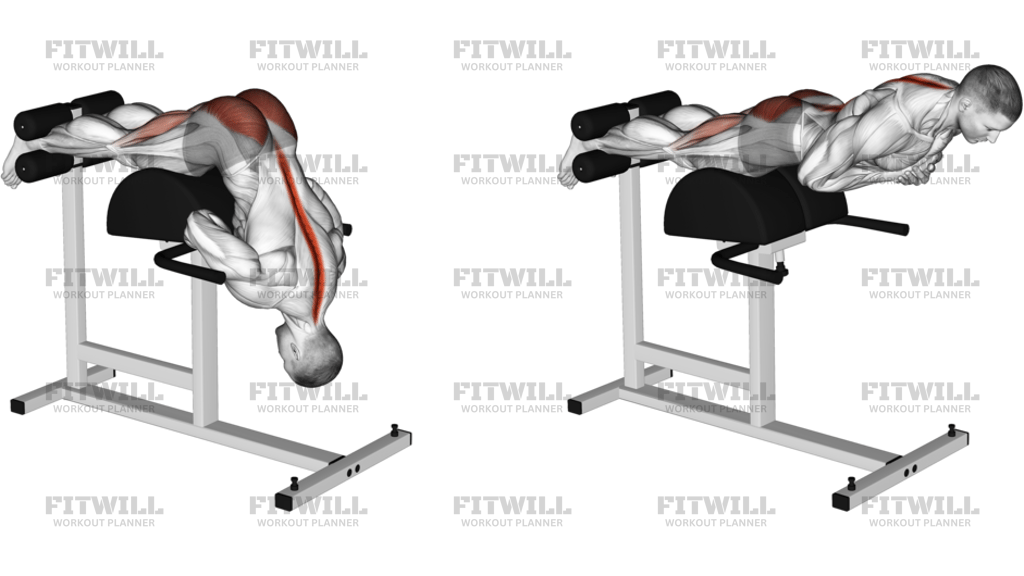
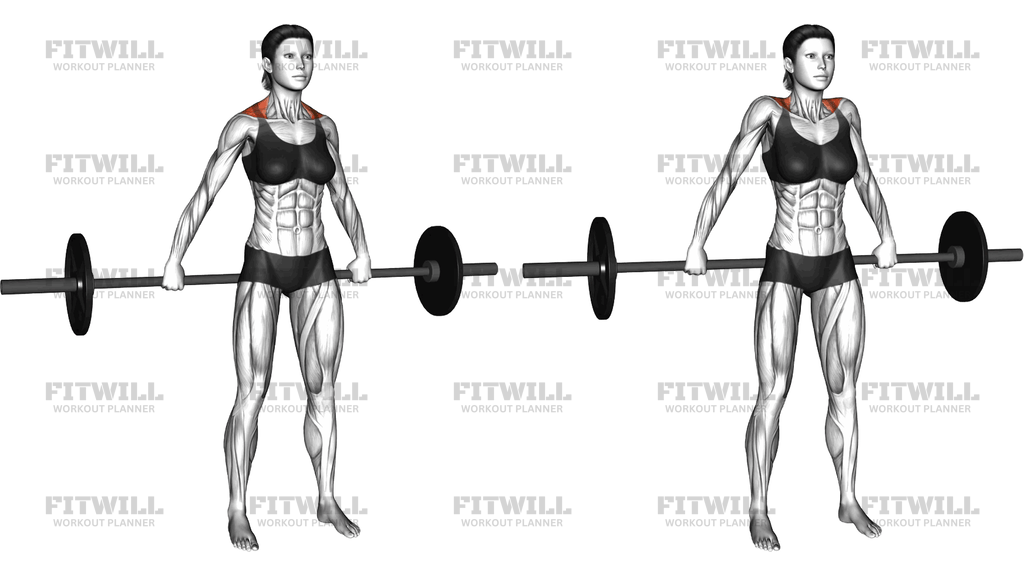
Barbell Romanian Deadlift To Row
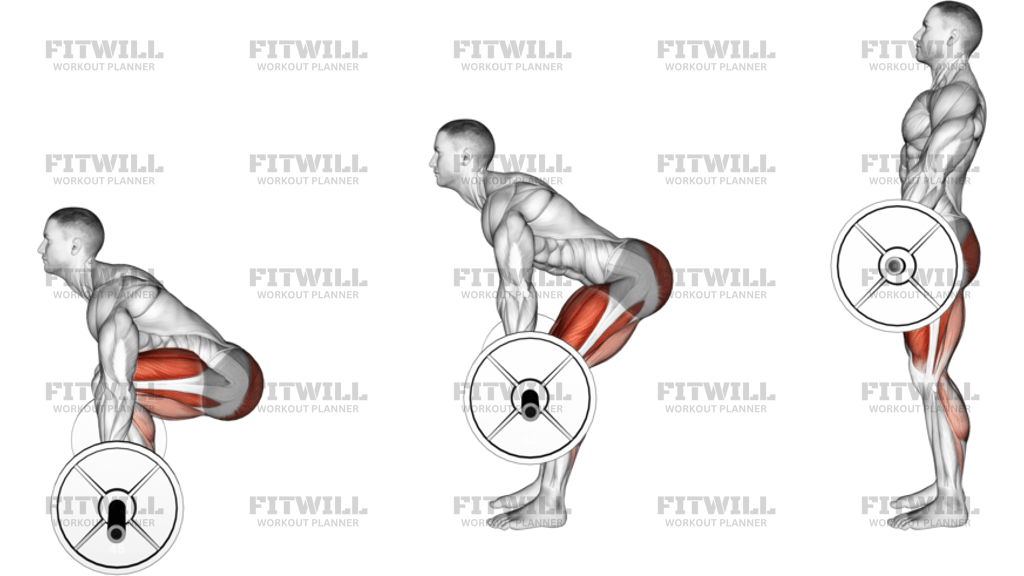
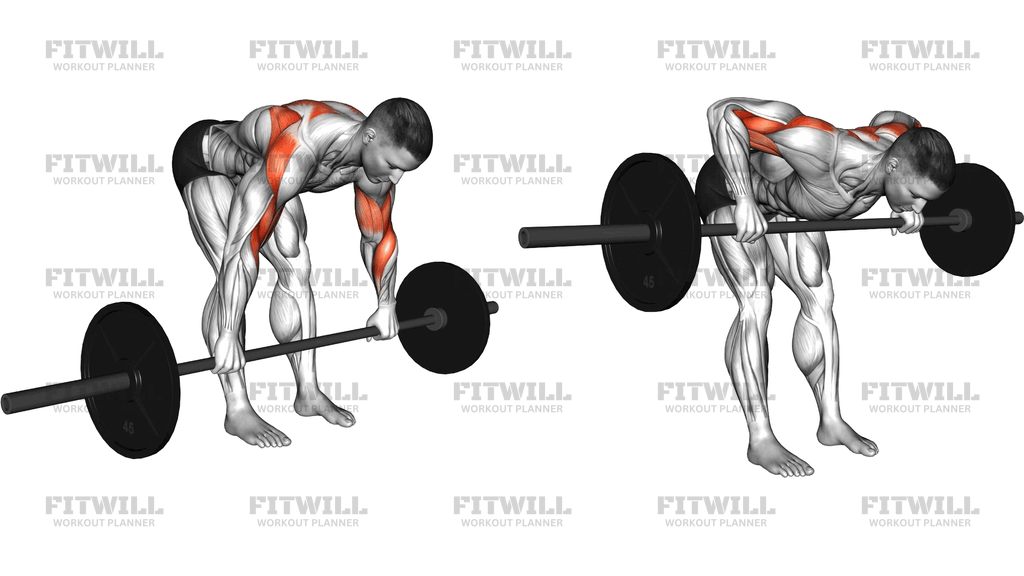
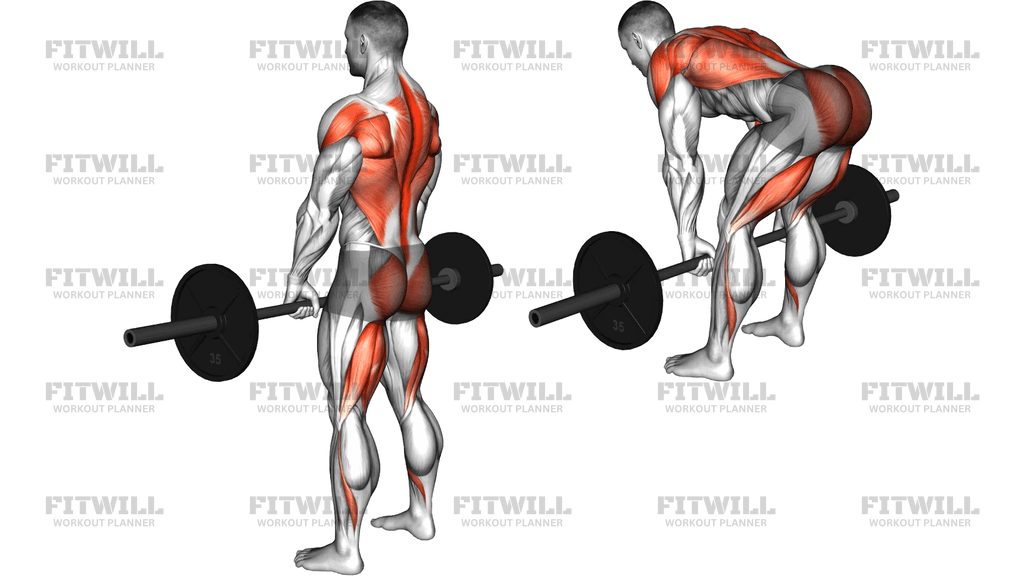
The Barbell Romanian Deadlift To Row is a compound sequence that stitches two proven barbell movements into one rep. You hinge forward into a Romanian deadlift position, and while you hold that hinged stance, you perform a barbell row before standing back up to complete the rep. This means every rep trains both the hip hinge pattern and the horizontal pull, with no extra setup time between them.
The lift loads the back side of the body from top to bottom. The hinge portion challenges the hamstrings and glutes through a deep stretch, while the row at the bottom demands work from the lats, rhomboids, mid traps, rear shoulders, and biceps. Your lower back and core stay busy the entire time because they must hold your torso still while your arms move the bar. Grip and forearm endurance also get taxed, since the bar never leaves your hands until the set is over.
Because the row is performed from the hinged position rather than a bench, the setup matters more than in a standard row. Your torso angle determines how the bar travels, so a stable hinge close to parallel with the floor gives the bar a straight vertical path and keeps the load on your hips and upper back instead of your spine. A barbell also lets you load this pattern heavier than a dumbbell or cable version, which makes it useful for lifters who have outgrown lighter posterior chain work.
This movement suits intermediate lifters and busy trainees who want more from each exercise, as well as anyone building pulling strength for deadlifts, rows, or sport demands that combine hinging and pulling. It works well as a second lower body or back exercise on a pull day, typically for moderate weight in the 8 to 12 rep range. Going too heavy turns the row into a sloppy jerk and the hinge into a squat, so treat it as a controlled lift rather than a max-effort one.
Execution comes down to sequencing. Hinge first with the hips driving back and the bar staying in contact with your legs, stop when your hamstrings hit their working range, row the bar to your lower ribs, lower it under control, then drive the hips forward to stand. The most common fault is rounding the lower back at the bottom or letting the torso rise as you row, which turns a back exercise into a lower back strain. Keep the hinge locked in place until the row is finished, and reset your brace at the top of every rep.
[ Workout Log & Planner ]
Put your next workout in Fitwill
Keep your plan and training log ready when you are.


Instructions
- Stand with your feet about hip-width apart and grip the barbell with an overhand grip just outside your thighs, hands roughly shoulder-width apart.
- Brace your core, pull your shoulders back slightly, and lift the bar to a standing position with the bar resting against the front of your thighs.
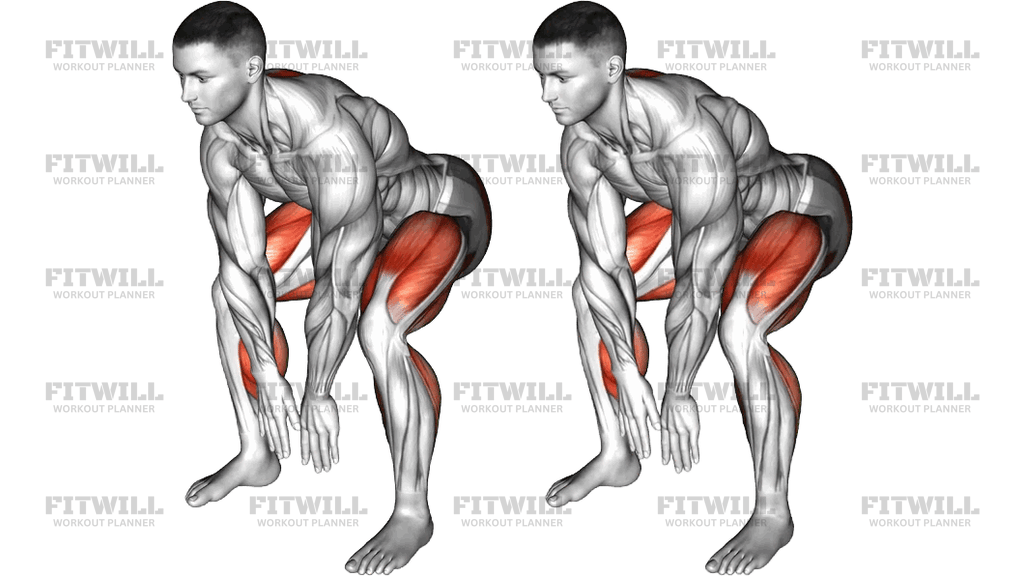
- Push your hips straight back and let the bar slide down your legs, keeping your knees softly bent and your spine long until your torso is close to parallel with the floor and the bar hangs at mid-shin level.
- Hold this hinged position firmly, keeping your hips high and your weight balanced over mid-foot.
- Row the bar up toward your lower ribs or belly, driving your elbows back and squeezing your shoulder blades together at the top of the row.
- Lower the bar back to the hang position in a controlled manner without letting your torso angle change.
- Exhale as you row the bar up, inhale as you lower it, and keep breathing steadily throughout the rep.
- After the row is complete, drive your hips forward and stand tall with the bar back at your thighs to finish the rep.
- At the top, take a breath, reset your brace, and begin the next rep with a fresh hinge rather than rushing straight back down.
Tips & Tricks
- If your lower back rounds at the bottom of the hinge, you have gone deeper than your hamstrings allow. Stop the descent higher, around knee level or just below, and build range gradually over weeks.
- A common failure is standing up as you row, which turns the movement into a partial deadlift. Imagine your hips are pinned in place and only your arms and shoulders move during the row.
- Keep the bar path vertical and close to your shins during the hinge and close to your body during the row. Letting the bar drift forward multiplies the strain on your lower back.
- Use a moderate load you could row for at least 8 clean reps. The hinge can handle far more weight than the row can, so the row becomes the limiting factor by design.
- If your grip gives out before your back does, try a mixed grip or use lifting straps rather than shortening the set, though plain double-overhand work builds forearm strength fastest.
- Do not yank the bar off the floor from a dead stop at the bottom. Stay in control of the row's lowering phase so the bar transitions smoothly back into the hinge.
- Squeeze your glutes hard at the top of each rep to remind your hips to finish the hinge, but avoid leaning back and hyperextending your lower back.
- Perform this lift on a platform or over rubber flooring and be ready to drop the bar if your hinge position breaks down mid-set. Losing position under fatigue is the main injury risk here.
- Film yourself from the side for a set. Checking your torso angle and bar path from a side view reveals rounded-back or hip-rise faults that are hard to feel in the moment.
Frequently Asked Questions
Which muscles does the Barbell Romanian Deadlift To Row work the most?
The hinge targets the hamstrings and glutes, the row works the lats, rhomboids, mid traps, rear shoulders, and biceps, and the lower back and core stabilize your torso throughout. It is essentially a full posterior chain exercise in one movement.
Is the Barbell Romanian Deadlift To Row suitable for beginners?
Beginners should first learn the hip hinge and the bent-over barbell row separately, because combining them doubles the coordination demand. Once both patterns feel solid with light weight, this combination is an efficient next step.
How low should I hinge before starting the row in the Barbell Romanian Deadlift To Row?
Hinge until your torso is near parallel to the floor or until you feel a strong hamstring stretch without any rounding in your lower back. The bar should hang around mid-shin level, which gives the row a natural vertical path to your lower ribs.
Why does my lower back fatigue faster than my upper back during this exercise?
Your spinal erectors work isometrically for the entire set to hold the hinge, so they fatigue before the rowing muscles. Reduce the weight, limit reps to the range you can hold with a flat back, and strengthen your hinge endurance with regular Romanian deadlifts.
Should I set the bar down between reps of the Barbell Romanian Deadlift To Row?
No, the bar stays in your hands for the whole set, hanging at mid-shin between reps. Setting it down each rep turns the exercise into separate deadlifts and rows instead of the combined sequence.
What is a good substitute if I do not have a barbell?
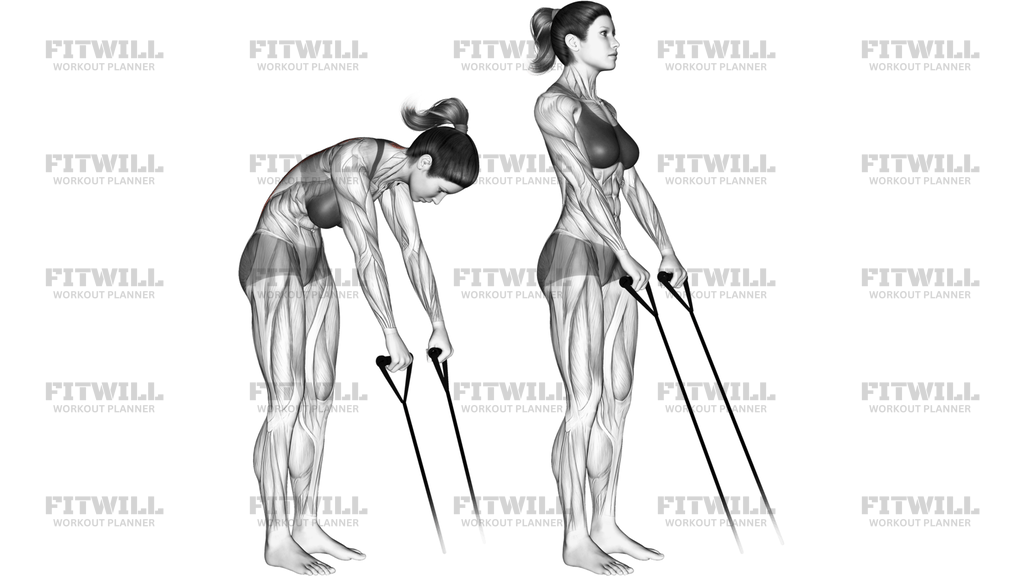
A pair of dumbbells works well and lets each arm row independently, which can help if one side is weaker. A trap bar is another option and is slightly easier on the lower back because the weight sits closer to your midline.
How many reps should I do per set of the Barbell Romanian Deadlift To Row?
Most lifters get the best results with 8 to 12 reps using a moderate load, since the hinged position is hard to hold cleanly for high reps. Stop the set as soon as your torso angle starts to drift or your back begins to round.
Is it safe to row from a hinged position with a rounded lower back?
Rounding under load significantly increases stress on the lumbar spine and is the main thing to avoid in this lift. If you cannot keep a flat back at your current depth or weight, hinge less deep or reduce the load until your position is solid.
Can I use straps or a mixed grip for the Barbell Romanian Deadlift To Row?
Yes, both are reasonable once your grip becomes the limiting factor, since you want the row and hinge muscles to be challenged before your forearms give out. Try plain double-overhand grip first and add straps on your heaviest sets.