Suspender Scapular Retraction
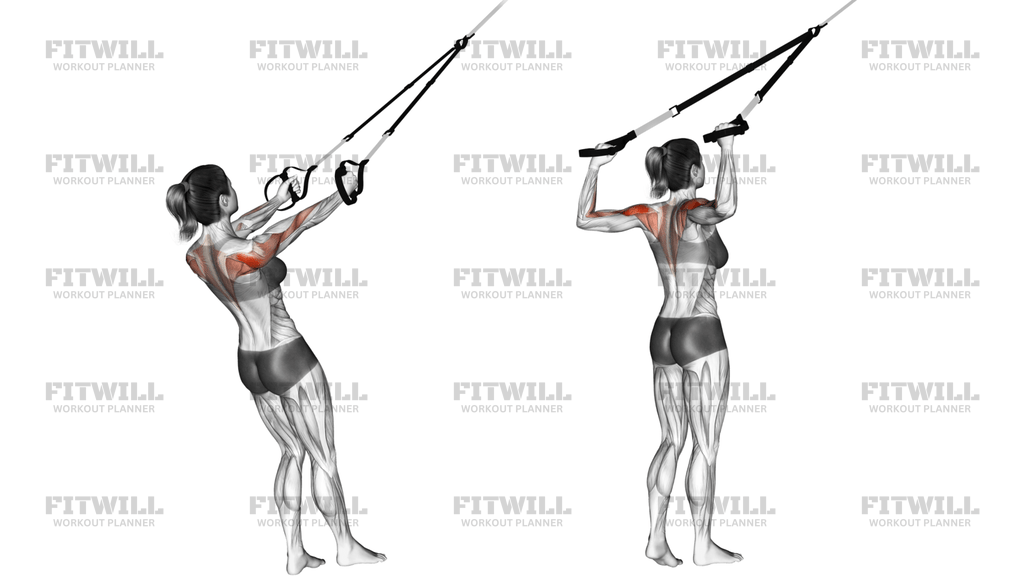
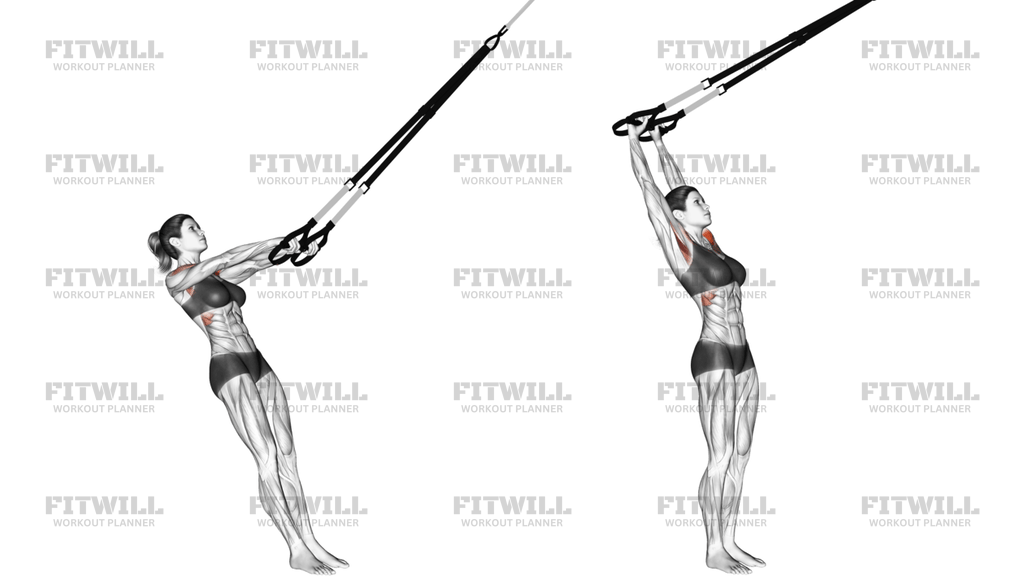
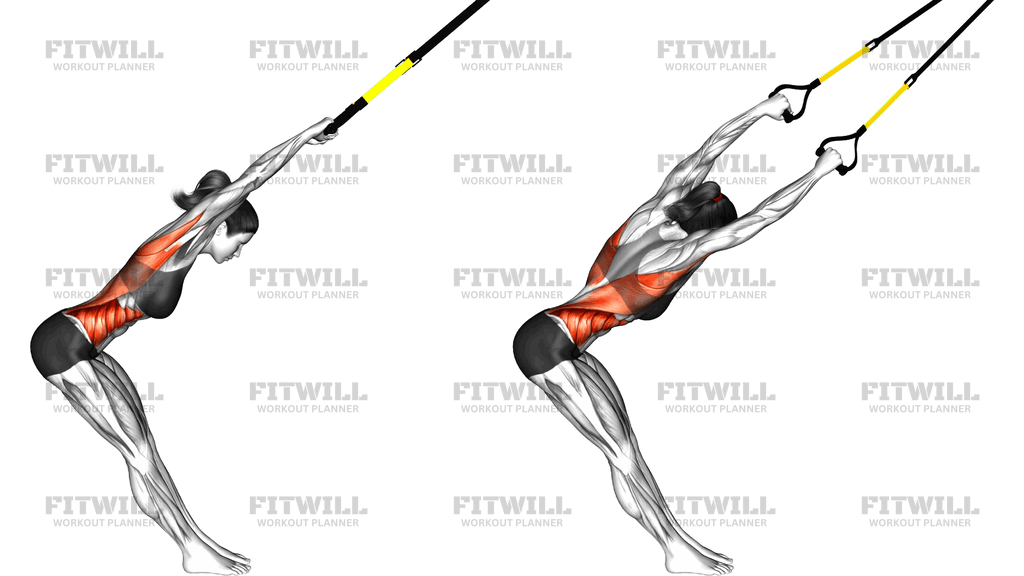
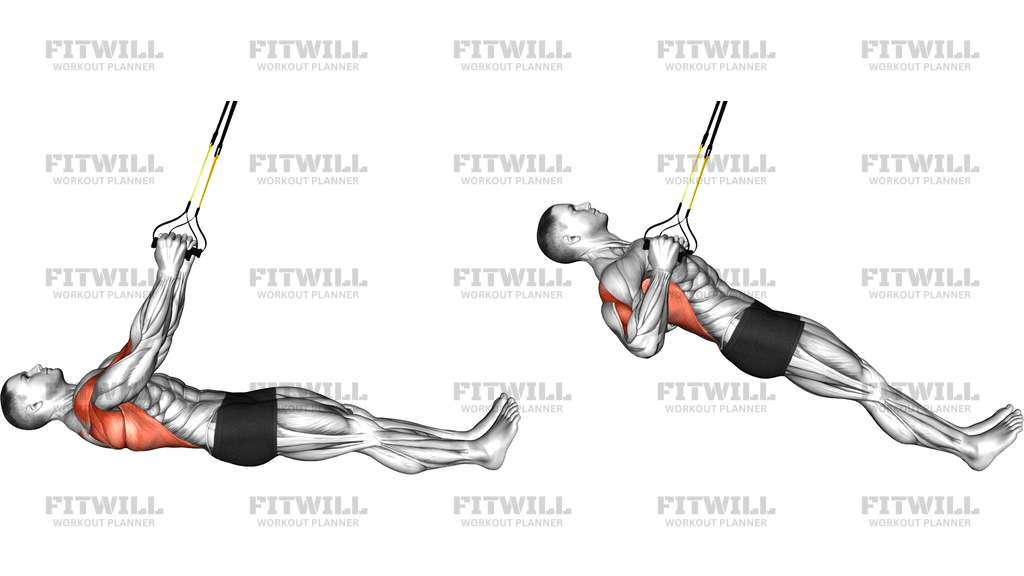
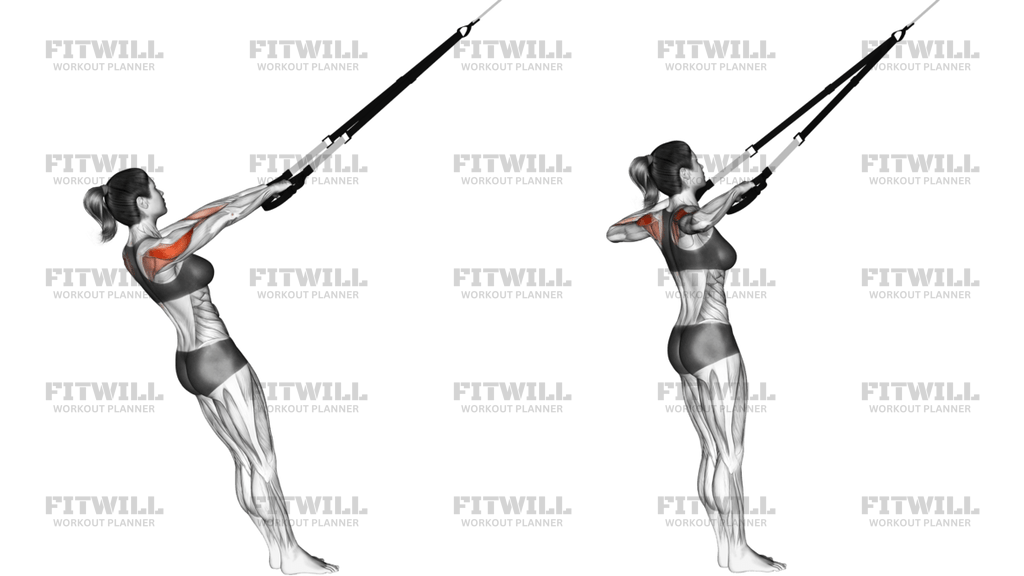
The Suspender Scapular Retraction is an isolation drill performed on a suspension trainer. You hold the handles and lean back into a straight, angled plank position with your arms extended overhead toward the anchor point. From there, the only movement is drawing your shoulder blades together and down toward your spine, then letting them spread apart again under control. Because your elbows stay locked and your body hangs from the straps, every ounce of motion comes from the muscles that move the shoulder blades rather than from the arms.
This exercise targets the rhomboids and the middle and lower trapezius, with the rear shoulders assisting and the entire core and legs working isometrically to keep your body rigid in the inclined position. That combination makes it especially valuable for people whose pressing work, desk posture, or long driving hours have left their upper back weak and their shoulder blades drifting forward. Pull-ups and rows often get skipped in favor of the bigger arm muscles; this movement removes that escape route entirely.
The suspended setup matters for two reasons. First, the angle of your body relative to the floor sets the resistance, so walking your feet back toward the anchor makes the drill harder and stepping them forward makes it easier. Second, the unstable straps force the small stabilizing muscles around each shoulder to work, which is exactly what you want from a scapular exercise. Keep the angle modest at first; even a shallow lean produces a strong contraction when the arms are fully extended overhead.
To execute it well, think of your shoulder blades as the only joints in motion. Pinch them toward each other as if holding a pencil between them, hold the squeezed position briefly, then let them glide apart slowly instead of collapsing. Your torso angle, hip line, and elbow position should stay identical from start to finish. If you find yourself bending your elbows or letting your hips sag, you are turning the drill into a row and losing the targeted scapular work.
Use the Suspender Scapular Retraction as a warm-up primer before pull-ups, rows, or overhead pressing, as a standalone strengthener between sets, or as a high-rep finisher on back days. Because the load is your own bodyweight and the range is short, it is also a low-risk entry point for beginners learning what scapular retraction actually feels like before applying it to heavier pulling movements.
[ Workout Log & Planner ]
Put your next workout in Fitwill
Keep your plan and training log ready when you are.


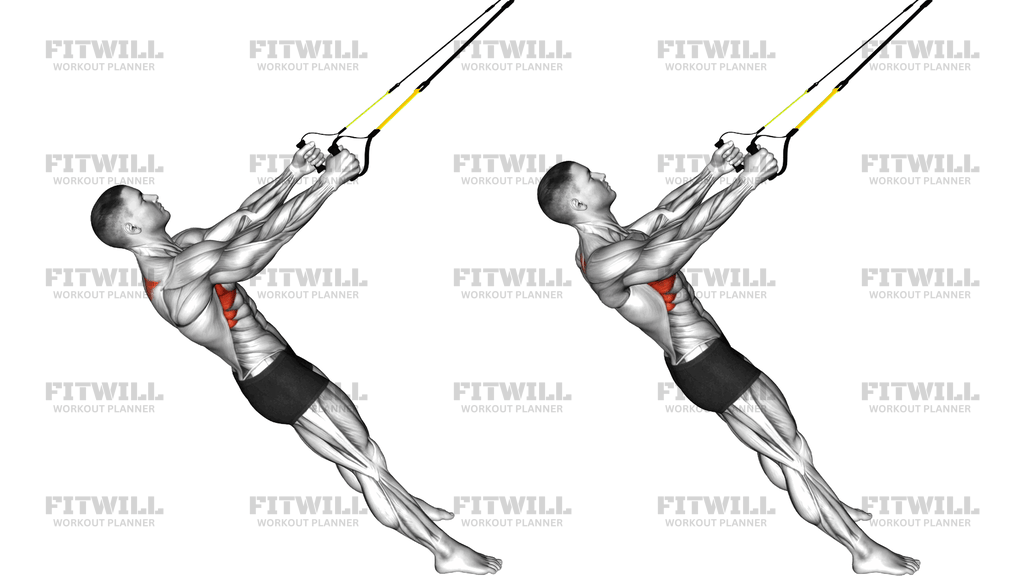
Instructions
- Anchor the suspension trainer securely overhead and adjust both straps to equal length so the handles hang together at roughly waist height.
- Grip the handles with a neutral palms-in grip, then walk your feet back and lean your body into a straight, inclined line with your arms fully extended overhead toward the anchor.
- Set your feet about hip-width apart, heels pressed to the floor, and squeeze your glutes and abs so your hips and shoulders form one rigid plank.
- Keep your elbows completely straight throughout the set; the arms act only as connectors between your torso and the straps.
- Exhale and draw your shoulder blades back and down toward each other, letting your chest rise slightly toward the handles while your arm angle stays fixed.
- Hold the retracted position for one to two seconds, feeling the squeeze between and below your shoulder blades.
- Inhale and let the shoulder blades spread slowly apart, allowing your torso to sink back toward the floor without losing body tension.
- Complete all repetitions at one angle, then walk your feet forward, release the handles one at a time, and stand up before resetting the straps for the next exercise.
Tips & Tricks
- The most common mistake is turning this into a row by bending the elbows. Film yourself from the side; if your elbows flex, reduce your lean angle until you can keep them locked.
- Do not shrug your shoulders toward your ears as you pull. Cue yourself to pull the shoulder blades down and together, not up and together, to bias the lower and middle traps over the upper traps.
- Keep the head in line with the spine. Craning the chin forward to look at the anchor shortens the neck and shifts tension away from the upper back.
- If your lower back arches or your hips drop mid-set, your core has given out before your scapular muscles have. Step your feet forward to a shallower angle rather than pushing through a sagging position.
- A brief one- to two-second pause at full retraction does more for learning this pattern than extra speed; rushing turns the movement into a small, bouncy row.
- Grip the handles firmly but do not crush them. Excessive gripping tension creeps up into the forearms and upper traps and dilutes the scapular focus.
- Progress by walking your feet back one shoe length at a time, not by adding reps at a sloppy angle. A steeper lean with clean elbows beats a shallow lean with grinding form.
- If one side feels weaker, slow the return phase down and pay attention to whether both shoulder blades spread evenly; asymmetries show up clearly in this drill.
- Warm the shoulders up with a few arm circles before starting, since fully extended overhead positions under tension can feel stiff on cold shoulders.
Frequently Asked Questions
What muscles does the Suspender Scapular Retraction work?
The primary muscles are the rhomboids and the middle and lower trapezius, which pull the shoulder blades together and down. The rear shoulders assist, while the core, glutes, and legs hold your body rigid in the inclined position.
How is the Suspender Scapular Retraction different from a suspension row?
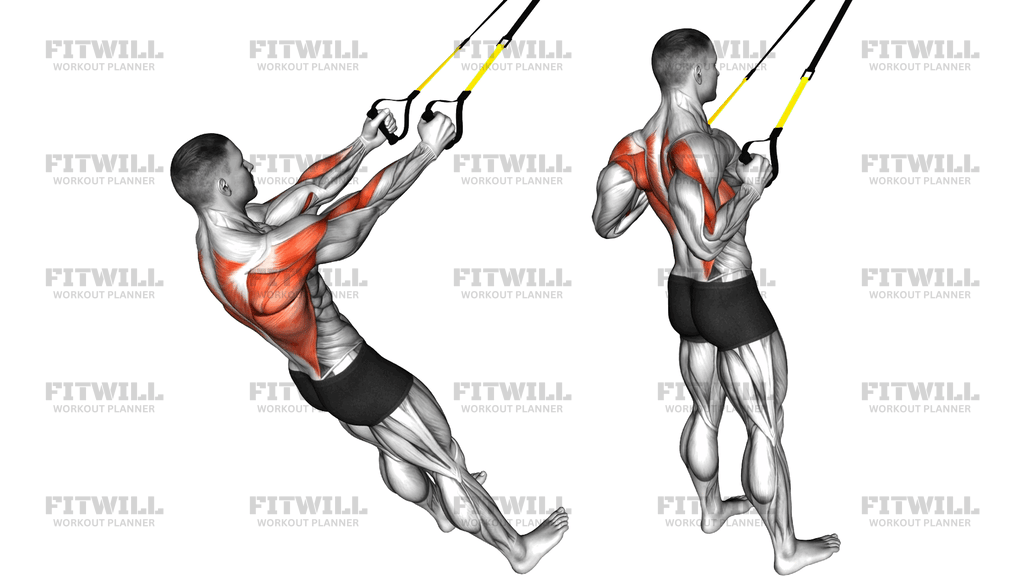
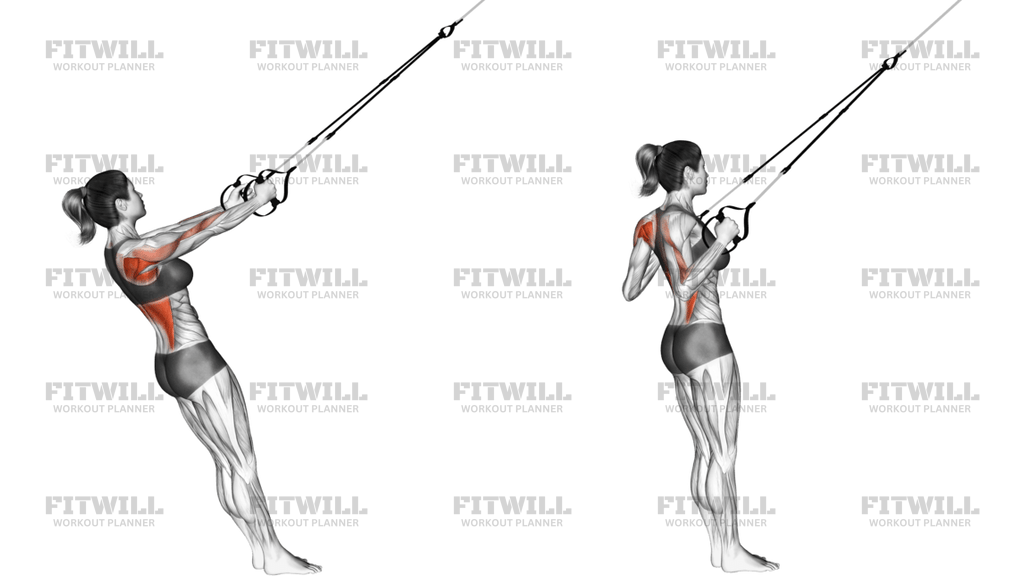
In a row you bend the elbows and pull your chest toward the handles; here your elbows stay fully straight and the only movement is the shoulder blades gliding together and apart. This makes it a pure scapular control exercise rather than a pulling exercise.
How do I make the Suspender Scapular Retraction harder or easier?
Adjust your body angle: walking your feet back toward the anchor deepens the lean and increases the load, while stepping them forward reduces it. You can also add a longer pause at the retracted position to increase difficulty without changing the angle.
Why do my elbows keep bending during this exercise?
Bent elbows usually mean the load is too heavy for your current angle or the movement pattern is unfamiliar. Step your feet forward to a shallower lean and focus on initiating the pull from between the shoulder blades rather than from the hands.
Is the Suspender Scapular Retraction suitable for beginners?
Yes. Because the resistance comes from your own bodyweight at a self-selected angle, even a nearly upright lean gives a meaningful contraction. It is actually one of the best ways to learn what scapular retraction feels like before attempting rows or pull-ups.
Should I feel this in my abs as well?
Some abdominal and hip tension is expected because they hold your plank position against the pull of the straps. However, if your abs burn more than your upper back works, your lean angle is likely too steep for your current core strength.
How high should the suspension trainer be anchored?
Attach it to a secure overhead point so the straps hang clear of the floor when you lean back. Your head and torso should never be at risk of striking the ground; start with a shallow angle until you know how far your body will travel.
Can I use the Suspender Scapular Retraction as a warm-up?
Yes, it works very well as a primer before rows, pull-ups, or overhead pressing. Two or three sets of eight to twelve slow reps at a shallow angle wake up the scapular muscles and reinforce the retraction pattern you need for heavier pulling.
What should I do if the straps twist or the handles slip during the set?
Stop the set, walk your feet forward to unload the straps, and re-adjust them to equal length before continuing. Retracting with uneven straps twists the shoulders and pulls the work away from the target muscles.
Is it safe for my shoulders if they click or feel pinched at the top position?
A mild click without discomfort is common and usually harmless, but sharp pain or pinching means you should reduce the lean angle and shorten the range. If discomfort persists at a shallow angle, consult a qualified professional before continuing.