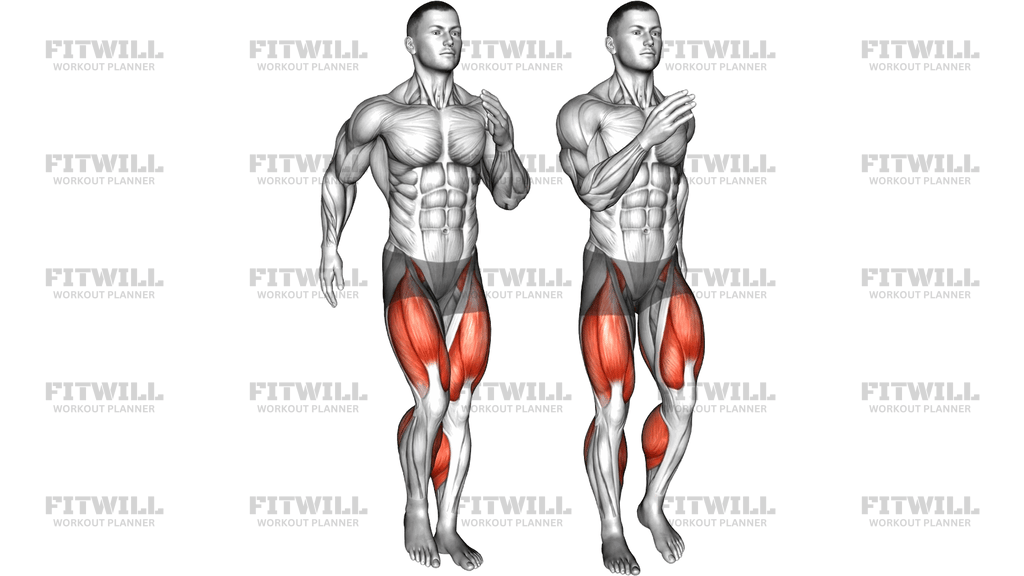
Standing Balance Side To Front Leg Raise
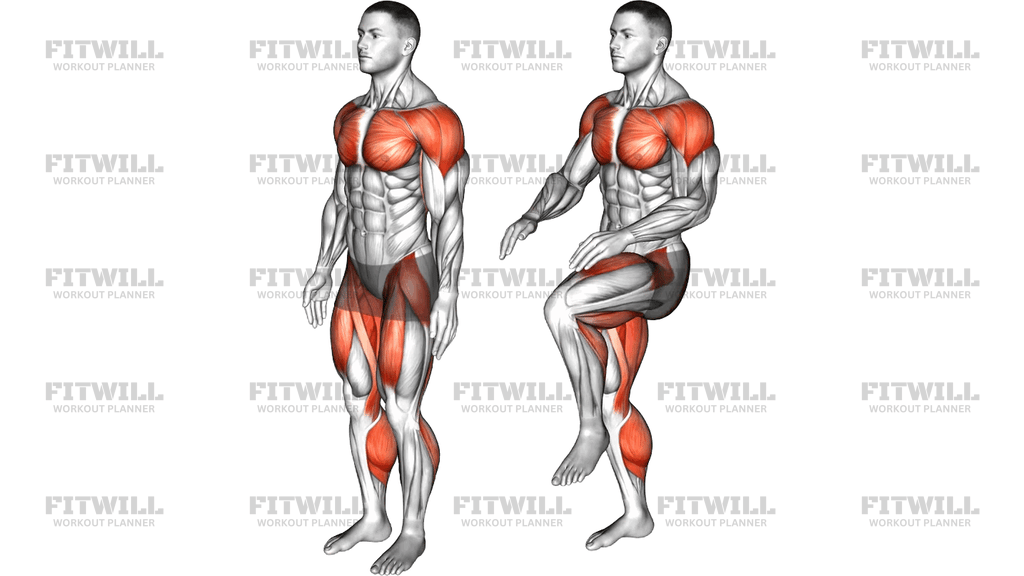
The Standing Balance Side To Front Leg Raise is a body weight movement that challenges two things at once: your ability to lift the free leg with control, and your ability to stay tall and steady on the standing leg while doing it. From a standing position with the arms reaching overhead, you shift your weight onto one leg, raise the other leg out to the side, bring it through to the front without letting it touch the floor, and then lower it under control. That constant shift of the leg's position forces the hip and trunk to keep correcting, which is exactly what makes this drill more demanding than a simple leg raise.
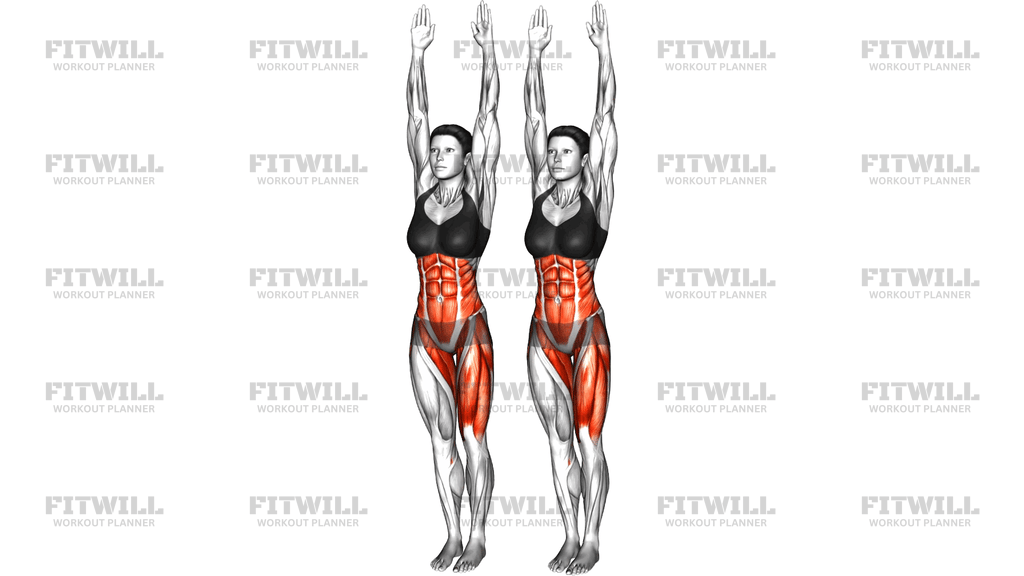
The working muscles change as the leg travels. When the leg lifts to the side, the gluteus medius and other outer hip muscles do most of the lifting; as the leg swings to the front, the hip flexors and the rectus femoris of the quadriceps take over. Meanwhile the standing leg's ankle, knee, and hip stabilizers work overtime, and the abdominals and obliques keep your ribs and pelvis from tipping sideways. The arms overhead position raises your center of gravity, which makes the balance demand noticeably harder than keeping the hands on the hips.
This exercise suits a wide range of people. It is a staple in warm-ups for running, lifting, and field sports because it wakes up the hip stabilizers before heavier work. It is also valuable for older adults and anyone returning from a layoff, since single-leg balance is one of the first abilities to fade and one of the most useful to maintain. Because it needs no equipment and very little space, it fits easily into home routines, hotel room workouts, or the first five minutes of any session.
Setup matters more than it looks. Stand with your feet together or hip-width apart, pick a fixed point at eye level to stare at, and make sure your weight is spread across the whole foot of the standing leg rather than dumped on the toes. If the arch collapses inward or the hip juts out to the side, every repetition gets sloppier from there. Keep the torso upright and the arms long overhead rather than letting them drift or bend, so the shoulders and upper back contribute to the tall posture instead of fighting it.
Execution should feel smooth rather than fast. Lift the leg with intent but without jerking, pause briefly when it reaches the side, draw it forward through a controlled arc to the front, and only then lower it back toward the floor. Height is less important than a quiet, steady torso; a leg at forty-five degrees with a level pelvis beats a high leg with a leaning trunk. Expect your first few reps to wobble, and use a wall or chair nearby for the occasional fingertip touch until the pattern feels automatic.
Treat this as a balance and hip-stability exercise first and a leg-strengthening exercise second. Slow the tempo down, keep the reps moderate, and switch legs before your standing foot starts to ache from gripping the floor. Done this way, it carries over directly to running, hiking on uneven ground, and any single-leg strength work like split squats or step-ups.
[ Workout Log & Planner ]
Put your next workout in Fitwill
Keep your plan and training log ready when you are.


Instructions
- Stand tall with your feet together or hip-width apart and your arms extended straight overhead, palms facing each other or forward.
- Pick a fixed spot at eye level to focus on, then shift your weight fully onto your right foot and spread your weight across the whole foot rather than the toes.
- Brace your abdominals lightly and lengthen through the spine so your ribs stay stacked over your pelvis before you move the free leg.
- Lift your left leg out to the side, leading with the heel and keeping the knee fairly straight or softly bent, stopping at a height where your pelvis stays level.
- Without setting the foot down, sweep the leg forward in a smooth arc until it is raised in front of your body, thigh roughly parallel to the floor or slightly lower.
- Pause for a beat at the front position, then lower the left foot back to the floor under control rather than dropping it.
- Exhale as you lift and sweep the leg, inhale as you lower it, keeping the breath steady instead of holding it.
- Complete all repetitions on the left leg, then shift your weight onto the left foot and repeat the same side-to-front path with the right leg.
- Between sets, shake out the ankles and reset your stance so each set starts balanced rather than fatigued and rushed.
Tips & Tricks
- If you keep losing balance sideways, your standing foot is probably rolling to the outer edge; press the big toe base into the floor to re-center the ankle.
- A common mistake is hiking the hip of the working leg to gain height, which tilts the pelvis and shortens the side raise; lower the target height until the pelvis stays square.
- The arms overhead position only helps if the elbows stay long and the shoulders stay down away from the ears; shrugged shoulders make the whole torso twitchy.
- Do not let the working leg swing with momentum from rep to rep; if the leg is moving faster than you can stop it, the hip muscles are no longer doing the work.
- Keep a soft bend in the knee of the standing leg; locking it straight makes balance harder and stresses the joint with every correction.
- Watching your moving foot pulls your head down and destabilizes you; keep the gaze on your fixed point and let proprioception do the steering.
- If you cannot keep the torso upright, place a hand lightly on a wall or the back of a chair and use it only for a fingertip touch, not to lean on.
- When the standing foot starts to grip and cramp, that is a sign of fatigue in the small foot muscles; finish the set and switch legs rather than pushing through.
- Progress by slowing the tempo and adding a two-second pause at both the side and front positions before increasing the leg height.
Frequently Asked Questions
Which muscles does the Standing Balance Side To Front Leg Raise work the most?
The hip flexors and quadriceps lift the leg to the front, while the gluteus medius and outer hip muscles handle the side lift. The abdominals, obliques, and the stabilizers of the standing leg work continuously to keep you upright.
Why are the arms held overhead during this exercise instead of at the sides?
Raising the arms lifts your center of gravity and makes the balance task harder, so the trunk and standing-leg stabilizers have to work more. If overhead arms are too difficult at first, start with hands on the hips and progress up.
Is the Standing Balance Side To Front Leg Raise suitable for beginners?
Yes, but beginners should use a light fingertip touch on a wall or chair and keep the leg at a modest height. Mastering a level pelvis and steady torso matters more than leg height in the early weeks.
Should the leg stay straight when lifting to the side and front?
A mostly straight leg with a soft knee is standard because it makes the lift harder for the hip muscles, but a slight bend is fine if your hamstrings feel tight. Avoid forcefully locking the knee at the top.
How many repetitions should I do per leg?
Eight to twelve controlled reps per leg is a good working range, with quality stopping the set before fatigue ruins your balance. Two to three sets per side is plenty since the stabilizers fatigue quickly.
Why does my standing foot cramp or grip the floor during this exercise?
The small intrinsic foot muscles are working hard to keep you balanced, and they tire faster than the hips. Shorten the set, spread your toes between sets, and build volume gradually as the foot adapts.
What can I use as a substitute if I cannot balance at all?
Hold a wall or chair with one hand, or perform the same side-to-front leg path while holding a stable support with both hands. Once you can complete the path smoothly, remove support one hand at a time.
Is it a mistake if my torso leans away from the lifting leg?
A small lean is a natural counterbalance, but a large lean usually means the outer hip muscles cannot lift the leg at that height. Reduce the range until the lean is minor and controlled rather than a collapse.
Can the Standing Balance Side To Front Leg Raise replace dedicated core training?
No, it mainly challenges the core in a stabilizing role rather than building strength through loaded flexion or rotation. Use it alongside dedicated core work, not instead of it.
Is this exercise safe for the knees and lower back?
When performed with a soft knee on the standing leg, a level pelvis, and a controlled tempo, it is generally gentle on both. Avoid twisting the torso to chase height, and stop if you feel joint pain rather than muscle effort.