Standing Spine Imbalance And Pelvic Imbalance Hold
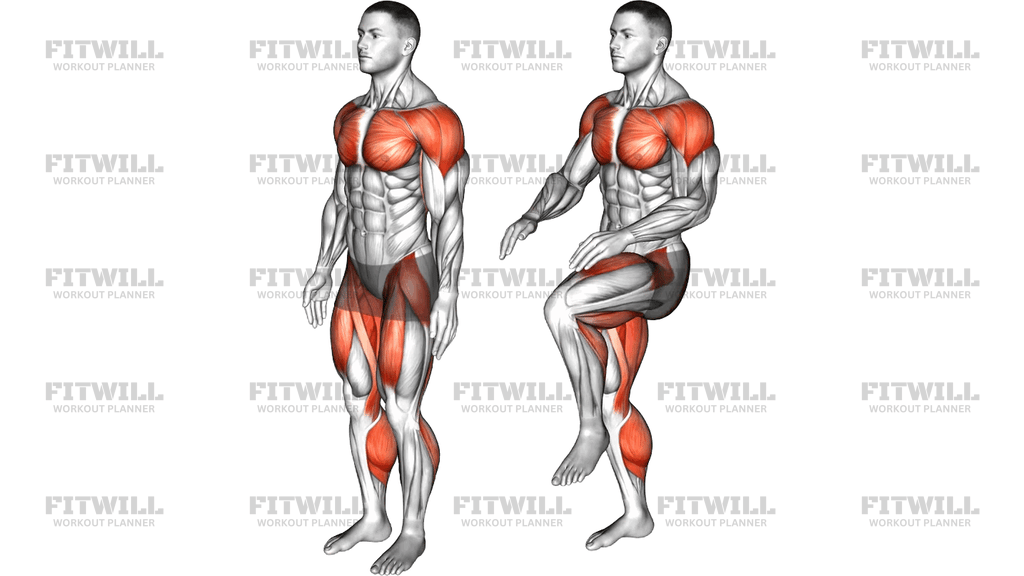
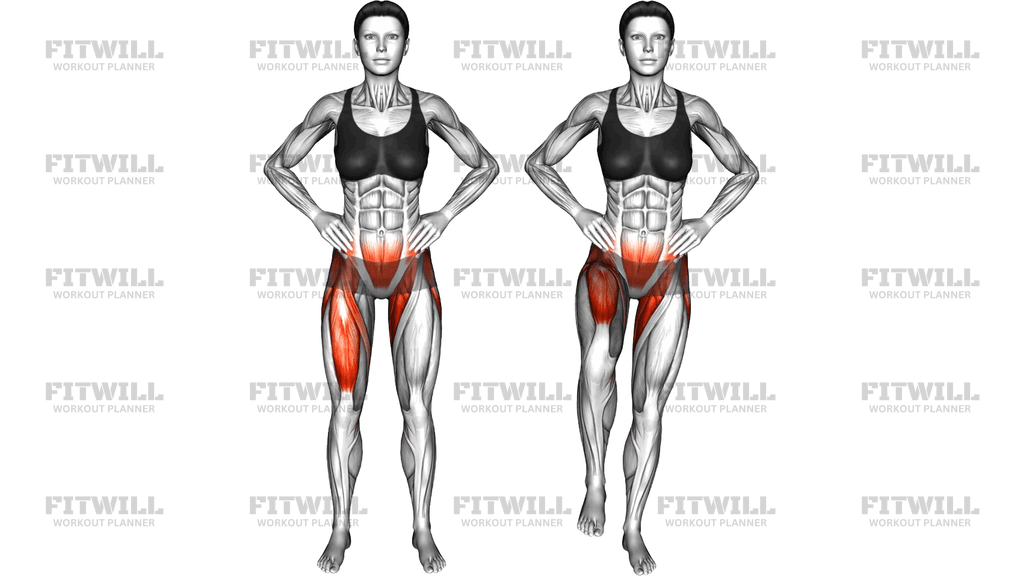
The Standing Spine Imbalance And Pelvic Imbalance Hold is a bodyweight balance exercise performed on one leg with the hands placed on the hips. The goal is not to move through a range of motion, but to hold a stable single-leg stance while deliberately challenging the alignment between your spine and pelvis. Because one foot leaves the floor, your body instantly loses its symmetrical base, and the muscles around the hips and trunk have to work to keep you level instead of tipping toward the unsupported side.
This hold is especially useful for people who spend long hours sitting, runners and lifters who notice one side of their hips working harder than the other, and anyone rehabbing back into single-leg activities like walking, stair climbing, or lunging. When you stand on one leg, the standing hip must keep the pelvis from dropping while the trunk keeps the spine from leaning or rotating to compensate. Those two jobs — controlling the spine and controlling the pelvis — are exactly what this exercise trains together.
The primary work comes from the hip flexors and quadriceps on the lifted leg as you hold it in a raised position, along with the glutes and deep core on the standing side as they fight to keep your hips square. The obliques and lower back muscles contribute constant small corrections to stop your torso from swaying. Nothing is loaded externally; your own bodyweight and the asymmetry of the stance provide all the challenge.
Setup matters more than duration here. Hands on the hips act as a built-in feedback system — you can literally feel one side of your pelvis rising or dropping through your palms. A tall spine, soft knees, and even weight through the standing foot create the conditions for an honest hold. If the setup is sloppy, you will end up leaning, hitching a hip, or resting the lifted foot on the floor, and the intended stabilizing work disappears.
To execute it well, stand tall, place your hands on the fronts of your hips, shift your weight fully onto one leg, and lift the opposite foot just off the floor with the knee bent. Hold that position with your shoulders level and both hips facing forward, breathing steadily, for the target time before switching sides. Expect some wobble — that is the training stimulus, not a flaw. Keep use of support minimal and only for safety.
Use this hold as a warm-up primer before lower-body training, as a standalone balance drill on off days, or as a corrective pairing with unilateral strength work like split squats and step-ups. Stop the hold when your form breaks — a dropped hip, a leaning torso, or a foot that needs to touch down — rather than pushing through poor positions.
[ Workout Log & Planner ]
Put your next workout in Fitwill
Keep your plan and training log ready when you are.


Instructions
- Stand with your feet roughly hip-width apart, weight spread evenly, and arms relaxed at your sides.
- Place both hands on the front of your hips with your palms flat and fingers pointing down, so you can feel the level of each side of your pelvis.
- Roll your shoulders back and down, lengthen through the crown of your head, and gently brace your abdominal wall as if preparing for a light push to the stomach.
- Shift your full bodyweight onto one leg, keeping a soft bend in the standing knee rather than locking it straight.
- Lift the opposite foot just off the floor, bending that knee so the foot hangs behind or beside you without touching down.
- Hold the position: keep both hips facing forward and level, shoulders square, and spine tall — use your hands on the hips to check that one side is not dropping or hiking up.
- Breathe steadily through your nose and mouth while you hold; avoid holding your breath as the balance gets harder.
- Hold for the planned time, then lower the lifted foot back to the floor with control instead of letting it drop.
- Reset your stance and breathing, then repeat the hold on the other leg for the same duration.
- Complete equal holds on both sides, resting briefly between reps as needed.
Tips & Tricks
- The most common mistake is letting the pelvis drop on the side of the lifted leg — press the standing foot firmly into the floor and think about keeping both hands on your hips at exactly the same height.
- If you find yourself leaning your torso away from the lifted leg to counterbalance, shorten the hold instead of leaning; an upright spine is the point of the drill.
- Avoid locking the standing knee straight. A rigid knee removes the ankle and thigh stabilizers from the job and makes the hold less effective.
- Do not twist the lifted leg across your body for balance; keep the knee of the raised leg pointing forward like the standing one.
- If wobbling takes over completely, stand near a wall and let one fingertip touch it only when truly needed — the goal is minimal, not constant, support.
- Start with shorter holds of 10 to 15 seconds per side and build up; a long, sloppy hold teaches worse balance than a crisp, shorter one.
- Check your feet: gripping the floor with the toes of your standing foot is a sign you are losing hip control. Spread the toes and keep pressure through the whole foot instead.
- Keep your gaze on a fixed point at eye level. Looking down at your feet or around the room amplifies sway in a single-leg stance.
- Match the hold time exactly on both sides. If one side is noticeably harder, note it — that asymmetry is useful feedback for your broader training.
Frequently Asked Questions
What muscles does the Standing Spine Imbalance And Pelvic Imbalance Hold work?
The hip flexors and quadriceps of the lifted leg do the most visible work, while the glutes and deep core on the standing side stabilize the pelvis. The obliques and lower back muscles contribute continuous small corrections to keep the spine upright.
Why are the hands placed on the hips during this hold?
Hands on the hips give you direct feedback: if one side of your pelvis drops or hikes, you feel it immediately through your palms. They also discourage arm swinging, which many people use to fake stability in single-leg holds.
Is the Standing Spine Imbalance And Pelvic Imbalance Hold suitable for beginners?
Yes, because it uses no load and requires no equipment. Beginners should start with 10 to 15 second holds near a wall for safety and focus entirely on keeping the hips level rather than on hold duration.
How long should I hold each side?
Aim for a hold length you can complete with level hips and a tall spine, typically starting at 10 to 20 seconds per side. When your pelvis starts tilting or your torso leans, the set is over regardless of the clock.
My standing hip drops when I lift the other leg — how do I fix it?
That is a common sign the standing-side glutes need more work. Shorten the hold, consciously drive the standing hip into a level position, and use light fingertip support from a wall until you can hold the position honestly.
Can I use this exercise as a warm-up?
It works well as a warm-up primer before squats, lunges, running, or any single-leg training, because it wakes up the hip stabilizers and trunk control those movements rely on. Keep the holds short and crisp rather than fatiguing.
What can I substitute if single-leg balance is too difficult right now?
Stand with the lifted foot hovering just an inch off the floor, or keep the ball of the lifted foot lightly touching the ground while still shifting most weight to the standing leg. A wall or sturdy chair within fingertip reach is also a fair progression tool.
Should the lifted knee be high or low during the hold?
The knee only needs to bend enough that the foot clears the floor — a modest lift keeps the hip flexors engaged without pulling your pelvis into a tilt. Raising the knee high usually causes the lower back to arch and the hips to tip, which defeats the purpose.
Is it normal to wobble during the Standing Spine Imbalance And Pelvic Imbalance Hold?
Yes, some sway is expected and is part of how the stabilizers adapt. However, if the wobble forces you to lean, hitch a hip, or touch the foot down, end the hold and rest before the next rep.