Overhead Push Alternate Knee Raise
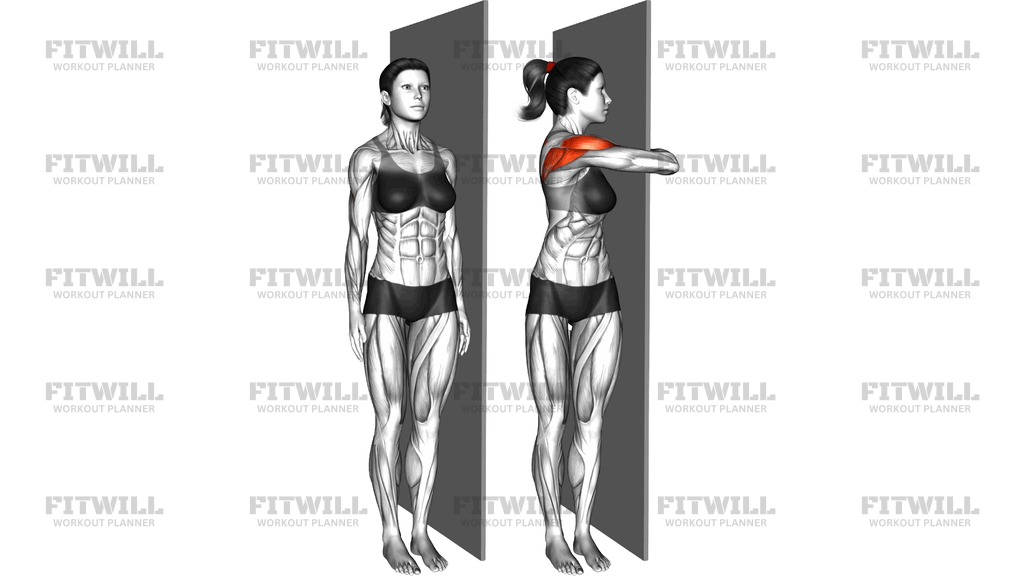
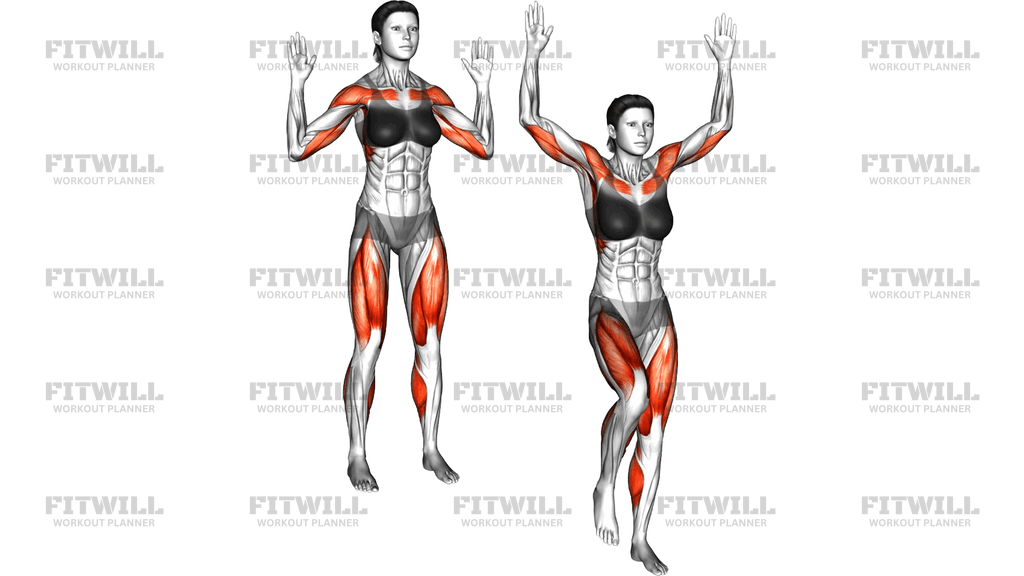
The Overhead Push Alternate Knee Raise is a standing body weight drill that combines an overhead arm position with an alternating knee lift. You start with both arms pressed straight up and locked out overhead, then drive one knee up toward hip height while keeping the arms extended, lower it, and repeat with the opposite knee. Because the arms stay elevated the entire time, your shoulders and upper back have to keep working isometrically while the legs and trunk do the dynamic portion of the movement.
This is a useful exercise for people who want to train shoulder endurance and trunk control at the same time without any equipment. The overhead hold challenges the delts and triceps to maintain full extension, while each knee raise forces the hip flexors and lower abs to work against a braced torso. Balancing on one leg as the other knee comes up also wakes up the stabilizers around the standing hip and ankle, which is something most seated or machine-based work never asks for.
Setup matters more than it looks. With the arms overhead, many people arch their lower back and let the ribs flare forward, which turns the movement into a low back stress test instead of a core drill. Before you lift the first knee, squeeze the glutes lightly, tuck the ribs down, and pull the belly button in so the pelvis sits in a neutral position. That locked-in torso is what allows the knee raise to train your abs and hip flexors rather than hanging off your spine.
To execute it well, think of the knee drive as a controlled punch upward, not a swing. Lift the knee to roughly hip height, pause for a beat, then lower it under control so your foot kisses the floor instead of crashing down. Keep the arms reaching tall throughout — the moment your elbows start to bend or your hands drift down, the shoulder work quietly disappears. Alternate legs for the desired number of repetitions on each side.
This drill fits well into warm-ups, circuit training, and home workouts where no equipment is available. It also works as a low-impact conditioning move: performed at a steady rhythm for longer sets, it raises your heart rate while still demanding posture and balance. If you spend long hours sitting, the combination of overhead reach and standing knee drive is a practical way to open up the shoulders and hips together.
[ Workout Log & Planner ]
Put your next workout in Fitwill
Keep your plan and training log ready when you are.


Instructions
- Stand tall with your feet about hip-width apart and your arms raised straight overhead, palms facing each other or slightly forward.
- Squeeze your glutes lightly and draw your ribs down so your lower back is not arched, then brace your abs as if preparing for a light push.
- Shift your weight slightly onto one leg, keeping that knee soft rather than locked.
- Exhale and drive your opposite knee upward toward hip height, keeping your torso upright and your arms fully extended overhead.
- Pause briefly at the top of the knee lift without letting your ribs flare or your hands drop forward.
- Inhale and lower the foot back to the floor under control, placing it down softly instead of dropping it.
- Immediately repeat the knee raise on the other leg, keeping the rhythm smooth and even between sides.
- Continue alternating legs for the target number of repetitions per side while the arms stay locked out overhead.
- When you finish the set, lower the arms with control to avoid a sudden drop in blood pressure, then reset your posture before the next set.
Tips & Tricks
- If you feel your lower back arching during the knee drive, reduce the lift height until you can keep the pelvis neutral — hip height is a target, not a requirement.
- Bending the elbows as the set gets tiring is the most common breakdown; when you notice it, either reset the arms or end the set rather than training with a half overhead position.
- Keep the lifting knee pointing forward or slightly inward; letting the leg swing out to the side shifts work away from the hip flexors and abs and challenges balance unnecessarily.
- Move slower than feels natural at first — the pause at the top of each knee raise is where the trunk control is actually built.
- If standing balance is the limiting factor, stand next to a wall and touch it lightly with one hand instead of dropping the overhead arm position.
- Avoid holding your breath; exhale on the knee drive and inhale on the lower to keep the brace steady across a full set.
- Keep the neck relaxed and look straight ahead — reaching the hands higher should come from the shoulders, not from shrugging up to the ears.
- For a conditioning version, keep a consistent tempo rather than rushing; speeding up usually flattens the knee drive and shortens the overhead reach.
Frequently Asked Questions
What muscles does the Overhead Push Alternate Knee Raise work?
The shoulders and triceps work isometrically to hold the arms locked out overhead, while the hip flexors and lower abs drive each knee up. The standing leg's glutes, quads, and ankle stabilizers keep you balanced throughout.
Is the Overhead Push Alternate Knee Raise suitable for beginners?
Yes, because it uses only body weight and the range can be scaled. Beginners can lift the knee lower, slow the tempo, or stand near a wall for light balance support.
Why should my arms stay overhead the whole time instead of pressing with each rep?
The sustained overhead hold is what trains shoulder endurance and forces the trunk to brace while the legs move. If the arms drop or bend, the exercise turns into a plain standing knee raise and loses that demand.
How high should I lift each knee?
Aim for roughly hip height, but only as high as you can go without your lower back arching or your ribs flaring forward. A shorter lift with a neutral pelvis trains the abs better than a higher lift that hangs off the spine.
My lower back aches when doing the Overhead Push Alternate Knee Raise — what am I doing wrong?
This usually means the pelvis is tipping forward as the knee comes up, often because the abs are not braced or the ribs are flared. Squeeze the glutes, tuck the ribs down before starting, and reduce the lift height until the ache disappears.
Can I use this exercise for cardio and conditioning?
Yes. Performed at a steady, continuous rhythm for longer sets, it elevates the heart rate while still requiring posture and balance, making it a solid low-impact conditioning option for circuits or home workouts.
What can I substitute if standing balance is too difficult?
Try a seated knee raise on a bench with the arms still overhead, or perform the standing version next to a wall with one fingertips-width of contact. Both preserve the overhead hold and the hip flexor drive.
How many repetitions should I do per side?
For strength-endurance and trunk control, 8 to 15 controlled knee raises per side works well. For conditioning, time the set for 30 to 45 seconds and stop when your arms start to bend or your form shortens.
Should the knee raise be fast or slow?
Start slow and deliberate, with a short pause at the top of each lift. Once you can hold the overhead position and a neutral pelvis without thinking about it, you can gradually speed up the rhythm.
Is it safe to hold my arms overhead if I have shoulder discomfort?
If overhead positions cause pain, lower the arms to a comfortable height or work with slightly bent elbows and rebuild tolerance gradually. Persistent shoulder discomfort should be checked by a qualified professional before continuing.