Slight Squat Back Shoulder Rotation
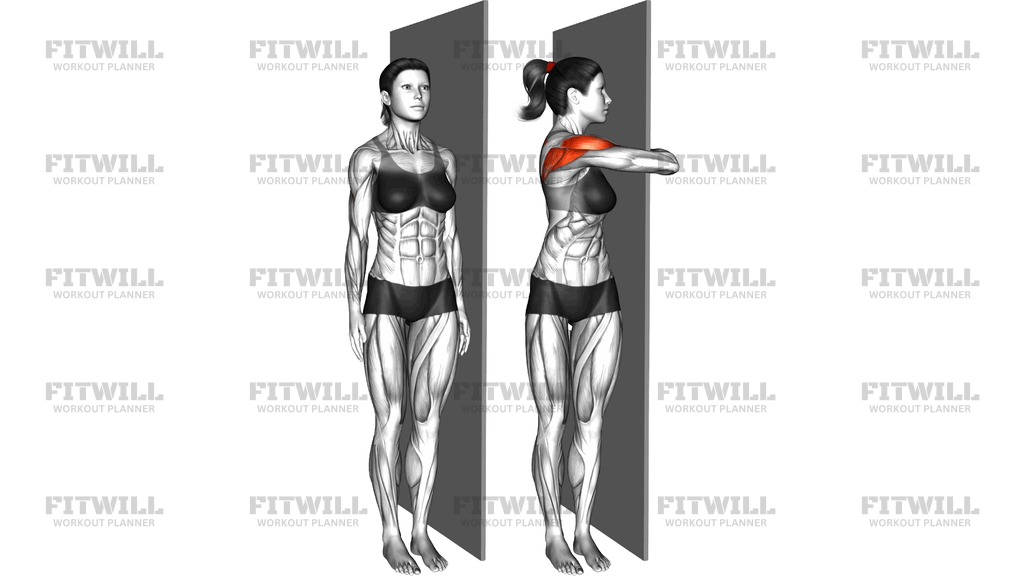
The Slight Squat Back Shoulder Rotation is a bodyweight mobility and activation drill that combines a wide, soft-knee stance with large backward arm circles. You start with both arms reaching straight overhead, then sweep them out and down through a wide arc while your hips drop into a shallow squat, before rotating them back up to the start. The result is one continuous circular path for the shoulders, layered over a stable lower-body position.
This movement is a favorite as a warm-up before pressing, pulling, or overhead work, because it takes the shoulders through their full range under no load. It also works well as a standalone mobility reset for anyone who spends long hours sitting, since it opens the chest and lats while gently waking up the thighs and hips. The slight squat is not just a stance choice: bending the knees slightly and sitting the hips back lowers your center of gravity and forces the core and legs to hold you steady while the arms move.
The primary work happens in the deltoids and the rotator cuff, which control the arm as it travels through the wide backward circle. The upper back and mid-traps engage as the shoulder blades glide through the rotation, and the quads and glutes work isometrically to maintain the squat position. Because there is no external resistance, the value comes from range of motion, control, and rhythm rather than strength overload.
Setup matters more than it looks. A stance about shoulder-width to slightly wider, with toes turned out a few degrees, gives the hips room to sit down without the knees collapsing in. The slight squat should feel like a quarter of the way down, with weight spread across the whole foot and the torso upright. If you stand too tall, the arms tend to swing from the lower back instead of the shoulder; if you squat too deep, the rotation usually gets sloppy and rushed.
To execute it well, think of your fingertips tracing the biggest circle possible. Reach tall at the top, let the arms carve out and down to the sides, feel a gentle stretch across the chest at the bottom of the arc, and then rotate the arms back up behind you. Keep the elbows long and mostly straight, the neck relaxed, and the ribs stacked over the pelvis so the lower back does not arch to fake extra shoulder range. Move at a steady, unhurried tempo rather than flinging the arms.
Most people use this drill for 10 to 20 controlled rotations as part of a warm-up, or a few sets of 30 to 60 seconds when breaking up desk time. If either shoulder is cranky, shrink the circle first and only widen it as the joint warms up. Stop and reduce the range if you feel pinching at the front of the shoulder rather than a working, stretching sensation through the chest and shoulders.
Fitwill
Log Workouts, Track Progress & Build Strength.
Achieve more with Fitwill: explore over 9600 exercises with images and videos, access built-in and custom workouts, perfect for both gym and home sessions, and see real results.
Start your journey. Download today!




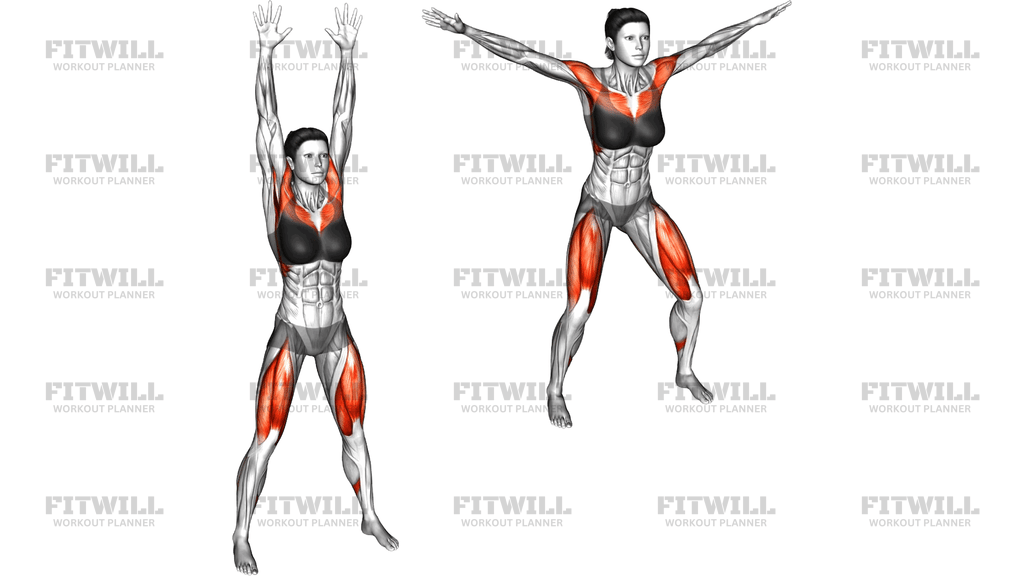
Instructions
- Stand with your feet about shoulder-width apart or slightly wider, toes turned out a few degrees, arms resting at your sides.
- Raise both arms straight overhead with palms facing each other or slightly turned out, elbows long and shoulders pulled down away from your ears.
- Sit your hips back and bend your knees into a shallow quarter squat, keeping your torso upright and your weight spread across both whole feet.
- Brace your core lightly and hold this slight squat position for the entire set instead of bobbing up and down with each circle.
- Sweep both arms out to the sides and down in a wide arc until they are level with or slightly below your shoulders, palms facing forward.
- Continue the circle by rotating the arms back and up behind you, keeping the elbows nearly straight so the shoulder joint does the rotating.
- Finish each rep back at the top with arms overhead, then begin the next circle without pausing.
- Breathe steadily throughout: inhale as the arms sweep down and open the chest, exhale as they rotate back up overhead.
- Complete 10 to 20 controlled rotations, then stand all the way up, shake out the arms, and reset your stance before the next set.
Tips & Tricks
- The most common mistake is swinging the arms fast and letting momentum drive the circle. Slow the tempo down so the deltoids and rotator cuff actually control every part of the arc.
- If you feel a pinch at the front of the shoulder at the top of the circle, angle your arms slightly forward instead of straight overhead and shrink the circle until the pinch disappears.
- Watch that your knees do not drift inward as the arms get heavy with fatigue. Press the knees gently out over the toes the whole time you are in the slight squat.
- Do not let your lower back arch to reach taller at the top. Keep the ribs stacked over the pelvis and get your height from a long reach of the arms, not from extending the spine.
- Keep your heels glued to the floor. If you rise onto your toes during the rotation, your stance is too narrow or your squat is too deep for your current hip mobility.
- A useful cue is to imagine your fingertips painting the wall behind you as the arms rotate back. This keeps the circle wide instead of collapsing into small circles by your ears.
- If your shoulders feel tight at the start of a session, do the first 5 rotations with a smaller, more comfortable arc and gradually widen it rep by rep.
- Keep the neck relaxed and the jaw loose. Many people unconsciously shrug and tense the upper traps overhead, which defeats the purpose of the shoulder-blade rotation.
- Stop at the bottom of the arc for a two-second chest stretch on a few reps if you sit a lot during the day; the open-arm position is a great place to spend an extra breath.
Frequently Asked Questions
What muscles does the Slight Squat Back Shoulder Rotation work?
The deltoids and rotator cuff do most of the work controlling the backward arm circles, with the mid and upper traps assisting as the shoulder blades rotate. The quads and glutes work isometrically to hold the slight squat position.
Why does this exercise use a slight squat instead of standing tall?
The shallow squat lowers your center of gravity and forces the legs, hips, and core to stabilize while the arms rotate, which adds a coordination and lower-body endurance element. It also discourages swinging from the lower back, so the rotation stays in the shoulder joint where it belongs.
How deep should the squat be during the Slight Squat Back Shoulder Rotation?
Only about a quarter of the way down, with knees softly bent, torso upright, and heels flat. If you squat deeper, most people lose quality in the arm rotation and the knees tend to drift inward.
Is the Slight Squat Back Shoulder Rotation a good warm-up before bench pressing or overhead pressing?
Yes, it takes the shoulders through a full backward arc with no load, raises the heart rate slightly, and pre-activates the delts and rotator cuff. Do 10 to 20 smooth rotations before your first working set.
How many reps and sets should I do?
For a warm-up, one or two sets of 10 to 20 rotations at a controlled tempo is plenty. As a standalone mobility break, 2 to 3 sets of 30 to 60 seconds of continuous circling works well.
My shoulders click or pinch during the rotation. Is that normal?
A painless click is common and usually harmless, but pinching or sharp discomfort is a signal to shrink the circle and angle the arms slightly forward. If the pinch persists at smaller ranges, skip the drill and have it assessed before pushing through it.
Can beginners do the Slight Squat Back Shoulder Rotation?
Absolutely. Because it uses no equipment or external load, the only requirements are standing balance and a comfortable quarter squat. Beginners can reduce the circle size and slow the tempo to learn the path first.
What can I use instead if standing is uncomfortable?
Seated arm circles on a bench or stability ball give you the same shoulder rotation without the squat component, though you lose the leg work. Once standing feels fine, return to the full Slight Squat Back Shoulder Rotation.
Should my elbows stay straight during the rotation?
Keep them long and nearly straight so the shoulder joint, not the elbows, drives the circular path. Bending the elbows shortens the arc and turns the drill into a much smaller, less effective movement.
Is it a strength exercise or a mobility exercise?
It sits in between: it builds light, controlled strength endurance in the delts and stabilizing leg muscles, but most people use it primarily for shoulder mobility and warm-up rather than for building maximal strength.