Dumbbell Seated Triceps Extension (Version 2)
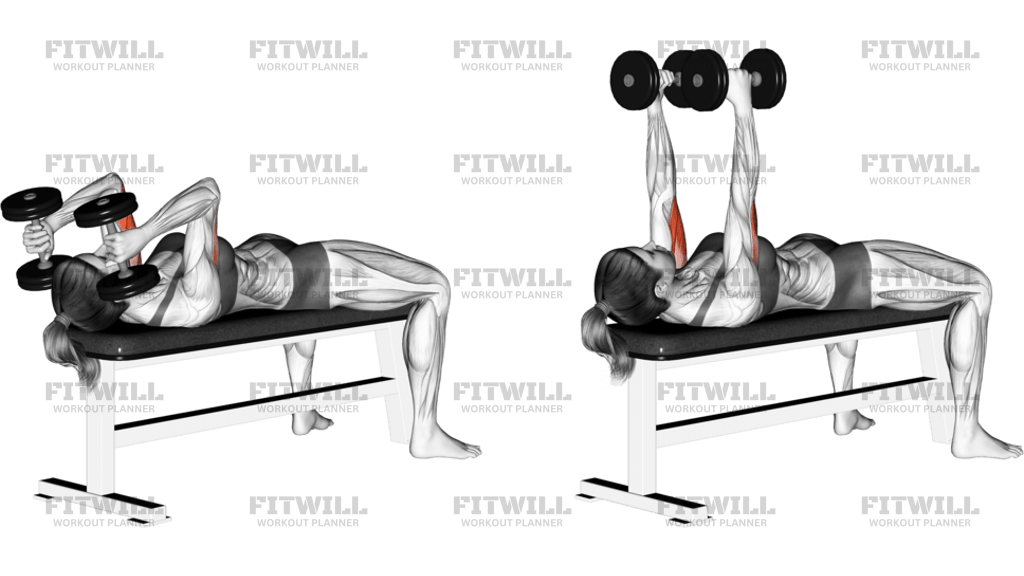
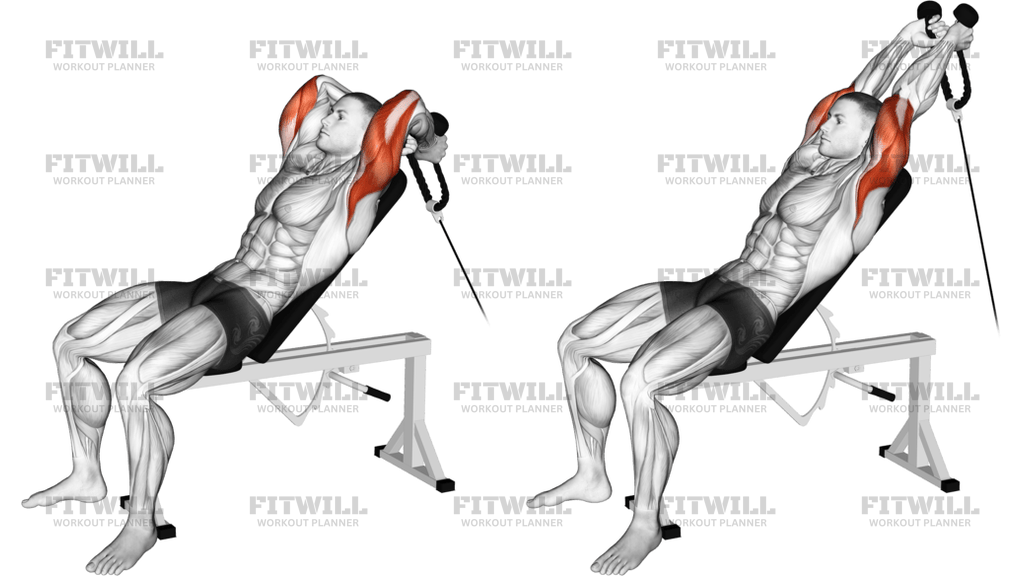
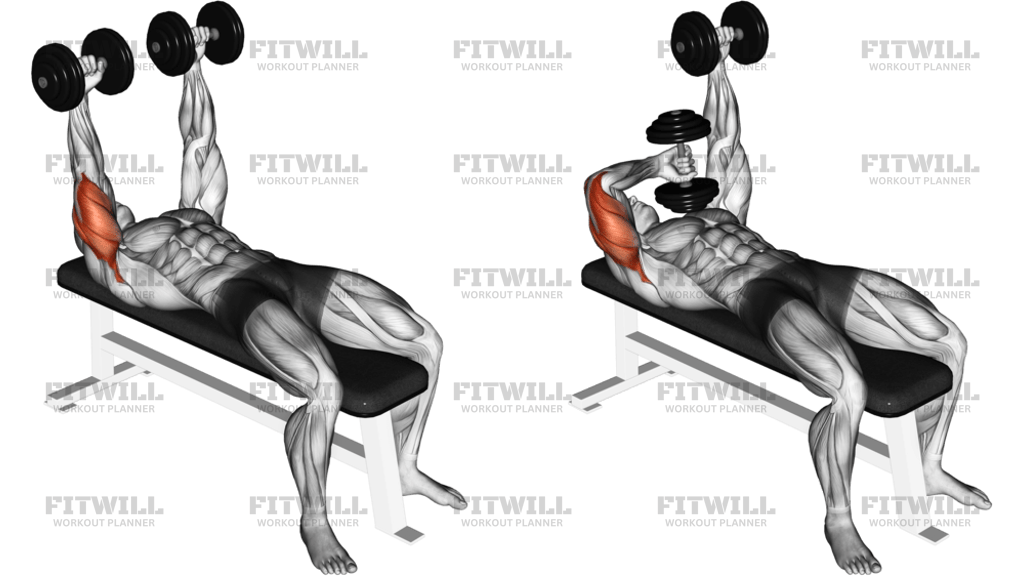
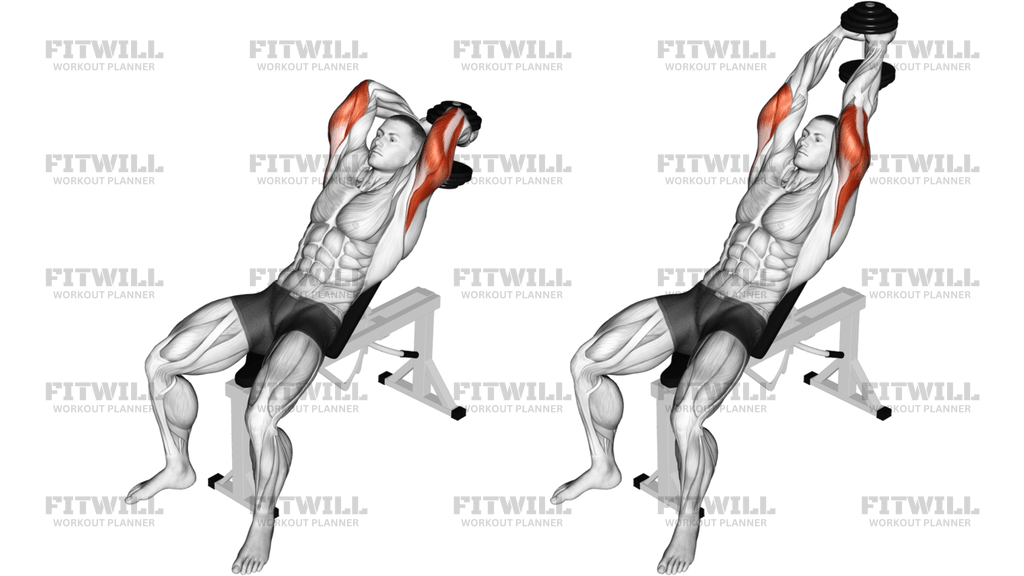
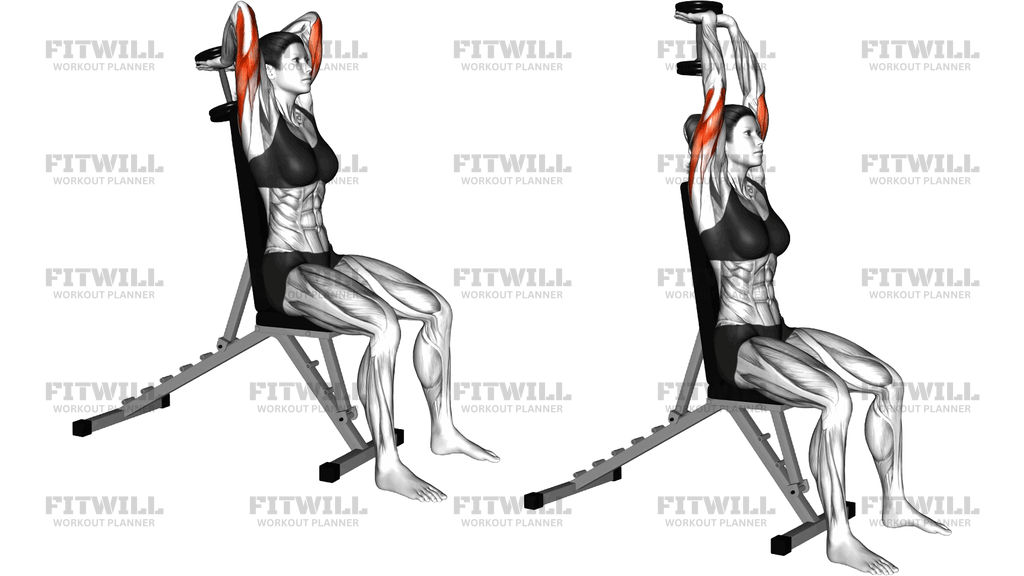
The Dumbbell Seated Triceps Extension (Version 2) is an overhead extension performed with a single dumbbell held in both hands while you sit upright on a bench. You press the dumbbell straight overhead, then bend your elbows to lower the weight behind your head before extending back up to the top. Because you work one dumbbell with both hands, each arm has to share the load evenly, which quickly exposes any strength difference between your left and right triceps.
The main muscle at work is the triceps brachii, with particular emphasis on the long head. That matters because the long head crosses the shoulder joint, and the overhead position puts it on a stretch, which is hard to replicate with pushdowns or other elbow-only movements. Your shoulders and upper back work isometrically to keep the weight stable overhead and stop your torso from leaning as the dumbbell travels behind you.
The seated setup is what separates this version from a standing overhead extension. Sitting against the upright back pad of the bench removes the tendency to arch your lower back and turn the movement into a standing press. It also lets you focus entirely on moving the load with your elbows rather than using momentum from your hips or spine. Keeping your feet flat on the floor and your back in contact with the pad gives you a stable base for the whole set.
To perform it well, think of your upper arms as fixed vertical posts beside your ears. Only the forearms should travel. If your elbows flare forward or drift apart as you lower, the dumbbell pulls your shoulders out of position and the triceps lose tension. A controlled lowering phase of two to three seconds, a brief pause behind your head, and a strong but smooth press back up is all the movement needs.
This exercise fits well as a primary triceps builder on arm or upper-body days, especially for lifters who already include pushdowns and want a version that targets the long head through a longer range. It is also a practical choice for home training, since a single dumbbell and a bench with a backrest are all you need. Start lighter than you expect, master the overhead path, and progress the weight gradually as your control improves.
Fitwill
Log Workouts, Track Progress & Build Strength.
Achieve more with Fitwill: explore over 9600 exercises with images and videos, access built-in and custom workouts, perfect for both gym and home sessions, and see real results.
Start your journey. Download today!




Instructions
- Sit on a bench with an upright back pad and plant both feet flat on the floor about hip-width apart.
- Hold one dumbbell vertically with both hands cupped under the top head of the weight and press it straight up overhead until your arms are fully extended.
- Draw your shoulder blades down, brace your abdominal muscles, and keep your ribs stacked over your hips with your back in contact with the pad.
- Position your upper arms so your elbows point forward and stay close to your head, roughly in line with your ears.
- Bend only at the elbows and lower the dumbbell behind your head in a slow arc until you feel a stretch along the back of your arms.
- Pause briefly at the bottom without letting your elbows flare outward or your lower back arch off the pad.
- Press the dumbbell back up by straightening your elbows until your arms are fully extended overhead and your forearms are vertical again.
- Exhale as you press up and inhale as you lower the weight behind your head.
- Complete your repetitions, then set the dumbbell down on your thighs or the floor by reversing the press in a controlled manner before standing up.
Tips & Tricks
- Most people go too heavy too soon on this movement. Because the weight passes behind your head, a dumbbell you can press easily overhead may still pull you out of position, so build up gradually.
- If your elbows drift wide as you lower, consciously squeeze them toward each other. Wide elbows let the shoulders take over and reduce the stretch on the triceps long head.
- Keep your head neutral and your chin slightly tucked. Craning your neck forward to watch the dumbbell is a common habit that strains the neck during the descent.
- If your lower back arches off the pad, tighten your abs before the set starts and think about pulling your ribs down toward your hips.
- Lower only as far as you can while keeping your upper arms vertical. Forcing extra depth by swinging your elbows forward turns the rep into a shoulder stretch instead of a triceps extension.
- A spotter can stand behind you and support the dumbbell by the top head if you fail a rep, which is much safer than dropping an overhead weight.
- If one side feels weaker, slow down the lowering phase and make sure your stronger arm is not doing more of the lifting, since the shared grip hides side-to-side differences.
- Rest the dumbbell on your thighs between sets rather than swinging it back overhead with momentum to start the next rep.
Frequently Asked Questions
Which muscles does the Dumbbell Seated Triceps Extension (Version 2) work?
The triceps brachii is the primary mover, with strong involvement of the long head due to the overhead position. The front shoulders and upper back assist by stabilizing the dumbbell overhead throughout the set.
Why is the dumbbell lowered behind the head instead of in front?
Lowering behind the head keeps the elbows high and places the long head of the triceps under a deep stretch. This gives the movement a longer working range than a pushdown or a close-grip press.
Is the Dumbbell Seated Triceps Extension (Version 2) suitable for beginners?
Yes, as long as beginners start with a light dumbbell and learn the overhead path first. The seated position against a back pad actually makes it easier to control than the standing version.
How should I grip the dumbbell for this exercise?
Hold the dumbbell vertically with both hands cupped around the top head of the weight, fingers interlaced or overlapping. This shared grip keeps the load balanced and centered as it passes over your head.
What is the most common mistake in the Dumbbell Seated Triceps Extension (Version 2)?
Letting the elbows flare outward or drift forward during the lowering phase. When that happens, tension shifts away from the triceps and the shoulder joint absorbs stress it was not positioned to handle.
Can I do this exercise standing instead of seated?
You can, but standing makes it much easier to arch your lower back and use momentum. The seated version against a back pad locks your torso in place and keeps the work on the triceps.
How heavy should the dumbbell be?
Choose a weight you can lower under control for all planned repetitions without your elbows wandering or your back arching. Overhead positions demand more stability than pressing at chest height, so expect to use less weight than a comparable press.
What can I use if I do not have a bench with a back pad?
Any sturdy seated position with back support works, such as a bench placed against a wall or a strict seated posture on a flat bench. Without support, be extra deliberate about bracing your core and keeping your ribs down.
Is it safe for my shoulders and elbows?
When performed with controlled tempo and a moderate weight, it is a standard triceps exercise. Warm up your elbows and shoulders first, avoid forcing extra depth behind your head, and stop if you feel pinching rather than a muscle stretch.