Gate Openers (Beginner)
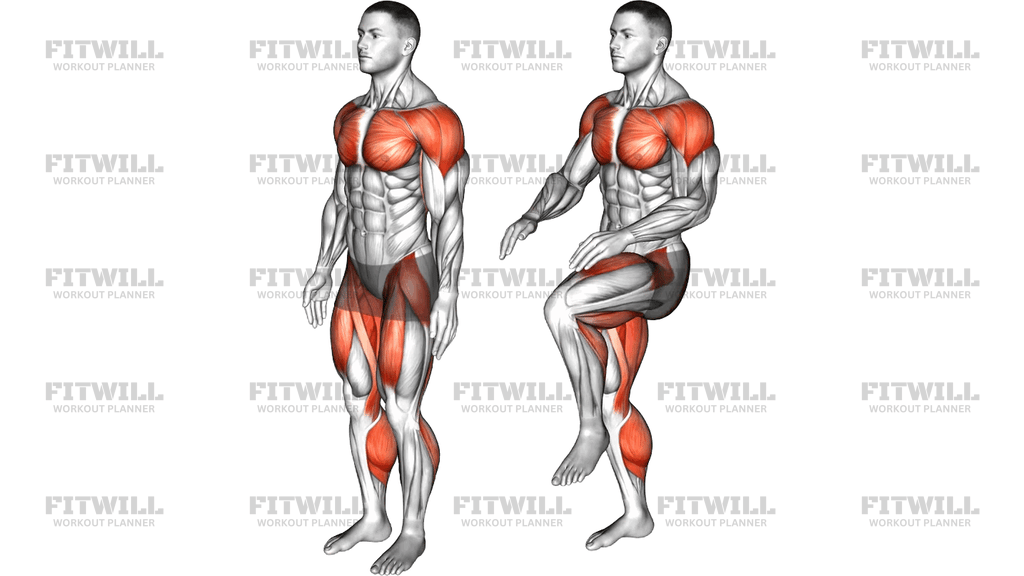
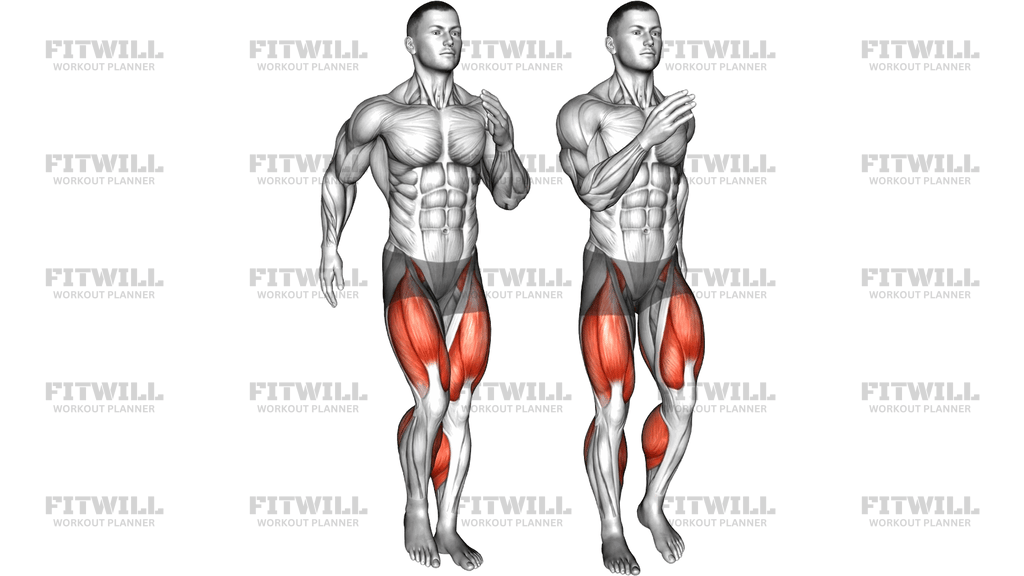
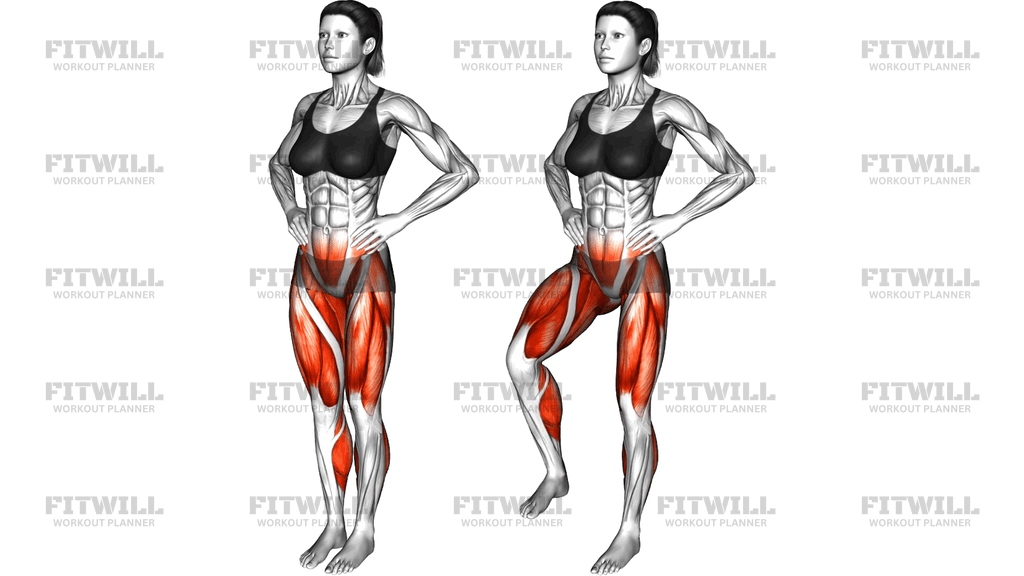
Gate Openers is a standing hip mobility and activation drill where you lift one knee up and rotate it out to the side, mimicking the swing of a gate opening. The movement takes the hip through flexion and external rotation in one smooth arc, then returns it to the floor under control. Because it is done standing on one leg, it doubles as a balance exercise, which is why it works so well as a warm-up before squats, lunges, or running.
The exercise mainly trains the hip flexors at the front of the hip as they lift the thigh, while the outer hip muscles, including the gluteus medius and deep rotators, control the rotation. Meanwhile the standing leg has to work hard: the glutes and smaller stabilizers around the ankle and foot keep you steady as your weight shifts over one leg. Your core stays engaged the whole time to stop your torso from tilting or twisting as the knee travels.
Setup matters more than most people expect. You need a tall spine, hands on the hips or one hand on a wall for support, and weight spread evenly across the standing foot before the leg starts moving. If you rush or lean, the knee will swing forward instead of traveling through the clean arcing path that gives the drill its name, and you lose most of the hip rotation benefit.
To perform Gate Openers well, lift the knee to roughly hip height, pause, then rotate it out to the side as far as comfort allows without letting your pelvis tip. From there, reverse the arc and place the foot back down where it started. The whole path should look like a gate swinging open and closed on a hinge at the hip joint.
This drill suits beginners because it requires no equipment, puts minimal load on the joints, and immediately reveals side-to-side differences in hip mobility and balance. It is commonly used in warm-ups, in rehab-style programming for stiff hips, and as a low-impact movement break for people who sit for long hours. Keep the range honest and the tempo slow rather than chasing height with momentum.
Fitwill
Log Workouts, Track Progress & Build Strength.
Achieve more with Fitwill: explore over 9600 exercises with images and videos, access built-in and custom workouts, perfect for both gym and home sessions, and see real results.
Start your journey. Download today!




Instructions
- Stand tall with your feet hip-width apart and place your hands on your hips, or rest one hand lightly on a wall if you need balance support.
- Shift your weight fully onto your right leg and spread the pressure evenly across the standing foot, from heel to big toe.
- Brace your abdominal muscles lightly and keep your ribs stacked over your pelvis so your torso does not lean back.
- Lift your left knee up in front of you to about hip height, keeping the knee bent at roughly 90 degrees.
- From the lifted position, rotate the knee outward to the side in a smooth arc, as if opening a gate on a hinge at the hip.
- Pause briefly at the open position, keeping the pelvis level and avoiding any twist through the lower back.
- Reverse the path by rotating the knee back to the front, then lower the foot to the floor with control.
- Exhale as the knee lifts and opens, and inhale as you return the foot to the ground.
- Complete the desired repetitions on the left side, then switch to standing on the left leg and repeat with the right.
- Reset your stance and posture between reps if you notice your balance drifting or your torso leaning.
Tips & Tricks
- If the knee swings forward instead of arcing out to the side, slow the rep down and picture the hip as a door hinge the knee must travel around.
- Watch for the standing hip jutting sideways; keep your weight centered over the standing foot rather than collapsing toward the moving leg.
- Do not tilt your pelvis or arch your lower back to gain extra rotation height, since this fakes range of motion at the expense of the actual hip joint.
- If balance is the limiting factor, use a fingertip on a wall rather than abandoning the drill, and reduce your hand contact as stability improves.
- Keep the toes of the moving leg relaxed; gripping the foot or pointing the toes hard usually signals you are straining instead of moving from the hip.
- A common mistake is rushing the return and letting the foot slap the floor, which suggests you are falling out of the position rather than lowering under control.
- If one side feels noticeably stiffer or wobblier, start every set with that side and match the reps on the easier side instead of doing more.
- Keep the movement silent: a smooth, quiet arc through the open position usually means the tempo and range are right.
- Perform Gate Openers after your general warm-up but before lower-body strength work, when the hips are warm enough to rotate freely.
Frequently Asked Questions
What muscles do Gate Openers work?
Gate Openers primarily work the hip flexors as they lift the thigh, with strong support from the outer hip muscles such as the gluteus medius and deep rotators that control the outward swing. The standing leg's glutes and ankle stabilizers, plus your core, work isometrically to keep you balanced.
Is Gate Openers a good exercise for beginners?
Yes, it is beginner-friendly because it uses only body weight, requires no equipment, and lets you control the range of motion. Newcomers can hold a wall for balance and use a smaller arc until stability improves.
Should I hold onto a wall while doing Gate Openers?
Light fingertip support on a wall or chair is perfectly fine if you wobble, and it often lets you focus on the hip rotation itself. Aim to reduce your reliance on the support over time so the standing leg stabilizers keep getting challenged.
How high should I lift my knee in Gate Openers?
Lift to roughly hip height or as high as you can go without leaning your torso back or tilting your pelvis. A controlled knee at waist height beats a cranked-up knee achieved by arching the lower back.
Why does my knee travel forward instead of opening out to the side?
This usually happens when the movement is rushed or the hip rotators are tight, so the easiest path wins. Slow the tempo down, imagine the hip as a hinge, and reduce the range until the arc feels smooth before increasing it.
Can Gate Openers help with stiff hips from sitting all day?
Yes, the combined lift-and-rotate path takes the hip through flexion and external rotation, ranges that often tighten with prolonged sitting. Use slow, comfortable reps a few times a day as a movement break, but stop short of forcing a painful range.
Is Gate Openers a mobility exercise or a strength exercise?
It sits between the two: it mobilizes the hip through rotation while building strength in the hip flexors and single-leg stabilizers. Most people get the most value using it as a warm-up drill before lower-body training or running.
How many reps of Gate Openers should I do?
Five to ten slow, controlled reps per side works well as a warm-up. If you are using it as a standalone stability exercise, two to three sets per side with a brief pause at the open position is a solid dose.
My balance fails before my hips feel anything — what should I fix?
Check that your weight is centered over the whole standing foot and that your core is braced, since wobbling usually comes from a passive stance leg. Shorten the range, slow the tempo, and use fingertip support until the standing leg can hold steady.
Can I do Gate Openers if I have knee discomfort?
The knee stays bent and mostly passive in this drill, so many people with mild knee sensitivity tolerate it well. Keep the arc pain-free and shallow, and if discomfort persists in or around the knee joint itself, get it assessed before continuing.