Sitting Leg Lift
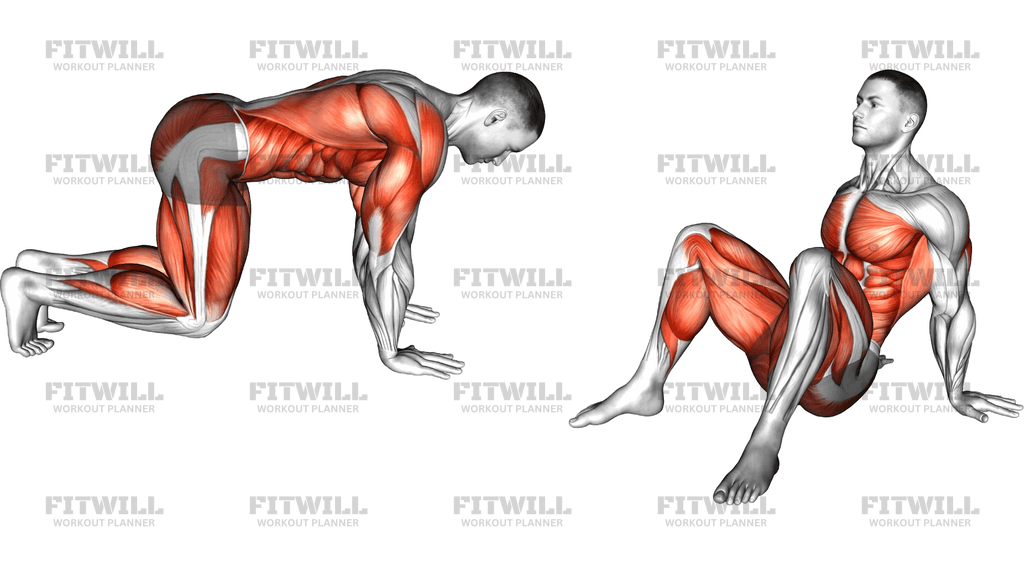
The Sitting Leg Lift is a simple body weight movement performed from a seated position on the floor, with your hands planted behind your hips for support. One leg stays bent with the foot flat on the floor while the other leg stays straight and lifts upward under control. The setup isolates the working leg so the lift has to come from the hip itself rather than from momentum or a rocking torso.
This movement primarily trains the hip flexors, the group of muscles at the front of the hip that raise the thigh toward the torso. Because the lifting leg stays straight, the rectus femoris, the quad muscle that crosses the hip joint, works hard as well, and the lower abs contract isometrically to keep your torso from collapsing backward. That combination makes it a practical exercise for anyone whose hip flexors are underactive from long hours of sitting.
The seated setup matters more than it looks like it should. With your hands behind you and your torso leaning back, your hip flexors start in a lengthened position at the bottom of the lift, which is exactly where many people are weakest. The bent support leg anchors your body and gives you a stable base, so the working hip can move through its range without your pelvis tipping or your lower back arching to fake extra height.
To perform it well, sit tall with your shoulders back and lift the straight leg by leading with the thigh, not the toes. Pause briefly at the top where the thigh is clearly off the floor, then lower slowly until the heel lightly touches down before starting the next rep. The tempo is the point here: a slow, deliberate lift and lower with a tall chest will do far more for your hip strength than fast, bouncy reps.
The Sitting Leg Lift fits well into warm-ups, hip health routines, and beginner core or lower body circuits. It needs no equipment beyond a bit of floor space, so it travels easily and scales naturally: bend the knee slightly to make it easier, or add an ankle weight or a longer pause at the top to make it harder. Stop and shorten the range if you feel pinching at the front of the hip rather than muscular effort.
A few practical points will keep it productive. Keep your weight evenly spread through your palms so your shoulders do not shrug up around your ears, and keep the working knee pointing toward the ceiling rather than rolling outward. If your hamstrings are tight, a small bend in the lifting knee is fine, as long as the thigh itself is doing the lifting.
[ Workout Log & Planner ]
Put your next workout in Fitwill
Keep your plan and training log ready when you are.


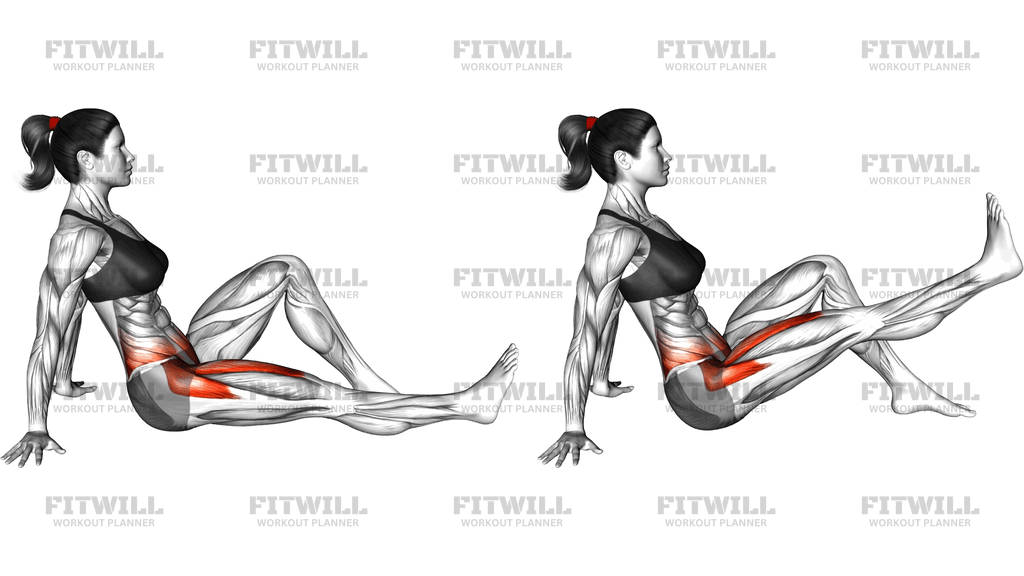
Instructions
- Sit on the floor with your legs extended in front of you, then bend your left knee and place your left foot flat on the floor about a foot from your glutes.
- Place your palms on the floor just behind your hips with fingers pointing forward or slightly outward, and press down so your weight is supported through your arms.
- Keep the right leg straight with the knee soft but not locked, and sit up tall with your chest open and shoulders down away from your ears.
- Brace your abdominals lightly as if preparing for someone to nudge your stomach, and keep your pelvis neutral rather than tipping backward.
- Exhale and lift the straight right leg off the floor by driving the thigh upward, leading with the knee and thigh rather than the foot.
- Raise the leg until your thigh is clearly off the floor and you feel the work at the front of the hip, pausing for one beat at the top without letting your torso slump.
- Inhale and lower the leg slowly and under control until the heel lightly touches the floor; do not let it drop or slam down.
- Complete all reps on the right leg, then bend the right leg, extend the left, and repeat on the other side for the same number of reps.
- Between reps, keep your torso tall and your hands pressed into the floor; if your shoulders tire before your hips, rest briefly and reset your posture.
Tips & Tricks
- If your heel scrapes the floor on every rep, your range is too short to load the hip flexor; pause the leg just above the floor instead of letting it touch down between reps.
- Rolling the working knee outward is a common cheat that shifts work away from the front of the hip; keep the kneecap and toes pointing toward the ceiling throughout the lift.
- If you feel a pinch at the front of the hip at the top of the lift, reduce the height slightly rather than forcing the thigh higher; the pinch usually comes from pushing past your current hip range.
- Leaning further back makes the lift harder because the hip flexors start from a more lengthened position, while sitting more upright makes it easier; adjust the torso angle before adding weight.
- Keep your shoulders down as you press through your palms; shrugging toward your ears usually means your arms are taking over as your torso fatigues.
- Tight hamstrings often pull the pelvis backward in this seated position; sitting on a folded towel or low cushion to raise the hips can make the lift feel much smoother.
- The lift should come from the hip, not from pushing off the bent support foot; if your torso rocks forward on each rep, slow down and lighten the effort.
- An ankle weight is an easy progression once you can complete your reps with a one-second pause at the top and no loss of torso posture.
Frequently Asked Questions
What muscles does the Sitting Leg Lift work?
The main muscles are the hip flexors at the front of the hip, especially the iliopsoas, along with the rectus femoris in the quadriceps because the lifting leg stays straight. The lower abs also work to hold your torso steady as you lean on your hands.
Is the Sitting Leg Lift good for beginners?
Yes, it requires no equipment and can be scaled easily. Beginners can sit more upright or bend the working knee slightly to reduce the load on the hip flexors while learning the movement.
Why does one leg stay bent during the Sitting Leg Lift?
The bent leg with the foot flat on the floor anchors your body so your pelvis stays stable while the other hip lifts. Without it, your torso would tend to rock and your lower back would compensate for the working hip.
How high should I lift my leg in the Sitting Leg Lift?
Lift only as high as you can while keeping your torso tall and your knee pointing up. A moderate height with a brief pause at the top trains the hip flexors better than forcing the thigh as high as possible.
Why do I feel a pinching sensation at the front of my hip?
A pinch at the top of the lift usually means you are pushing past your current hip range or letting the knee rotate outward. Lower the working height slightly, keep the kneecap facing the ceiling, and build the range gradually.
Can I do the Sitting Leg Lift if I have tight hamstrings?
Yes, but sitting on a folded towel or low cushion to elevate your hips will take tension off the hamstrings and make the seated position much more comfortable. A small bend in the lifting knee is also acceptable.
What can I use instead of the Sitting Leg Lift?
Standing straight-leg raises, lying leg raises, or seated knee lifts on a bench train the hip flexors in a similar way. The seated version is unique in that the hip flexors start from a lengthened position, which makes it a good option if you sit for long periods.
How many reps and sets of the Sitting Leg Lift should I do?
Two to three sets of 8 to 12 controlled reps per side is a solid starting point. If your form breaks down before eight reps, sit more upright or shorten the range rather than rushing the tempo.
Is the Sitting Leg Lift safe for the lower back?
When done with a tall torso, a braced core, and a controlled lowering phase, it is generally gentle on the lower back. Discomfort usually comes from slumping backward or letting the leg drop, so keep the tempo slow and the range honest.
Should I add ankle weights to the Sitting Leg Lift?
Once you can complete your target reps with a one-second pause at the top and no torso movement, a light ankle weight is a natural progression. Increase the load gradually and keep the same slow lifting and lowering tempo.