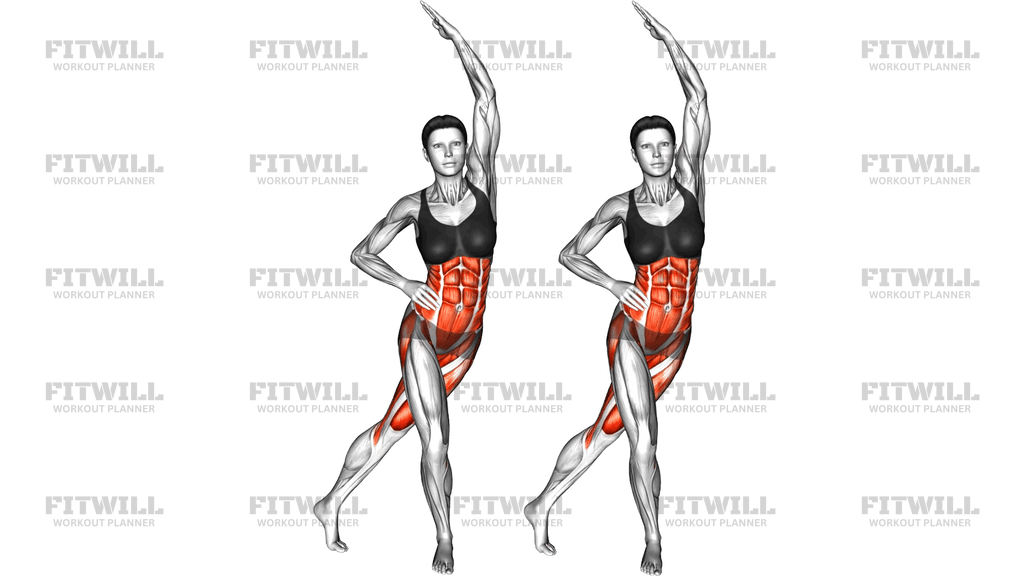
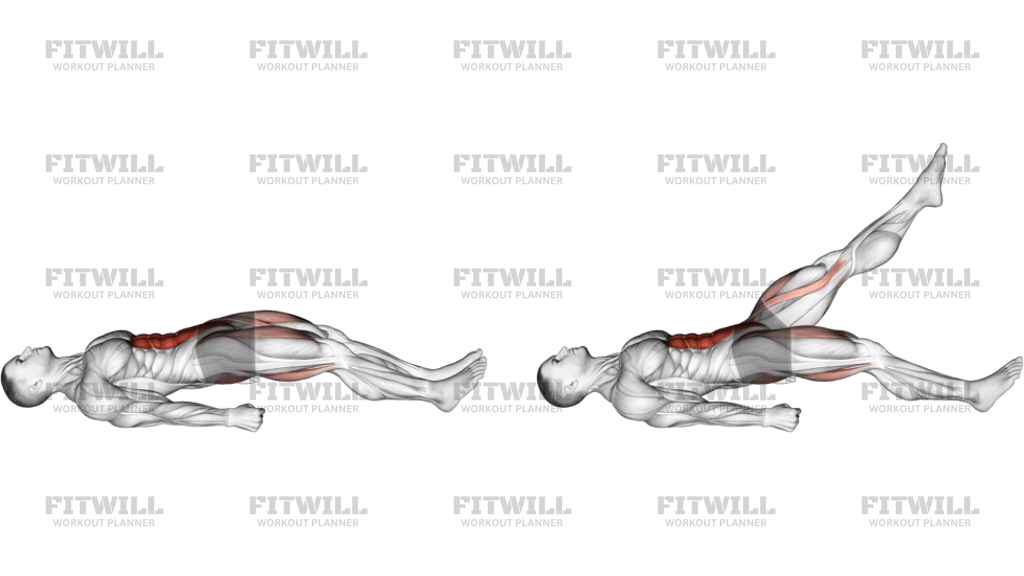
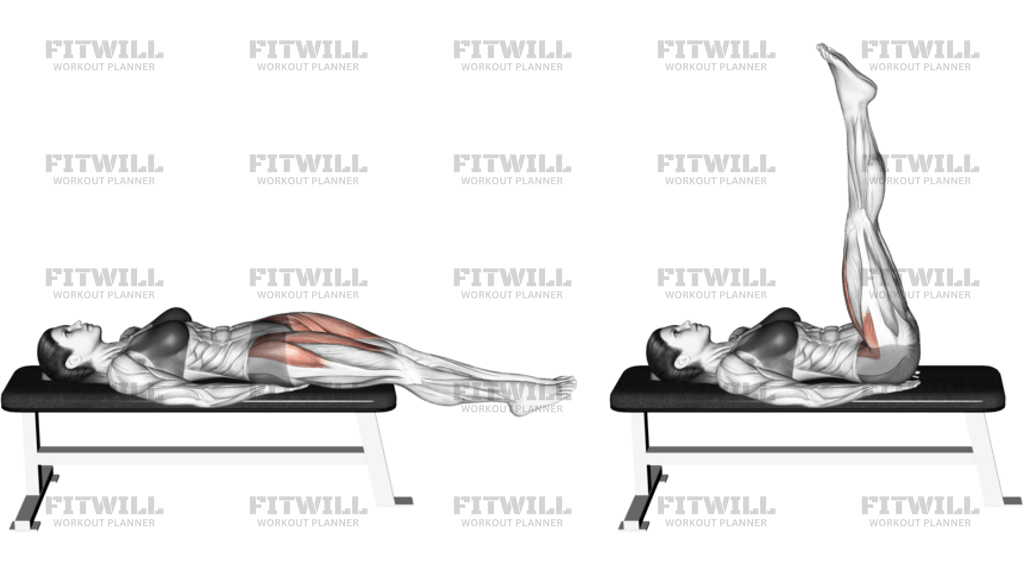
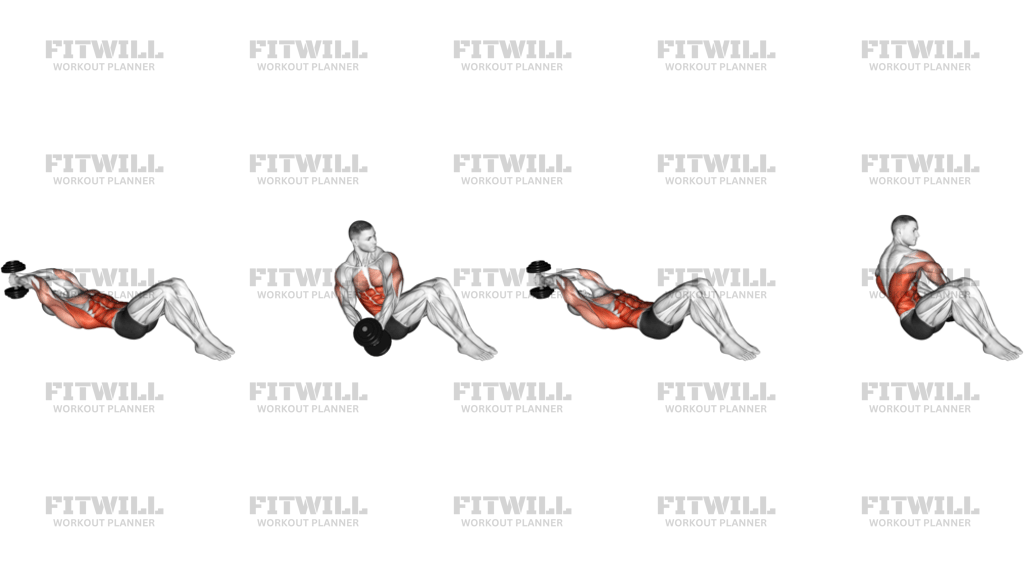
Cross Arms Alternate Leg Lift
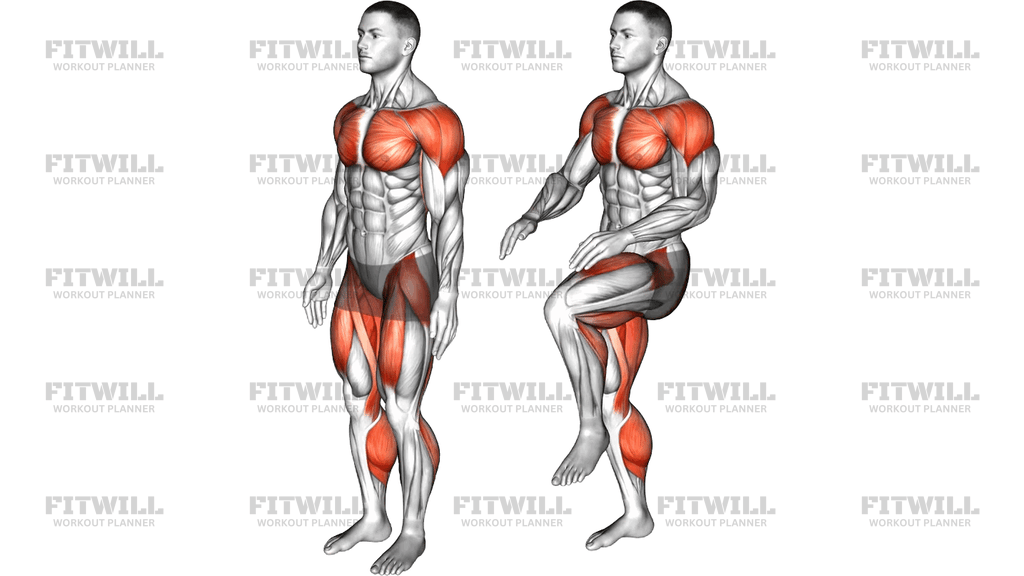
Cross Arms Alternate Leg Lift is a standing core and balance drill where you fold your arms across your chest and lift one leg at a time without letting your torso sway, tilt, or lean. Because your hands are pinned to your chest, you cannot use your arms to counterbalance, which forces your trunk, hips, and standing leg to do all of the stabilizing work. Each rep is essentially a single-leg balance challenge combined with a controlled hip flexion, alternating from one leg to the other.
The main demand falls on the hip flexors of the lifting leg, which drive the knee or foot upward, while the deep core and obliques keep your ribcage and pelvis level as the load shifts from side to side. The gluteus medius and the small stabilizing muscles around the ankle of the standing leg work hard to keep you stacked over your base of support. You will also feel the quadriceps on the standing leg as it locks in to hold you steady.
Setup matters more here than in most standing drills. A tall spine, soft knees, and even weight spread across the whole foot give you a stable platform before you ever lift a leg. If you start with your weight dumped into your heels or your lower back already arched, every lift will pull you off balance and the movement turns into a wobble contest rather than controlled strength work.
To perform it well, brace your midsection as if bracing for a light push, cross your arms over your chest, and shift your weight fully onto one foot. Lift the other leg with control, hold the top position for a beat, lower it slowly, and only then switch sides. The tempo should feel deliberate; if you are rushing, the leg lift becomes momentum-driven and the balance demand disappears.
This drill fits well into warm-ups, core circuits, and lower-body or balance-focused sessions. It is especially useful for runners, older adults working on fall prevention, and anyone returning from time away from training who needs to rebuild single-leg stability before progressing to loaded or dynamic versions. It requires no equipment and very little space, so it travels well to hotel rooms and home workouts.
The main safety point is honesty about your balance. If you cannot hold the top position without significant swaying, reduce the lift height, slow the tempo further, or stand near a wall you can touch for confidence. Avoid locking the standing knee hard, and stop the set when your balance degrades rather than grinding out extra reps with poor control.
[ Workout Log & Planner ]
Put your next workout in Fitwill
Keep your plan and training log ready when you are.


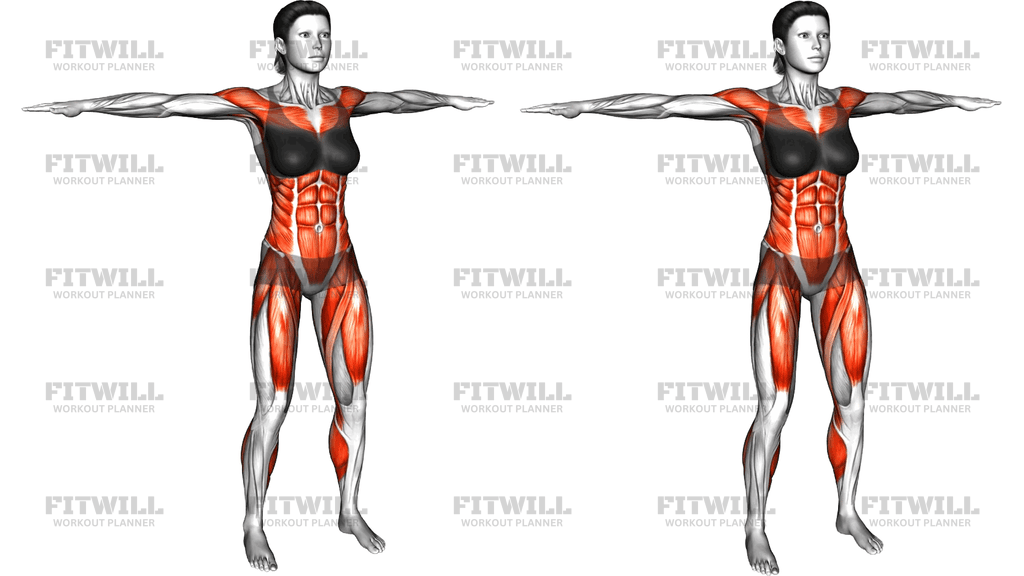
Instructions
- Stand tall with your feet hip-width apart and your weight spread evenly across both feet.
- Cross your arms over your chest so each hand rests on the opposite shoulder or upper arm, and keep them there for the whole set.
- Draw your shoulders back and down, brace your core gently, and soften your knees slightly without bending forward at the hips.
- Shift your full body weight onto your right foot so your left foot is just kissing the floor.
- Exhale and lift your left leg by bending at the hip and knee, raising the knee to roughly hip height or as high as you can control without leaning back.
- Pause for one to two seconds at the top, keeping your chest tall and your pelvis level so the hip on the lifted side does not drop.
- Inhale and lower the left leg slowly until the foot touches the floor under control, then transfer your weight onto it.
- Repeat the lift with your right leg to complete one alternating cycle.
- Continue alternating legs for the desired number of reps, resetting your posture and brace any time you feel yourself swaying.
- If you lose balance, set the foot down, stand fully upright, re-brace, and restart the rep rather than fighting through a wobbly lift.
Tips & Tricks
- A common mistake is leaning the torso backward as the knee rises; imagine the crown of your head being pulled toward the ceiling so the lift comes from the hip, not from arching the lower back.
- If your standing knee collapses inward, think about pressing that foot into the floor and spreading the toes, which wakes up the hip stabilizers and keeps the knee tracking straight.
- Keep the arms genuinely crossed and still. Reaching an arm out to catch balance mid-rep defeats the purpose of the drill; set the foot down and reset instead.
- Lift the knee only as high as you can while keeping the pelvis level. A lower lift with a level pelvis trains the hip stabilizers more effectively than a high lift with a hip hike.
- Move slowly enough that each lift takes about two seconds up and two seconds down; if you cannot control the lowering phase, the leg is dropping rather than being trained.
- Wear flat, stable shoes or go barefoot. Cushioned or unstable soles make the ankle wobble more and turn this into a balance test before it becomes a core drill.
- Look at a fixed point at eye level across the room rather than down at your feet; a drifting gaze is a frequent cause of the side-to-side sway in this movement.
- If one side feels noticeably less stable, give the weaker side one extra rep per set rather than only training the side that feels good.
- Before adding reps, film yourself from the front once. You will quickly see whether your hips stay level or whether one hip drops every time you lift the opposite leg.
Frequently Asked Questions
What muscles does the Cross Arms Alternate Leg Lift work?
The hip flexors of the lifting leg do the primary work, while the deep core and obliques stabilize your torso and the gluteus medius and ankle stabilizers of the standing leg keep you balanced. The quadriceps on the standing leg assist throughout.
Why are the arms crossed instead of held out to the sides for balance?
Crossing the arms removes the counterbalance your arms would normally provide, which shifts the entire stabilization demand onto your trunk, hips, and standing leg. It makes the same leg lift considerably harder and more core-focused.
How high should I lift each leg during the Cross Arms Alternate Leg Lift?
Aim for roughly hip height with the knee, but only as high as you can go while keeping your chest tall and pelvis level. A controlled lower lift beats a high lift that makes you lean back or hike the hip.
Is this exercise suitable for beginners?
Yes, as long as the range and tempo are scaled down. Beginners can lift the knee to a lower height or place one hand lightly on a wall for reassurance while still keeping the arms crossed for most of each rep.
Why do I keep losing my balance when I lift one leg?
The usual culprits are shifting your weight too late, looking down at your feet, or lifting before you brace. Transfer your weight fully onto the standing foot first, fix your gaze on a point at eye level, and brace your core before the foot leaves the floor.
Should the standing leg stay completely straight?
Keep a soft bend rather than locking the knee hard or sitting deeply into it. A locked knee can strain the joint and makes balance worse, while a slight bend lets the thigh and hip muscles absorb small corrections.
How is the Cross Arms Alternate Leg Lift different from a standing knee raise with arms out?
With arms out, you can subtly swing them to correct balance, so the challenge shifts toward the shoulders and coordination. With arms crossed, the trunk and hip stabilizers must handle every correction, making it a more targeted core and balance drill.
What can I use as a substitution if my balance is poor?
Perform the same alternating knee lift with fingertips resting lightly on the back of a chair or a wall, keeping the arms crossed whenever you feel stable. Another option is a seated knee lift on a bench, which removes the balance demand while preserving the hip flexion work.
How many reps and sets should I do?
Start with 8 to 10 controlled lifts per leg for 2 to 3 sets, pausing briefly at the top of each lift. Prioritize clean, level-hip reps over total volume, and stop the set when your balance starts to deteriorate.
Is it safe for my knees and lower back?
When performed with a soft standing knee, a braced trunk, and a lift height you control, it is generally a low-load, joint-friendly drill. Avoid jerking the leg up, arching your lower back at the top, and forcing reps once you are fatigued and swaying.