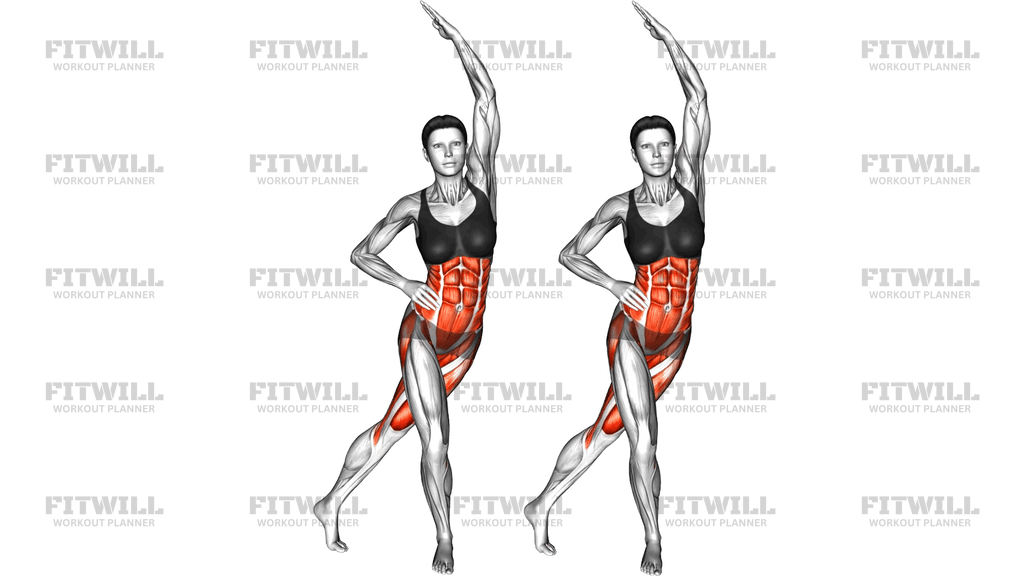
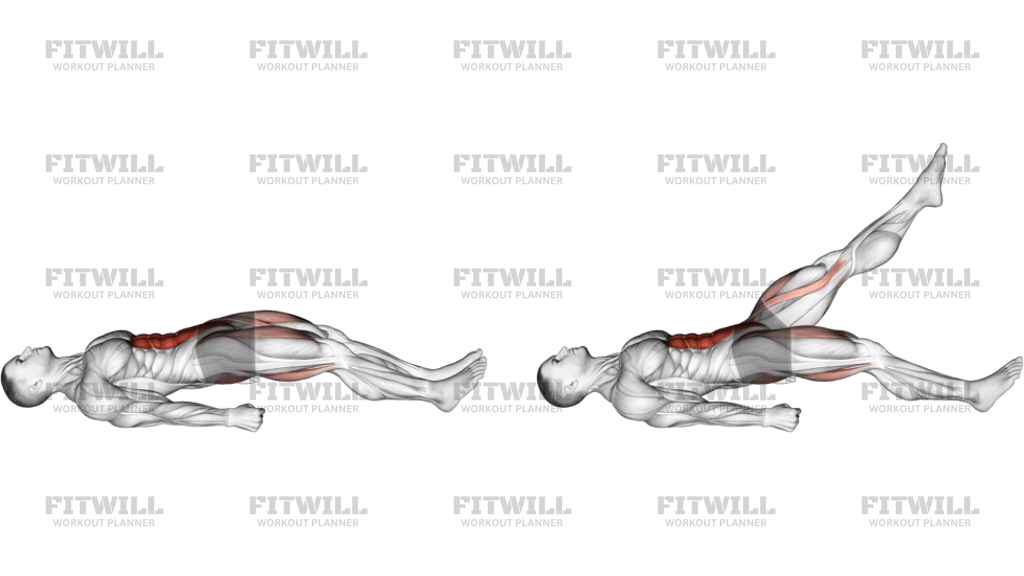
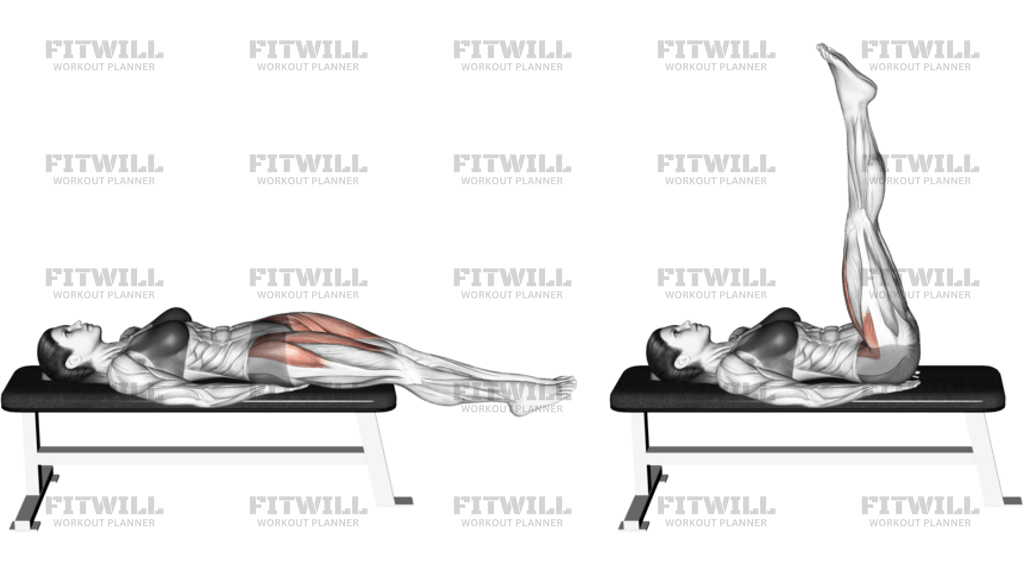
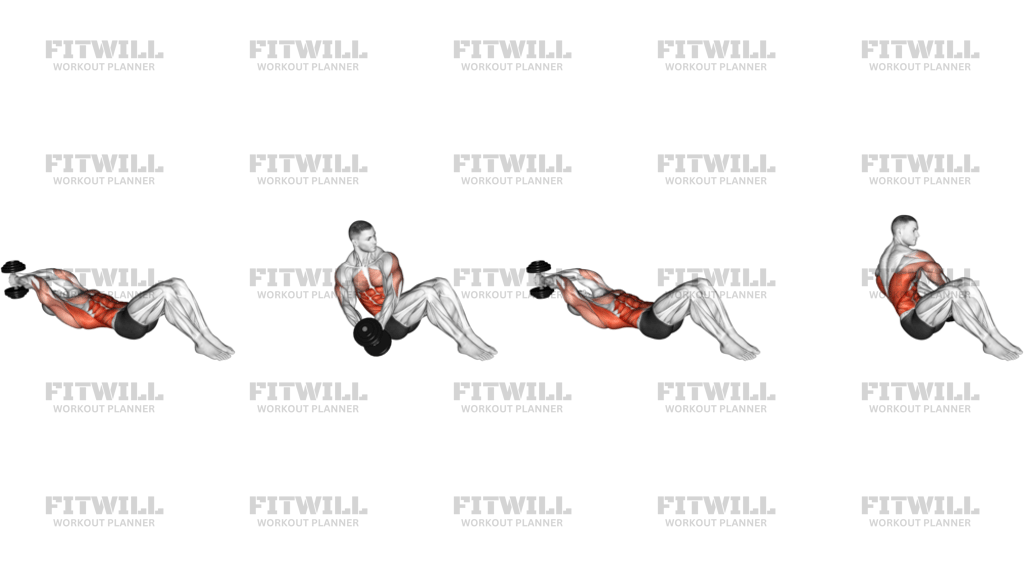
45 Degree Lean Back Alternate Knee Raise
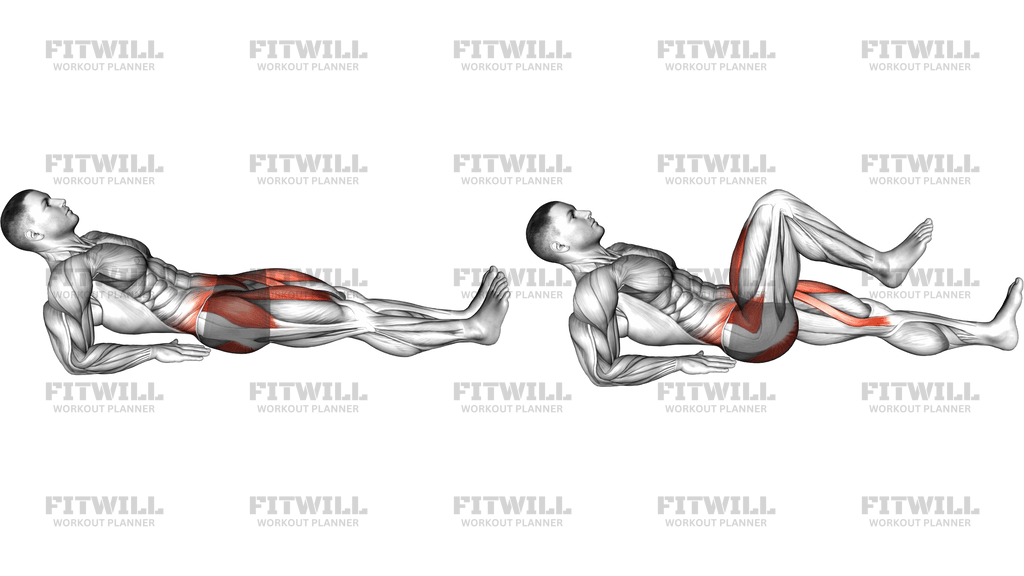
The 45 Degree Lean Back Alternate Knee Raise is a floor-based bodyweight drill where you recline onto your forearms at roughly a 45-degree angle, extend both legs straight out in front of you, and then drive one knee in toward your chest at a time while the opposite leg stays hovering above the floor. Because your torso is held off the ground and your hands are only propping you up behind your hips, your trunk has to work the entire time just to hold the lean, which makes this far more demanding than a standard seated knee raise.
This movement primarily trains the hip flexors — the group that lifts your thigh toward your torso — with strong support from the abdominal wall, especially the lower abs, which fight to keep your pelvis from tipping forward as each knee comes in. The extended working leg also fires the quadriceps to keep the knee straight, and the shoulders and arms work isometrically to hold your lean angle. The constant tension on the idle leg is what separates this from slower, alternating-seated variations: nothing ever fully rests.
It is a good fit for anyone who wants to build hip-flexor strength and end-range abdominal control without equipment — home trainees, people warming up for sprinting or kicking sports, and lifters who find hanging knee raises too grip-intensive. Because the floor supports your forearms, there is no load on the spine from holding yourself up with your abs alone, which makes it a sensible progression step toward more advanced leg-raise variations.
Setup matters more than it looks. The height of your lean and the placement of your forearms determine how much of your body weight your trunk has to manage. Lean back too far with your arms stretched long and the movement becomes a shoulder workout; sit too upright and the knee raises lose most of their difficulty. Aim for a 45-degree torso angle with your forearms planted just behind your hips, elbows roughly under your shoulders.
To execute it well, extend both legs straight and let them hover an inch or two off the floor, then pull one knee up until it points at the ceiling with the thigh near vertical, and lower it back to the hover under control before switching sides. Keep your lower back from arching off the floor — if it does, raise the idle leg slightly higher or reduce your lean. Move with a steady rhythm: two counts up, two counts down, no rushing, no bouncing the heel off the ground.
A mat under your forearms and tailbone makes the hold comfortable enough to focus on the leg work rather than the floor pressing into your skin. If you feel it only in your thighs and not at all in your trunk, slow down and shorten the range; the knee raise should feel like it starts from the front of your hip and is braced by your stomach, not like a loose leg swing.
[ Workout Log & Planner ]
Put your next workout in Fitwill
Keep your plan and training log ready when you are.


Instructions
- Sit on the floor with your legs extended, then lean back until your torso forms about a 45-degree angle with the ground.
- Plant both forearms on the mat just behind your hips, elbows roughly under your shoulders, hands relaxed with palms down for light support.
- Lift both straight legs so they hover one to two inches above the floor, knees fully extended, toes pointing up.
- Brace your stomach and gently press your lower back toward the floor so your pelvis stays neutral before you move.
- Exhale and draw one knee toward your chest, bending the leg until the thigh is close to vertical while the other leg stays straight and hovering.
- Pause briefly at the top with the knee pulled in, feeling the front of the hip shorten and the abs holding your lean steady.
- Inhale and lower the knee back down under control until the leg returns to the extended hover position — do not let the heel touch the floor.
- Repeat with the opposite knee, keeping the idle leg perfectly still and straight throughout.
- Continue alternating sides for your target number of total reps, keeping the torso angle unchanged from start to finish.
- When finished, lower both legs to the floor and sit up slowly to release the shoulders and hip flexors.
Tips & Tricks
- If your shoulders burn out before your hips do, your forearms are probably planted too far behind you — slide them forward so the elbows sit closer to a vertical line under your shoulders.
- A common mistake is letting the idle leg drop toward the floor when the other knee comes up. That leg is half the exercise; if it keeps sinking, hold it slightly higher or bend both knees slightly at first.
- Watch for your lower back peeling off the floor as the knee drives in. This means your pelvis is rotating instead of staying braced — pull the knee in a little less far and re-press the back down.
- Do not let the moving knee drift outward. Pull it straight up toward the same-side shoulder line so the hip flexor works in a clean vertical path.
- The heel of the extended leg should never touch down between reps. If you need a rest, stop the set rather than cheating with a floor tap.
- Speed control is the whole point: a knee yanked up in half a second uses momentum and skips the end range. Aim for a deliberate pull and an equally deliberate return.
- If you feel pinching at the front of the hip, reduce your lean angle slightly and shorten the range at the top — the movement should feel like a strong squeeze, not a joint complaint.
- Point your toes of the extended leg toward the ceiling and squeeze the thigh straight. A soft, floppy idle leg signals that the quad has switched off.
- For a harder version, lean back a few degrees more or slow the lowering phase to three counts; for an easier one, prop your hands (instead of forearms) behind you.
Frequently Asked Questions
What muscles does the 45 Degree Lean Back Alternate Knee Raise work?
The hip flexors at the front of the hip do the lifting, while the abs — particularly the lower abs — hold your torso at the 45-degree lean and keep the pelvis stable. The quadriceps work isometrically to keep the extended leg straight, and the shoulders support your torso position.
Why does the non-working leg have to stay off the floor?
Keeping the extended leg hovering maintains continuous tension on the hip flexors and abs of that side and prevents your lower back from arching as the other knee comes in. Once the heel touches down, the trunk gets a full rest and the exercise loses much of its value.
Is the 45 Degree Lean Back Alternate Knee Raise suitable for beginners?
Yes, with adjustments. Sit more upright than 45 degrees, plant your hands behind you instead of your forearms, and raise one knee at a time with the idle leg slightly higher. As control improves, gradually lean back and lower the hovering leg.
How is this different from a seated knee raise or a lying leg raise?
The reclined torso at 45 degrees adds a constant trunk-stabilization demand that a fully upright seated raise lacks, while the floor support under your forearms makes it easier on the grip and lower back than hanging or lying leg raises.
My shoulders fatigue before my hips — what should I change?
Move your forearms forward so your elbows sit closer to under your shoulders, and reduce your lean angle slightly. If the shoulders still give out first, do the exercise with straight arms propping behind you until your pressing endurance improves.
Can I substitute the 45 Degree Lean Back Alternate Knee Raise if I find it too hard?
A seated alternate knee raise with your hands behind you and heels lightly touching the floor between reps is the closest easier version. Once you can control 15 to 20 reps there, progress to the hovering-leg lean-back version.
Should my lower back stay pressed to the floor during the movement?
Aim to keep it gently contacted throughout. If it arches or lifts when the knee comes in, your pelvis is rotating — shorten the range slightly and re-brace your stomach before continuing.
How many reps should I do?
Count total alternating reps. Most people do well with 2 to 4 sets of 12 to 20 total raises, stopping when the hovering leg becomes hard to hold straight and off the floor.
Do I need any equipment for this exercise?
No — it is a pure bodyweight movement. An exercise mat is recommended purely for comfort, since your forearms and tailbone stay in contact with the floor for the entire set.
Is this exercise safe for people with lower back sensitivity?
The supported reclined position makes it gentler on the back than many leg raises, but you should keep the range modest, avoid letting the back arch, and stop if you feel any sharp discomfort. Anyone with an existing back issue should get clearance from a qualified professional first.