Kneeling Hip Opener Into Forward Lunge And Hamstri
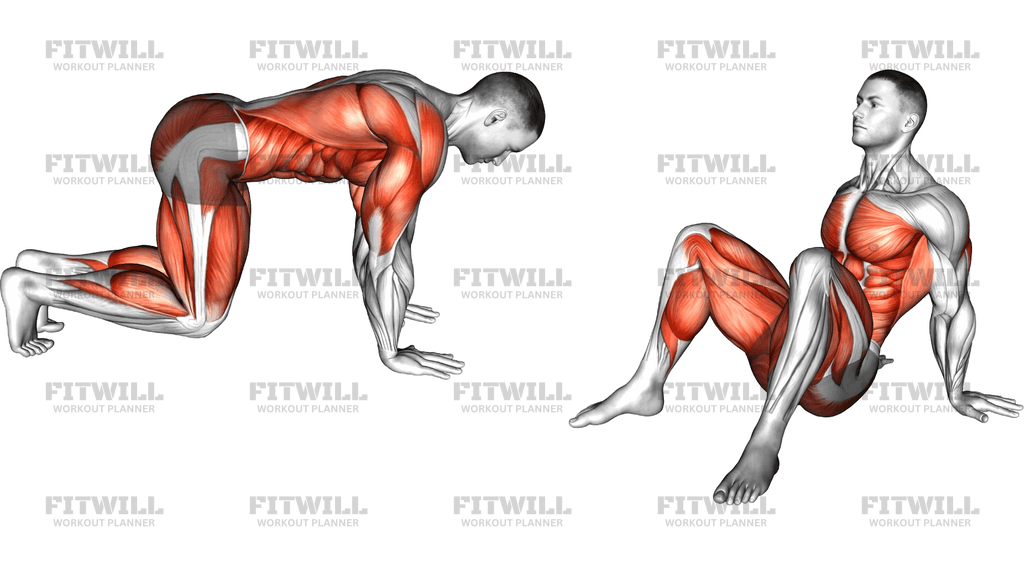
The Kneeling Hip Opener Into Forward Lunge And Hamstring Stretch is a floor-based mobility flow that moves you from a low lunge position into a deeper hamstring lengthener without ever standing up. You start on hands and knees or in a kneeling stance, step one foot forward between your hands, and sink into a low lunge to open the front of the rear hip. From there, you shift your weight back and gently straighten the front leg to move the stretch into the hamstring and calf of the leading leg. One hand stays on the floor for support while the other can guide the front knee slightly outward to involve the inner thigh.
This is one of the most practical two-in-one stretches for anyone with tight hips and stiff hamstrings from sitting, running, cycling, or heavy lower-body training. Because it flows in both directions, you address the hip flexors of the back leg and the hamstrings and calves of the front leg in a single continuous sequence. The adductors and glutes also contribute as the front knee drifts and the hips settle, which is why the sequence shows strong emphasis through the inner thigh, hamstring, and calf lines.
Setup matters more than most people expect. Placing the front foot far enough forward gives the rear hip room to drop, and keeping the hands planted inside the front foot creates the support needed to rock smoothly between the two positions. If the foot is too close to your hands, the forward lunge feels cramped and the knee travels past the toes; if it is too far back, you lose the hamstring stretch when you shift backward.
To execute it well, move slowly and let your breath set the rhythm. Sink into the lunge as you exhale, hold for a few breaths, then press through the front heel and sit the hips back as you straighten the leg. Keep the back knee soft or resting on the mat depending on your comfort, and keep your spine long rather than rounding to reach further. Switch sides and repeat the same flow on the other leg.
Use this sequence as a warm-up before squats, lunges, or sprint work, as a cooldown after leg day, or as a standalone evening mobility routine. It needs no equipment beyond a mat or soft floor, which makes it easy to fit in almost anywhere.
The main safety point is to respect the front knee. If you feel pinching at the knee joint rather than a stretch in the hip or thigh, adjust the foot position or reduce the depth before continuing. The stretch should feel like a broad, tolerable pull through muscle, never sharp pain in a joint.
[ Workout Log & Planner ]
Put your next workout in Fitwill
Keep your plan and training log ready when you are.


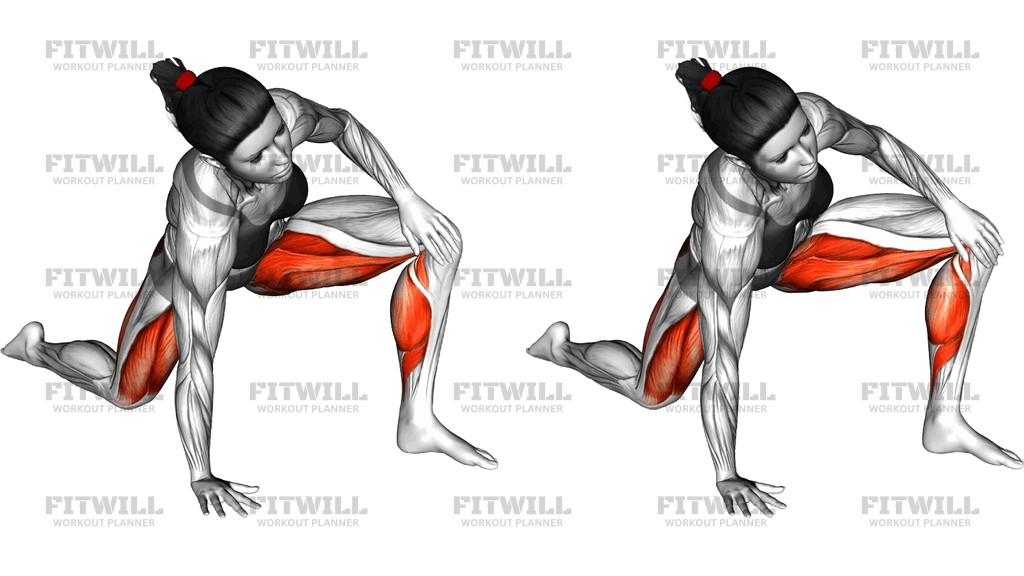
Instructions
- Kneel on a mat or soft floor on all fours, with your hands directly under your shoulders and your knees under your hips.
- Step your right foot forward and place it flat on the floor between or just outside your hands, with the knee bent to roughly 90 degrees.
- Slide your left leg back until the left thigh feels lengthened, resting the left knee on the mat or holding it a few centimeters above the floor.
- Brace your trunk lightly and keep your chest lifted as you sink the right hip forward and down, letting the hands support part of your weight.
- Optionally press your left hand against the inside of the right knee to guide it slightly outward, widening the stretch across the inner thigh.
- Hold the low lunge position for two or three slow breaths, feeling the front of the left hip open.
- Exhale and shift your weight backward, pressing through the right heel and straightening the right knee so the hips travel toward the rear foot.
- In the back position, flex the right toes toward your shin and let the stretch settle into the right hamstring and calf, keeping the back flat rather than hunched.
- Inhale and rock forward again into the low lunge, repeating the forward-and-back flow for several controlled repetitions.
- Step the right foot back, reset your position, and repeat the entire sequence on the left side.
Tips & Tricks
- If your front knee drifts well past your toes in the lunge, walk that foot an inch or two further forward — a cramped setup is the most common reason this flow feels uncomfortable.
- Place a folded towel or mat under the rear knee if the floor is hard; a bruised knee will make you rush the hip opener phase.
- Do not lock the front knee hard when you shift back; a soft, nearly straight leg stretches the hamstring without loading the joint.
- Keep your hands genuinely weighted on the floor. Lifting them to grab your foot too early usually rounds the lower back and steals the stretch from the hamstring.
- If the back of your front leg feels nothing in the backward phase, your foot is probably too close to your hands — widen the stance and try again.
- Let the hips move, not just the torso. The backward shift should come from the pelvis traveling toward the rear heel, not from bending at the waist.
- Breathe out as you deepen each end of the movement; holding your breath tends to tense the very muscles you are trying to lengthen.
- Stay in the lunge phase longer if your hips are tight and in the hamstring phase longer if you sit or run a lot — the flow lets you bias whichever end needs more time.
- Stop and shorten the range if you feel pinching at the front of the hip or inside the knee; those joints should never be the location of the stretch.
Frequently Asked Questions
Which muscles does the Kneeling Hip Opener Into Forward Lunge And Hamstring Stretch target?
The forward lunge phase lengthens the hip flexors of the rear leg, especially the iliopsoas, while the backward shift moves the stretch to the hamstring and calf of the front leg. The inner thigh and glutes are involved as the front knee and hip adjust position.
Is this stretch suitable for beginners?
Yes, because you control the depth with body weight and can rest the rear knee on the mat. Beginners should keep the front foot closer to hip width, use hands for support, and avoid pushing into end ranges on the first attempts.
Why does my front knee hurt instead of my hip or hamstring?
That usually means the foot is positioned too far back or the knee is collapsing inward, so the joint absorbs the stress the muscles should take. Replant the foot further forward, guide the knee over the toes, and reduce the depth.
Should the rear knee touch the floor in the lunge phase?
Either option works. Resting the knee on the mat is gentler and better for beginners, while hovering it a few centimeters up adds light engagement through the rear leg and core.
Can I use the Kneeling Hip Opener Into Forward Lunge And Hamstring Stretch before lifting weights?
Yes, it works well as a warm-up before squats, lunges, or running because it mobilizes the hips dynamically rather than holding one static position. Keep the holds brief and keep moving between the two positions pre-workout.
How long should I hold each end of the movement?
For a warm-up, spend one or two breaths in each position for six to eight reps per side. For a cooldown or flexibility session, hold each end for 20 to 30 seconds and repeat two to three times.
What can I do if I cannot straighten my front leg in the hamstring phase?
Keep a slight bend in the knee and sit the hips back only as far as the leg allows. Flexibility improves with consistent practice, and forcing the knee straight does not speed that up.
Do I need any equipment for this exercise?
No, it is a body-weight movement. An exercise mat or soft surface is recommended to cushion the rear knee and the palms during the flow.
How is this different from a standard low lunge stretch?
A standard low lunge holds one static position, while this flow rocks between the hip opener and the hamstring stretch without standing up. That continuous shift trains two muscle groups in one setup and keeps the movement dynamic.
How often should I do this stretch?
Daily is fine for most people, especially if you sit for long hours or train your legs several times a week. Mild stretch discomfort is normal, but any joint pain means you should adjust the setup before continuing.