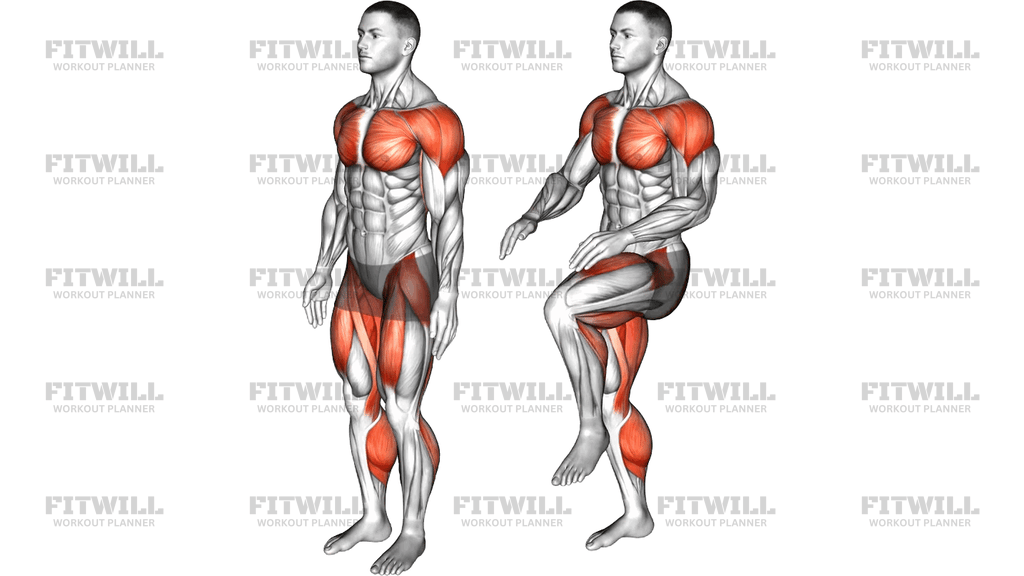
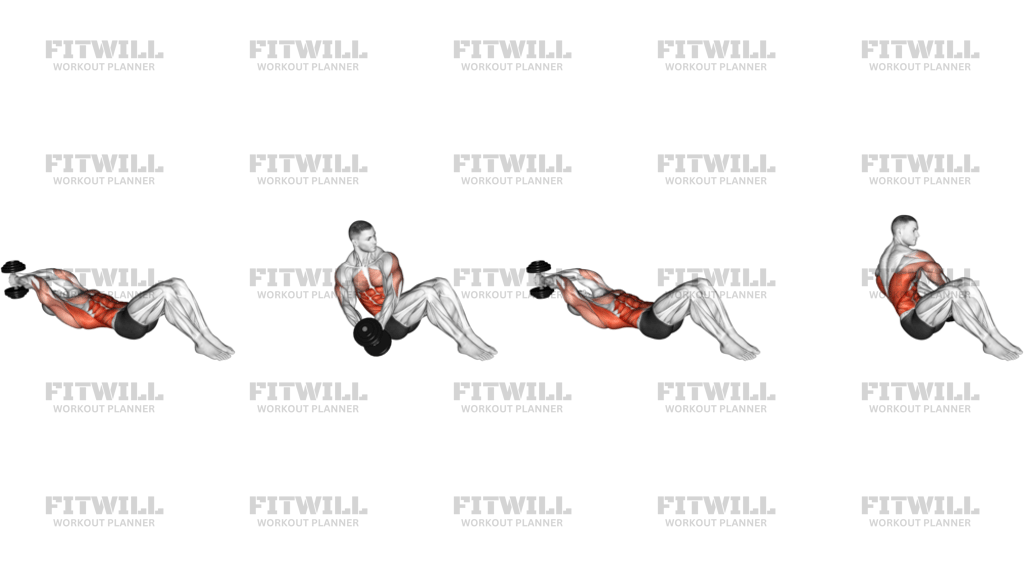
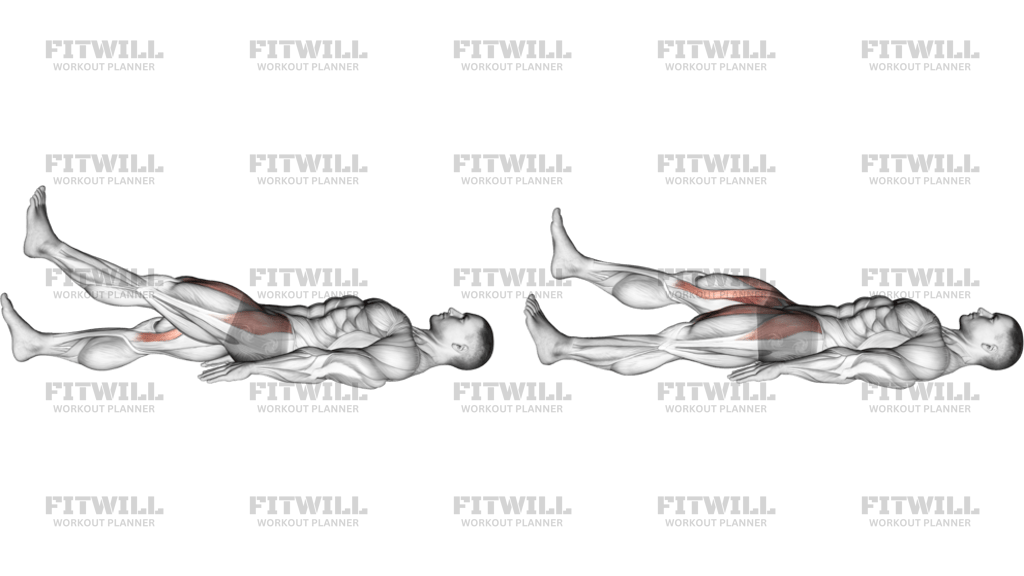
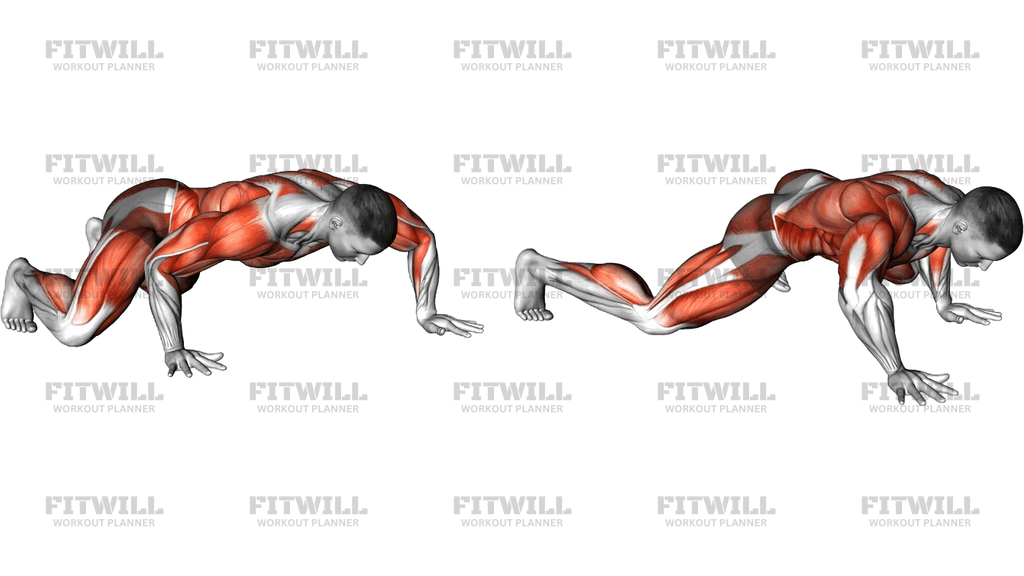
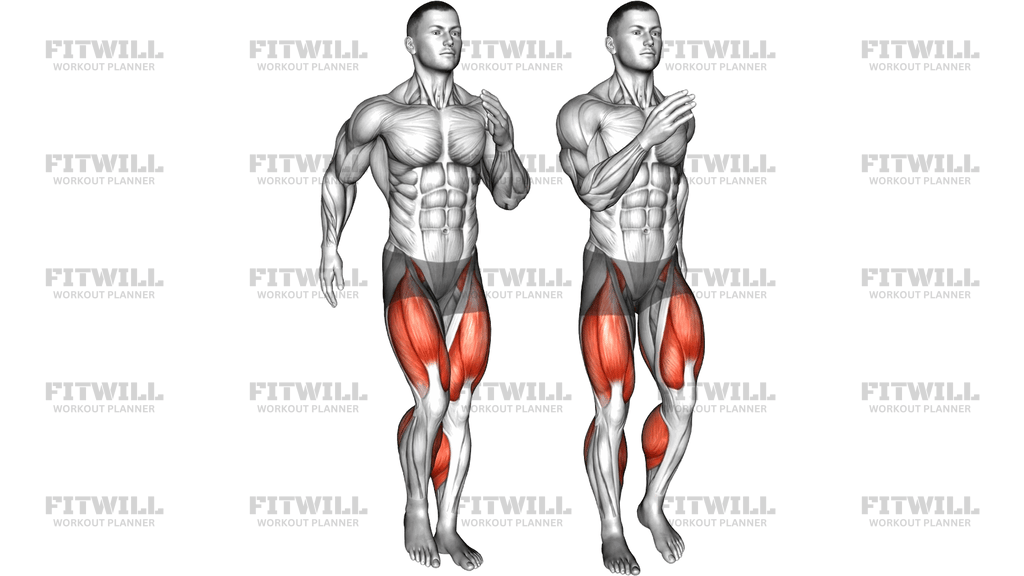
Arm Raise Back Leg Swing
Arm Raise Back Leg Swing is a standing bodyweight drill that combines a backward arm reach with a controlled rearward leg swing. You stand tall with a slight forward lean, sweep both arms up and behind you, and let one leg travel back behind your body in a smooth arc before switching sides. Because everything happens from a single supported stance, the movement doubles as a dynamic warm-up and a balance challenge.
This drill is most useful before lower-body training, running, or any activity that demands hip extension. Swinging the leg back lengthens the hip flexors of the moving leg while the glutes and hamstrings on that same side work to drive the swing. The backward arm raise opens the front of the shoulders and chest, activates the rear shoulder muscles, and wakes up the upper back, which tends to sit dormant after long periods of sitting.
The setup matters more than it looks. A slight hinge at the hips with a braced torso gives the leg somewhere to travel and keeps the swing from turning into a lower-back arch. Your standing foot should be planted with weight spread across the whole foot, not collapsed toward the toes, because every swing shifts your center of gravity backward and the standing leg has to absorb it.
To execute well, keep the swing controlled rather than flung. The leg should move like a pendulum from the hip, with the torso staying long and the ribs stacked over the pelvis. The arm raise and the leg swing happen together on the same side or as matched pairs, depending on your coordination, and the rhythm should feel rhythmic and loose rather than forced.
You will see this movement in general warm-ups, runner's prep routines, and rehab-style mobility circuits where someone needs to restore hip extension without loading the spine. It is also a good low-effort reset between heavy sets of squats or deadlifts, since it keeps the hips moving without adding fatigue.
From a safety standpoint, the main risk is losing balance and compensating with a sharp lower-back arch. Work near a wall or rack until the swing feels automatic, keep the range moderate at first, and stop short of any position where your pelvis tilts or your standing foot rolls. Controlled, repeatable swings beat big sloppy ones every time.
[ Workout Log & Planner ]
Put your next workout in Fitwill
Keep your plan and training log ready when you are.


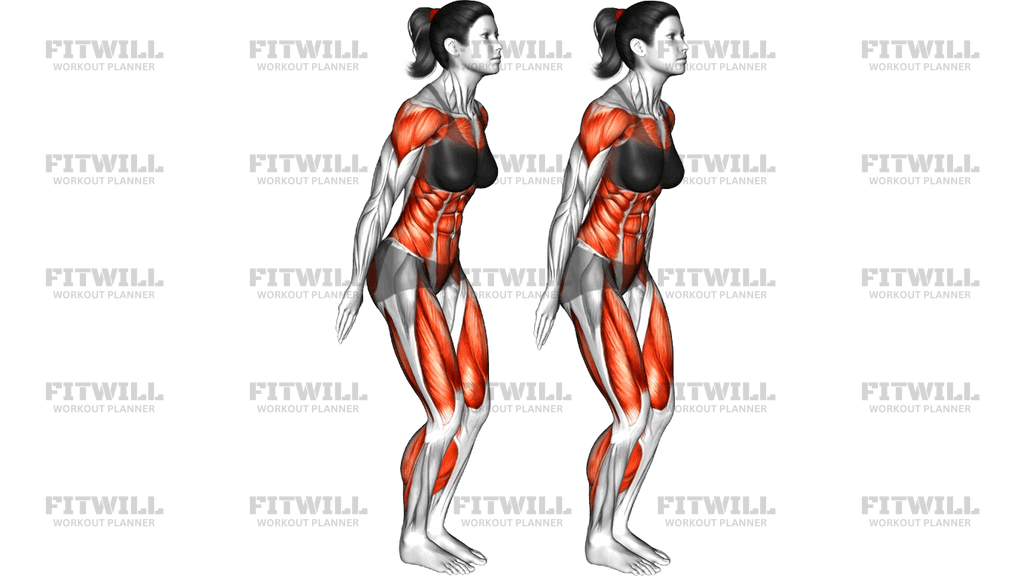
Instructions
- Stand with your feet about hip-width apart and shift your weight onto one leg, letting the other foot hover just off the floor.
- Hinge forward slightly from the hips so your torso leans a few degrees forward, and brace your abs to keep your ribs stacked over your pelvis.
- Let both arms hang at your sides with soft elbows, then begin sweeping them up and behind your body as if reaching back toward your heels.
- As the arms travel backward, swing the free leg straight back behind you from the hip, keeping the knee mostly extended and the toes relaxed.
- Reach the end position where the leg is behind you and the arms are raised back at or slightly above hip height, without arching your lower back.
- Reverse the motion under control, lowering the arms and bringing the leg forward to pass under your body.
- Exhale on the back swing and inhale as the leg returns forward, keeping the breath steady throughout.
- Complete several smooth repetitions on one side, then plant the foot, reset your stance, and switch to the other leg.
- Keep the standing knee softly bent and the standing foot fully planted for every rep; if balance breaks, steady yourself with one hand on a wall and continue.
Tips & Tricks
- If your lower back arches at the top of each swing, cue yourself to tuck the tailbone slightly and shorten the range instead of letting the pelvis tilt forward.
- A common mistake is kicking the leg back with a bent knee, which turns the drill into a hamstring curl; think of the leg as a long pendulum hinging at the hip.
- When the arms stay limp at your sides, you lose half the benefit; drive them actively behind you to open the chest and engage the rear shoulders.
- If you wobble on every rep, stand closer to a wall and drag your fingertips along it lightly rather than gripping it for full support.
- Keep the swing tempo even in both directions; a fast kick back and slow crawl forward usually means the hip flexors are gripping to brake the leg.
- Start with a small arc and grow it rep by rep; forcing full range on the first swing often pulls the torso into a backward lean.
- Point the toes of the swinging leg forward rather than outward, which keeps the swing in the sagittal plane and stops the hip from rotating open.
- If your standing calf or foot cramps, redistribute weight toward the mid-foot and soften the standing knee a little more.
Frequently Asked Questions
What muscles does Arm Raise Back Leg Swing work?
The swing is driven mainly by the glutes and hamstrings of the moving leg while the hip flexors on that side get a dynamic lengthening. The backward arm raise engages the rear shoulders and upper back, and the standing leg plus core handle stabilization.
Is Arm Raise Back Leg Swing a good warm-up before running or squats?
Yes, it is one of the simplest ways to prime hip extension before running, squatting, or hinging. Do it after a brief general warm-up so the tissues are not cold, and keep the swings smooth rather than maximal.
Should I swing the same-side arm and leg together, or opposite?
Either works. Moving the arm and leg on the same side together emphasizes the back-of-body opening, while opposite arm and leg feels more natural for many people and slightly challenges coordination. Pick the version you can repeat with a steady rhythm.
Why do I lose my balance during the back swing?
The leg swinging behind you shifts your center of gravity backward, so an unbraced torso or a standing foot rolled onto the toes will tip you. Hinge slightly forward, brace your abs, and keep your weight spread across the whole standing foot.
How many reps and sets should I do?
Eight to twelve controlled swings per side for one or two rounds is plenty as a warm-up. If you are using it as a mobility reset between lifting sets, a shorter set of five to eight swings per side works well.
Can beginners do Arm Raise Back Leg Swing?
Yes, it is beginner-friendly because there is no load and the range is self-selected. Start next to a wall for support, use a smaller arc, and progress the range only once the swing feels smooth and stable.
My lower back feels the swing instead of my hips. What should I change?
You are most likely arching at the spine to chase a bigger range. Tuck the tailbone slightly, keep the ribs down, and shorten the swing until the movement clearly comes from the hip joint rather than the waist.
What can I substitute if standing balance is difficult?
Hold a wall, doorway, or rack with one hand and swing with the other arm only, or perform the leg swings lying on your side or on hands and knees to remove the balance demand while keeping the hip motion.
Should the swinging leg stay straight or bend at the knee?
Keep it mostly straight with a soft knee so the swing articulates from the hip. A strongly bent knee turns the movement into a hamstring curl and changes which muscles are doing the work.
Is it safe to do this drill every day?
For most people yes, since it is low-load and self-resisted. Just keep the range comfortable, avoid bouncing hard at the end of the swing, and skip it if a recent hip, groin, or lower-back injury makes the position painful.