Side Step Row
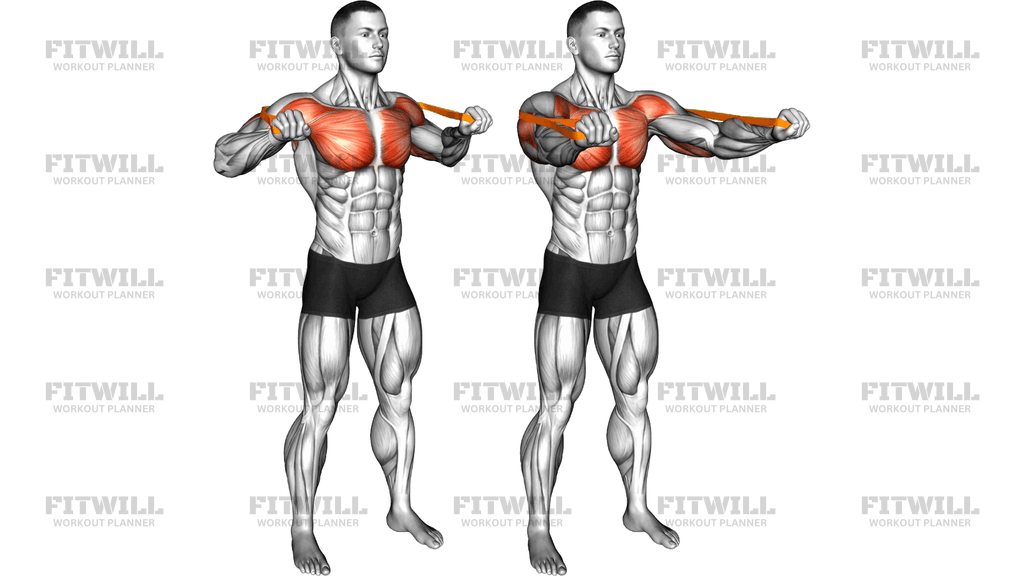
The Side Step Row combines two movements that are usually trained separately: a lateral step against band tension and a horizontal row. You anchor a resistance band at chest height, hold it with both arms extended straight in front of you, and travel sideways step by step while pulling your elbows back into a row at each position. The result is a standing exercise that trains your upper back and rear shoulders while your hips and core work to keep you balanced and square to the anchor.
This pairing makes the exercise especially useful when you have limited equipment or time. Instead of choosing between a row for your back and a lateral walk for your hips, you get both in one continuous drill. The band's constant tension also means your arms never fully rest, which builds shoulder endurance and grip strength that carry over to pulling exercises like rows and pull-ups.
Setup matters more here than in most band exercises. Because you are moving sideways while pulling, the band's angle changes with every step, and the tension on your trailing arm is noticeably higher than on your lead arm. Standing too close to the anchor removes the resistance; standing too far back turns the row into a strain on your grip before your back does any work. Anchor the band at chest height and set up far enough away that your arms are already under slight tension before you take your first step.
To execute it well, keep your torso quiet while your limbs do the moving. The most common error is letting the band rotate your shoulders toward the anchor, which turns the row into a twisting pull and takes the work away from your upper back. Brace your ribcage down, keep both arms at shoulder height, step with a long controlled stride, and row your elbows just past your ribs before extending your arms again for the next step.
The Side Step Row fits well into warm-ups, circuit training, and full-body sessions built around bands. Travel several steps in one direction, then lead with the opposite leg on the way back so both sides of your hips get the same demand. Because the resistance is elastic, the hardest part of each rep is the fully stretched position, so start with a lighter band than you would use for a standard anchored row and progress from there.
[ Workout Log & Planner ]
Put your next workout in Fitwill
Keep your plan and training log ready when you are.


Instructions
- Anchor a resistance band at chest height to a sturdy post or rack and stand facing the anchor about an arm's length away.
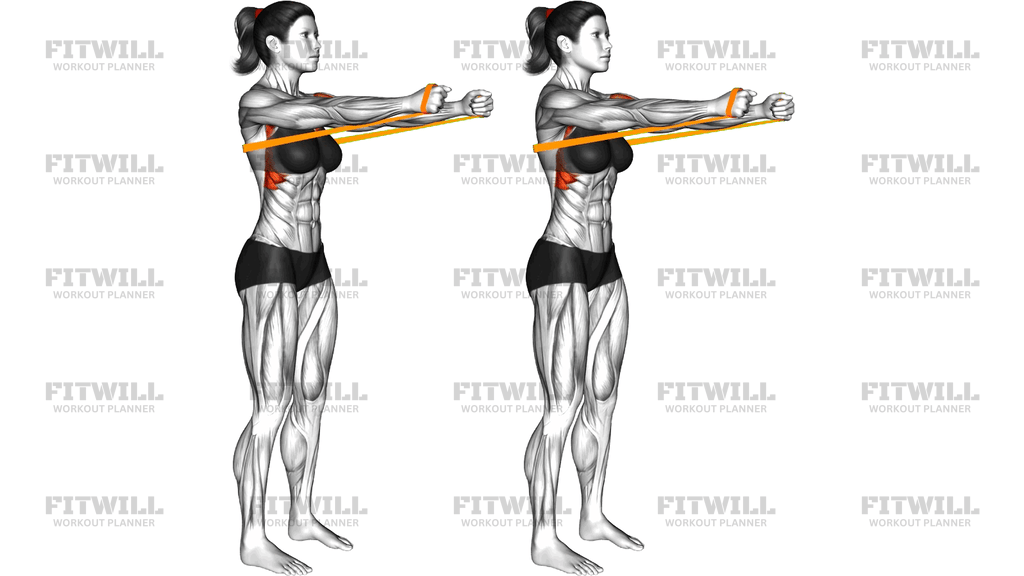
- Grip the band in both hands and extend your arms straight forward at shoulder height, hands roughly shoulder-width apart.
- Step backward or sideways until you feel steady tension pulling your arms toward the anchor, then set your feet hip-width apart with soft knees.
- Brace your core, draw your ribs down, and pull your shoulder blades slightly down away from your ears.
- Step out to the side with your lead leg, then bring your trailing leg to meet it, keeping constant tension in the band the whole time.
- At each step, row by pulling both elbows straight back past your ribs, squeezing your shoulder blades together at the end of the pull.
- Extend your arms forward under control until they are straight again before taking the next step.
- Exhale as you row, inhale as you extend your arms and step.
- Travel 8-12 steps in one direction, then lead with the opposite leg on the return trip while facing the same direction.
- Reset your stance square to the anchor between sets so you start each set with even tension in both arms.
Tips & Tricks
- If your torso twists toward the anchor as you row, shorten the row slightly and think about keeping your chest and hips pointed the same direction the entire set.
- Drooping arms are a sign the band is too heavy or the anchor is too high; your hands should stay at shoulder height from the first step to the last.
- Watch for shrugging at the top of the row. If your shoulders creep toward your ears, lower the anchor a few inches or reduce band tension and finish the pull with your elbows instead.
- The trailing arm carries more tension than the lead arm as you travel. Do an equal number of steps in each direction so one side does not get all the work.
- Keep your steps long and deliberate. Short, quick shuffles let the band slacken between steps and erase the hip work.
- Never let the band snap your arms forward after a row. Control the return with your back and shoulders, taking about the same time as the pull itself.
- If your grip fails before your upper back does, wrap the band once around each hand or switch to a handled version rather than cutting the set short.
- Keep a slight bend in your knees throughout. Locked knees make it harder for your glutes to control the side-to-side weight transfer.
Frequently Asked Questions
Which muscles does the Side Step Row work?
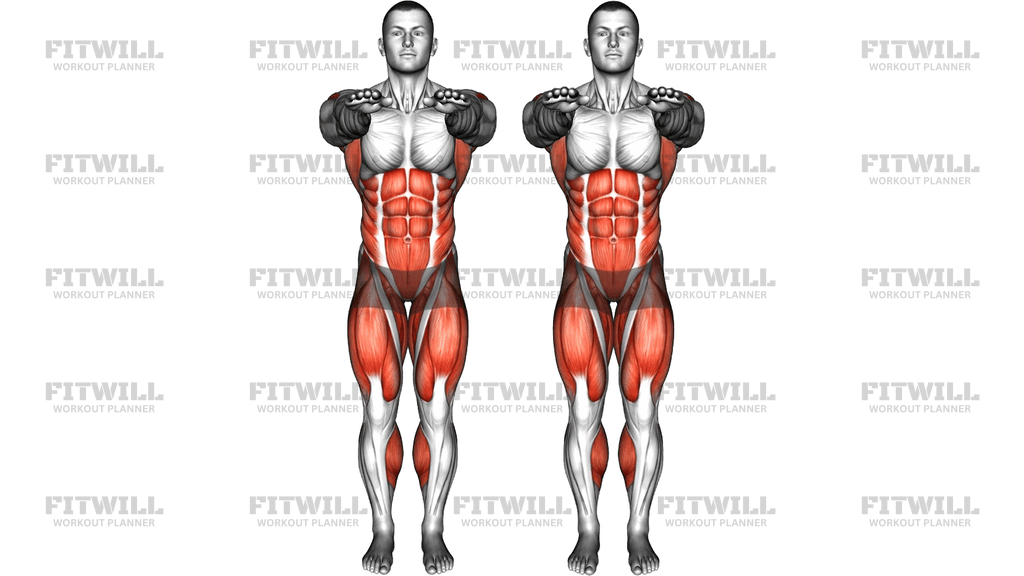
The primary movers are your rhomboids, mid traps, and lats during the row, with your rear shoulders assisting the pull. Your glutes, especially the outer hip muscles, and your core stabilize every lateral step against the band's tension.
Is the Side Step Row suitable for beginners?
Yes, provided you start with a light band and master the two halves separately. Practice plain lateral band walks and standing band rows first, then combine them once you can do both without twisting your torso.
How high should I anchor the band for the Side Step Row?
Chest height is ideal because it lets you keep your arms level at shoulder height throughout the set. A higher anchor pulls your hands upward and makes the row feel more like a pulldown.
Why does the exercise combine a side step with a row instead of doing each on its own?
The side step forces your hips and core to stabilize while your upper back pulls, which mimics how these muscles work together in sport and daily lifting. It also trains both patterns in the time of one exercise.
How far should I step during each Side Step Row rep?
Use a deliberate stride of roughly shoulder width to slightly wider per step. If the band goes slack at any point, your steps are too short or you have drifted too close to the anchor.
What can I substitute if I do not have a resistance band?
A cable machine with a dual handle attachment works well: face the stack, hold the handles with arms extended, and perform the same side steps and rows. On its own, a lateral lunge with a dumbbell row trains a similar combination.
My trailing arm gets much more tired than my lead arm. Is that normal?
Yes, the arm closer to the anchor path carries extra tension as you travel away from it. Always return the same number of steps leading with the opposite leg so the load balances out over the set.
Can I do the Side Step Row with a shoulder or lower back issue?
Check with a qualified professional first. If cleared, use a very light band, keep the row to a comfortable elbow height, and stop the set if any pulling or twisting sensation appears in the problem area.
How many steps should I take per set of the Side Step Row?
Eight to twelve steps in each direction is a solid working set. Because the band is hardest when stretched, err toward more steps with a lighter band rather than fewer steps with a heavy one.