Standing Single Front Leg Raise Chair Supported
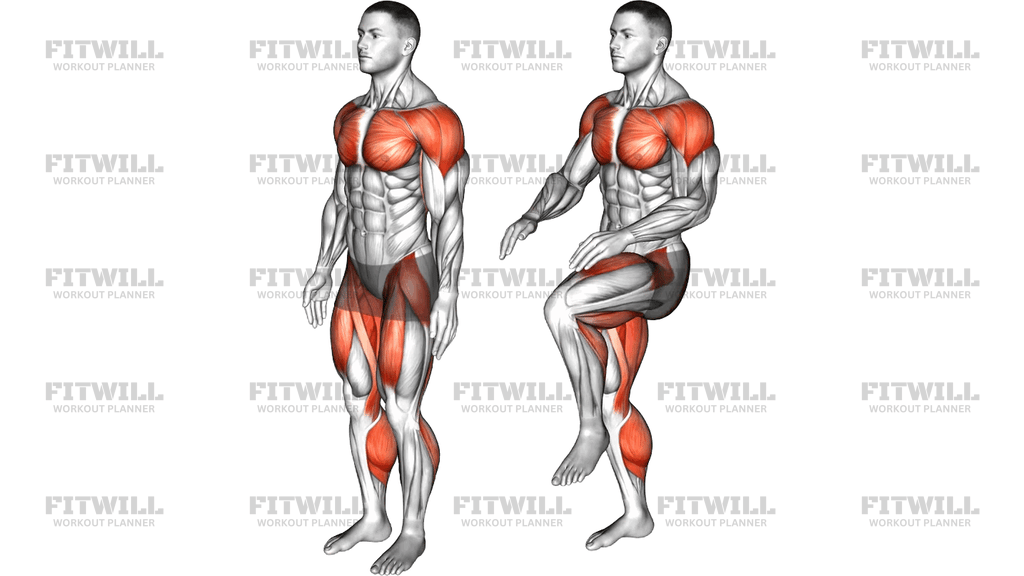
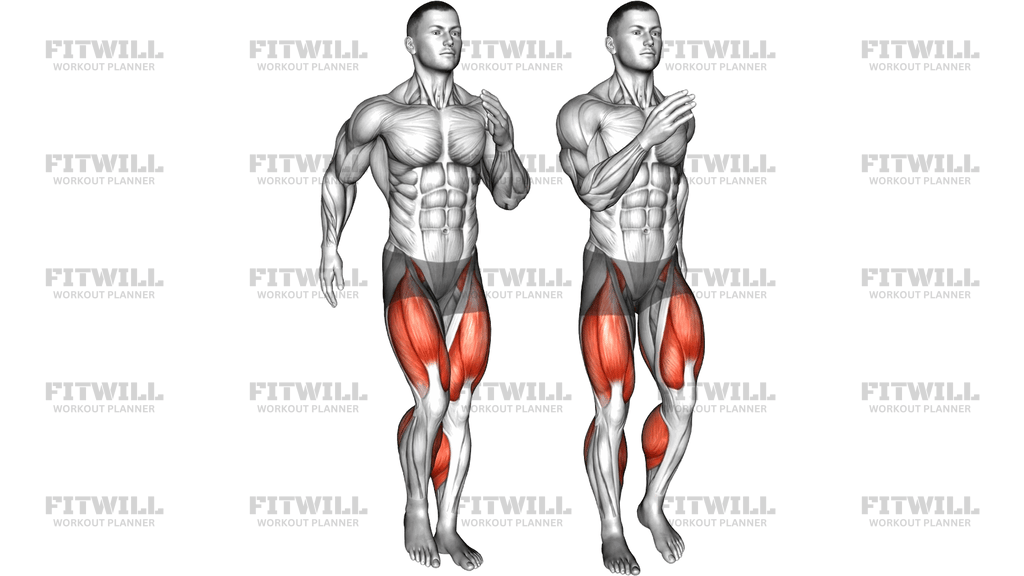
The Standing Single Front Leg Raise Chair Supported is a simple hip-flexion exercise performed while standing beside a sturdy chair, with one hand resting on the chair back for balance. From a tall standing position, you lift one straight leg forward in front of your body to about hip height, pause briefly, and lower it back down with control before switching sides. Because the chair only provides light support rather than carrying your weight, the working leg and standing leg both stay active throughout the set.
The main muscles at work are the hip flexors at the front of the hip, especially the iliopsoas and rectus femoris, which pull the thigh upward. The lower abs work isometrically to keep your pelvis and trunk from leaning back as the leg rises, and the quadriceps help keep the lifting knee straight. The standing leg also gets quiet work from the glutes and hip stabilizers as it holds your balance.
This movement suits a wide range of people. Beginners use it to learn hip hinge-free leg control and build baseline hip strength without equipment. Older adults and people returning from a layoff appreciate the chair for confidence and safety. It also fits well into warm-ups before squats, lunges, or running, and into lower-body or core circuits where controlled hip flexion is the goal.
The setup matters more than it looks. Standing too far from the chair forces you to lean or grip hard, while standing too close limits how smoothly the leg can travel. A light fingertip or one-hand contact is enough; the chair should steady you, not hold you up. Keep your weight distributed over the standing foot and your ribs stacked over your pelvis so the lift comes from the hip, not from trunk movement.
To perform it well, brace your core, lift the leg with intent rather than swinging, and stop at a height where you can keep your back tall and your shoulders level. Swinging the leg, arching the lower back, and hiking the hip are the most common faults, and all of them usually mean the range or speed has gone past what you can control. Slowing the lowering phase does more for strength than raising the leg higher.
No special equipment is needed beyond a stable, non-rolling chair, which makes this an easy exercise to do at home, in a hotel room, or as a station in a group class. Two to three sets of eight to fifteen controlled repetitions per leg is a practical starting point, progressing by slowing the tempo or adding height before adding load such as an ankle weight.
[ Workout Log & Planner ]
Put your next workout in Fitwill
Keep your plan and training log ready when you are.


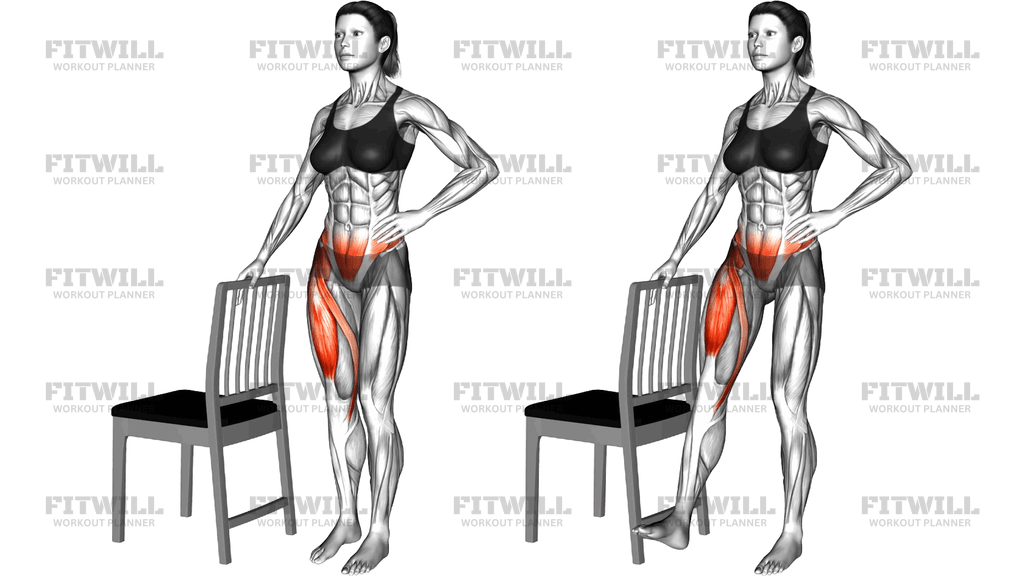
Instructions
- Place a sturdy, non-rolling chair on a flat surface and stand beside it with the chair back on one side of your body.
- Rest the hand on that side lightly on top of the chair back and place your other hand on your hip, with your feet about hip-width apart.
- Shift your weight onto the leg farther from the chair and lengthen your spine so your ribs sit over your pelvis.
- Brace your abdominal muscles gently and keep your shoulders level and relaxed.
- Raise the leg nearest the chair straight out in front of you, keeping the knee extended and the foot flexed, until your thigh reaches a comfortable height, roughly parallel to the floor.
- Pause for one to two seconds at the top without leaning your torso backward or hiking the hip.
- Lower the leg slowly and smoothly back to the floor, taking about two to three seconds rather than dropping it.
- Breathe out as you lift the leg and breathe in as you lower it, keeping your breathing steady throughout the set.
- Complete all repetitions on one side, then switch so the opposite hand rests on the chair and the other leg works.
- Between sets, step away from the chair, shake out your hips, and reset your posture before starting the next set.
Tips & Tricks
- Keep the hand on the chair light, almost like a fingertip touch, so your hips and trunk do the stabilizing instead of your arm.
- If your lower back arches as the leg rises, you have gone higher than your hip flexors can control; shorten the range and rebuild height gradually.
- Point your toes forward instead of letting the lifting foot turn out, which keeps the hip flexing straight ahead rather than rotating open.
- Avoid swinging the leg for momentum. A two-second lift and a two- to three-second lower turn this from a swing into a strength exercise.
- Check your shoulders in a mirror if possible. A shoulder hiking up on the working side usually means the hip is compensating for limited range.
- Keep the standing knee soft, not locked, so the stabilizers around that hip stay engaged for the whole set.
- If your quad on the lifting leg cramps, that is common when the rectus femoris works with the knee straight; reduce the hold time at the top and build up slowly.
- Do this exercise barefoot or in flat shoes to feel the floor through the standing foot and improve balance.
- Place the chair against a wall if it slides, since a shifting support defeats the purpose of the setup.
Frequently Asked Questions
Which muscles does the Standing Single Front Leg Raise Chair Supported work?
The primary work comes from the hip flexors at the front of the hip, mainly the iliopsoas and rectus femoris. The lower abs stabilize the pelvis, and the quadriceps help hold the lifting knee straight.
Why is a chair used instead of doing this standing free?
The chair gives light balance support so you can focus on smooth, controlled hip flexion without worrying about wobbling. It makes the exercise accessible for beginners, older adults, or anyone training on tired legs.
How high should I raise my leg during the Standing Single Front Leg Raise Chair Supported?
Raise it only as high as you can while keeping your torso tall and your lower back neutral, which for most people is around thigh-parallel to the floor. Height beyond that usually comes from arching the back rather than extra hip flexor work.
Is this exercise good for beginners?
Yes. It requires no load, the chair provides support, and the range is easy to adjust. Beginners should start with eight to ten slow repetitions per leg and prioritize control over height.
Should the lifting knee be straight or bent?
In this version the knee stays straight, which lengthens the demand on the rectus femoris and quadriceps. Bending the knee makes the movement easier, so it can be used as a regression if the straight-leg version is too hard.
What is the most common mistake in this movement?
Leaning the torso backward or swinging the leg to gain height. Both shift work away from the hip flexors and strain the lower back, so slow the tempo and reduce the range if you catch yourself doing either.
How is the Standing Single Front Leg Raise Chair Supported different from a standing knee raise?
A knee raise bends the knee and shortens the lever, emphasizing the hip flexors with less quad involvement. This straight-leg version keeps the whole leg extended, making it a longer, more demanding lever for the same muscles.
What can I use if I do not have a sturdy chair nearby?
Any stable, waist-height support works, such as a countertop, railing, or the back of a couch that will not move. Avoid anything with wheels or a lightweight frame that could tip when you lean on it.
Can I add resistance to this exercise?
Yes, once you can control fifteen clean repetitions per leg, a light ankle weight is a natural progression. Increase the load gradually, since the hip flexors and lower back feel added weight quickly.
Is it safe if I feel pinching at the front of my hip?
A pinch at the top of the lift usually means the range or speed is exceeding your current control. Reduce the height and slow down, and if the pinching persists, stop and consult a qualified professional before continuing.