Seated Single Leg Raise
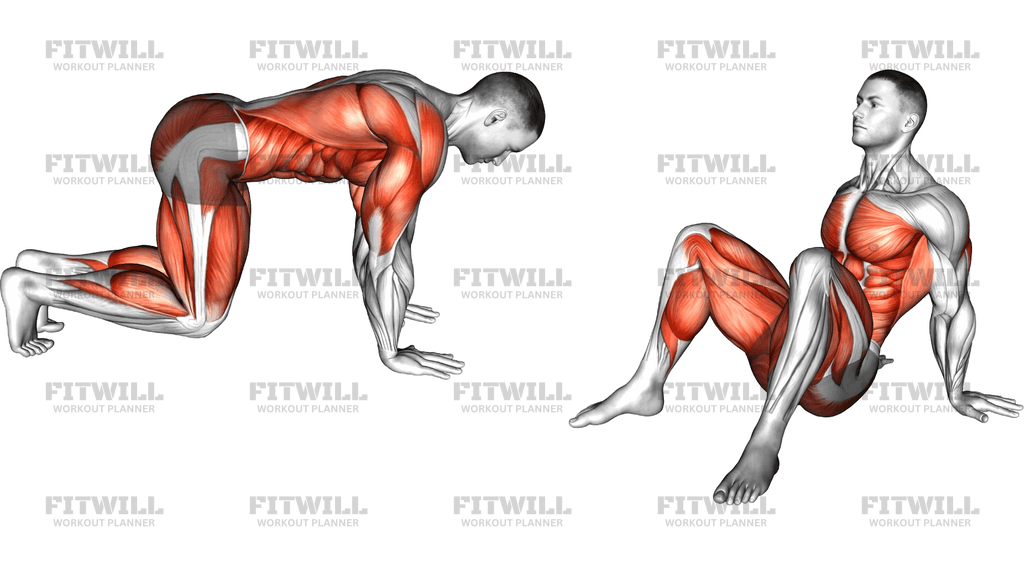
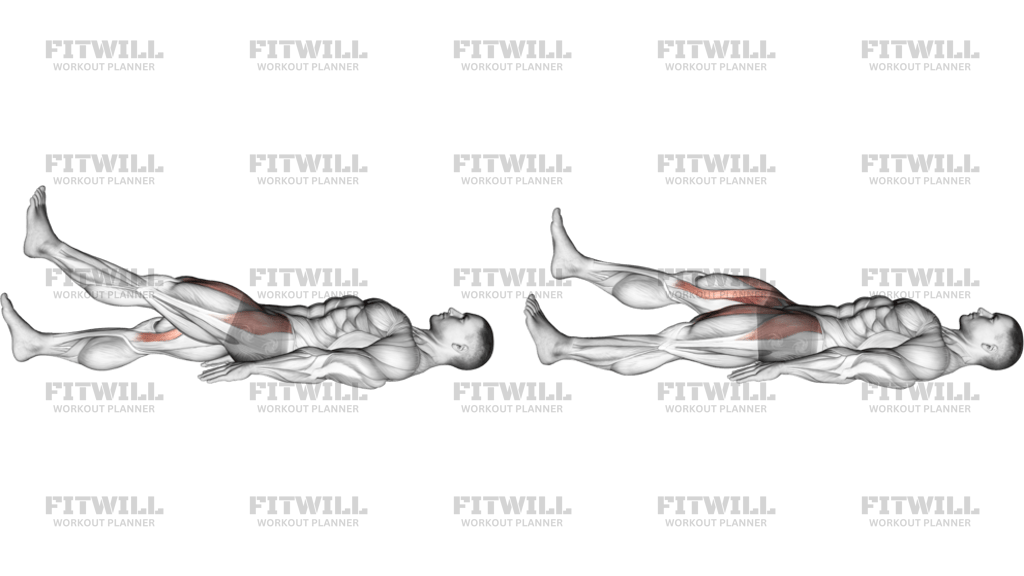
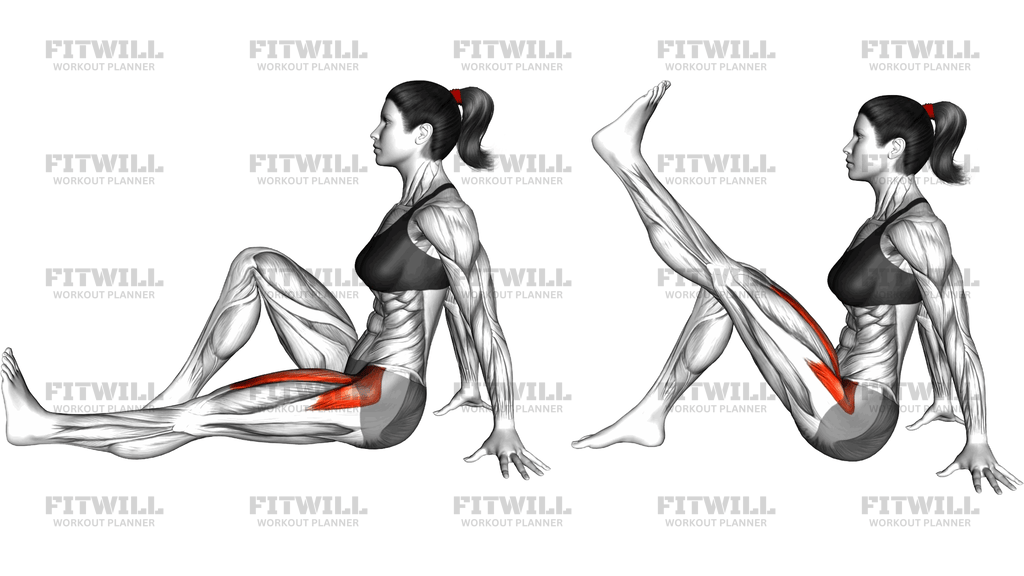
The Seated Single Leg Raise is a bodyweight movement performed on the floor that targets the hip flexors one leg at a time. You sit with your hands planted behind your hips, one knee bent with the foot flat on the floor for support, and the other leg extended straight in front of you. From there, you lift the extended leg up toward the ceiling by hinging at the hip, keeping the knee locked out, then lower it back down under control.
This exercise is especially useful for anyone whose hip flexors feel weak or undertrained. Most popular leg exercises—squats, lunges, deadlifts—train hip extension, meaning the glutes and hamstrings. Very little in a typical routine directly loads hip flexion, so movements like this one help round out lower-body development and can support better knee drive in walking, running, climbing stairs, and kicking motions.
The seated setup matters more than it looks. Because you are leaning back slightly with your hands behind you, your torso is stabilized and the working hip can move through a clean arc without your pelvis tipping or your lower back doing the work. The bent support leg anchors your position and keeps your hips square, so the raised leg does the moving rather than your whole body rocking.
To execute it well, keep the working leg completely straight from hip to ankle and think about lifting with the front of the hip, not by swinging the foot. Pause briefly near the top, then resist the way down—this eccentric phase is where much of the strength benefit lives. The quadriceps work hard to hold the knee straight, and your lower abdominals engage to keep your torso from collapsing as the leg travels.
The Seated Single Leg Raise fits well as a warm-up activation drill before running or lower-body lifting, as a finishing exercise after squats or deadlifts, or as a standalone strength move for beginners building baseline hip strength. Because it uses no equipment and one leg at a time, it is easy to program almost anywhere and simple to progress by adding reps, slowing the tempo, or adding an ankle weight.
For safety, the main watch-points are your lower back and the front of the raised hip. If you feel pinching at the top of the lift, reduce the range rather than forcing the leg higher. Keep your weight even across both hands, avoid shrugging your shoulders toward your ears, and stop if your lower back starts arching or lifting off the floor as the leg descends.
[ Workout Log & Planner ]
Put your next workout in Fitwill
Keep your plan and training log ready when you are.


Instructions
- Sit on the floor or an exercise mat with your legs extended in front of you.
- Place your palms flat on the floor just behind your hips, fingers pointing forward or slightly out, and lean your torso back a few degrees so your arms take some of your weight.
- Bend your left knee and plant that foot flat on the floor about hip-width from your body, keeping your right leg extended straight ahead.
- Brace your abdominal muscles and pull your ribcage down slightly so your lower back stays long against your arms' support.
- Lift your right leg straight up toward the ceiling by driving the top of your thigh upward, keeping the knee fully locked out and the toes relaxed.
- Raise the leg as high as you can without your pelvis tilting or your lower back rounding, and pause for one breath at the top.
- Lower the extended leg slowly back toward the floor, resisting the descent rather than letting it drop, and stop just before the heel touches down.
- Exhale as you lift the leg and inhale as you lower it, keeping your breathing steady throughout the set.
- Complete all repetitions on the right leg, then switch sides by bending the right knee for support and raising the left leg.
- Between sets, shake out your hips and reset your hand position before starting the next side.
Tips & Tricks
- Point your toes up toward your shin rather than letting the foot flop—this helps you hold the knee straight and makes the quadriceps contribute properly.
- The most common mistake is bending the working knee to lift higher. A straight leg with a slightly shorter range builds more hip flexor strength than a bent leg swung up high.
- If your shoulders creep up toward your ears as you lean back, press your hands down and draw your shoulder blades gently together to keep your neck relaxed.
- Watch that your support foot stays planted. If it slides or your hips rotate toward the moving leg, your pelvis is compensating—re-square your hips before the next rep.
- A feeling of pinching at the front of the hip usually means you are lifting past your active range. Back off a few degrees at the top and only lift as high as you can control.
- Slow the lowering phase to two or three seconds per rep. The hip flexors respond well to controlled eccentrics, and a fast drop wastes most of the work.
- If your lower back arches as the leg comes down, that is a sign your abdominals have disengaged—tighten your brace and lower only to the height you can keep your spine still.
- Beginners can lean back less, keeping the torso more upright, which shortens the lever and makes the lift easier before progressing to a deeper lean.
- Once bodyweight reps feel easy past twenty per side, add an ankle weight or hold the top position for two to three seconds to keep progressing.
Frequently Asked Questions
What muscles does the Seated Single Leg Raise work?
The primary movers are the hip flexors at the front of the hip, mainly the iliopsoas and rectus femoris. Your quadriceps work to keep the knee straight, and your lower abdominals stabilize the torso throughout.
Why is the working leg kept straight in the Seated Single Leg Raise?
A straight knee makes the leg a longer lever, which increases the demand on the hip flexors, and it forces the quadriceps to stay active. Bending the knee shortens the lever and turns the movement into a much easier, less specific exercise.
Is the Seated Single Leg Raise good for beginners?
Yes. Because it uses only bodyweight and one leg at a time, beginners can adjust the range and tempo easily. Start with a modest lift height and focus on keeping the knee locked out and the torso still.
Should I do the Seated Single Leg Raise before or after my main workout?
It works well as an activation drill before running or lower-body lifting, when your hips are fresh and you only need light reps. As a strength exercise, place it after your main lifts so fatigue does not compromise your heavier work.
Why does the front of my hip pinch when I lift my leg in this exercise?
A pinch at the top usually means you are lifting beyond your active range or letting the pelvis tilt forward. Lower the leg a few degrees, brace your abdominals harder, and work within a pain-free arc.
How many reps and sets of the Seated Single Leg Raise should I do?
For general strength and endurance, two to three sets of ten to fifteen reps per side works well. If you are using it as a warm-up, one lighter set of eight to ten reps per side is enough.
My lower back arches when I lower my leg—what should I change?
That usually means your abdominals have relaxed as the leg descends. Brace your midsection before each rep and stop the descent at the height where you can still keep your lower back still, rather than dropping all the way down.
Can I substitute the Seated Single Leg Raise with standing leg raises?
Standing leg raises train the same hip flexors but add a balance challenge and allow more torso compensation. The seated version is better for isolating the hip flexion pattern because the floor and your support arm fix your torso in place.
Do I need any equipment for the Seated Single Leg Raise?
No equipment is required—you only need floor space and, ideally, an exercise mat for comfort under your sitting bones and hands. An ankle weight is an optional later progression.
Is it normal for one side to be weaker in the Seated Single Leg Raise?
Yes, small side-to-side differences are common. Train both sides with the same number of reps, starting with your weaker leg, and let the stronger side match that count rather than exceeding it.