Standing Alternate Leg Lift
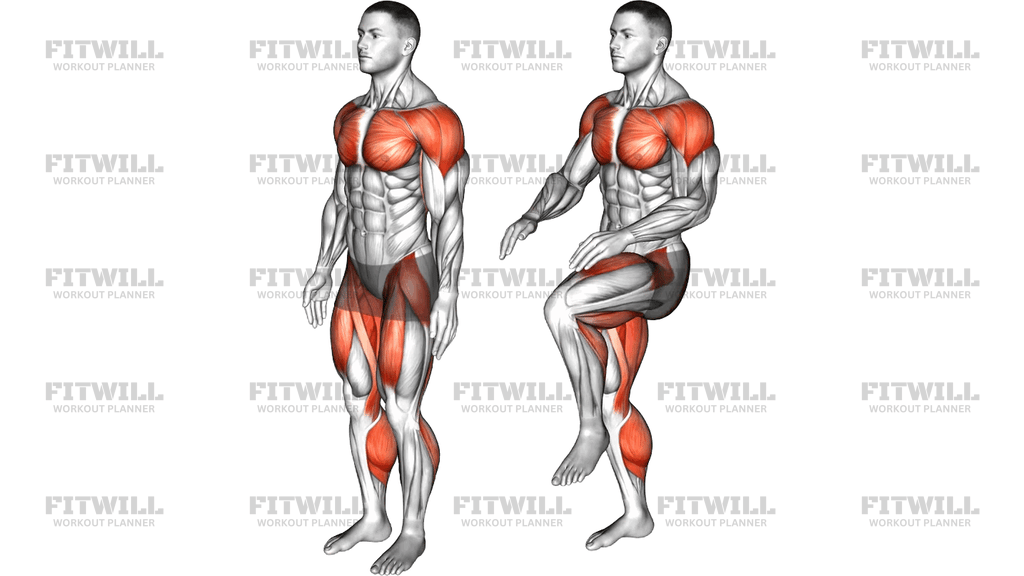
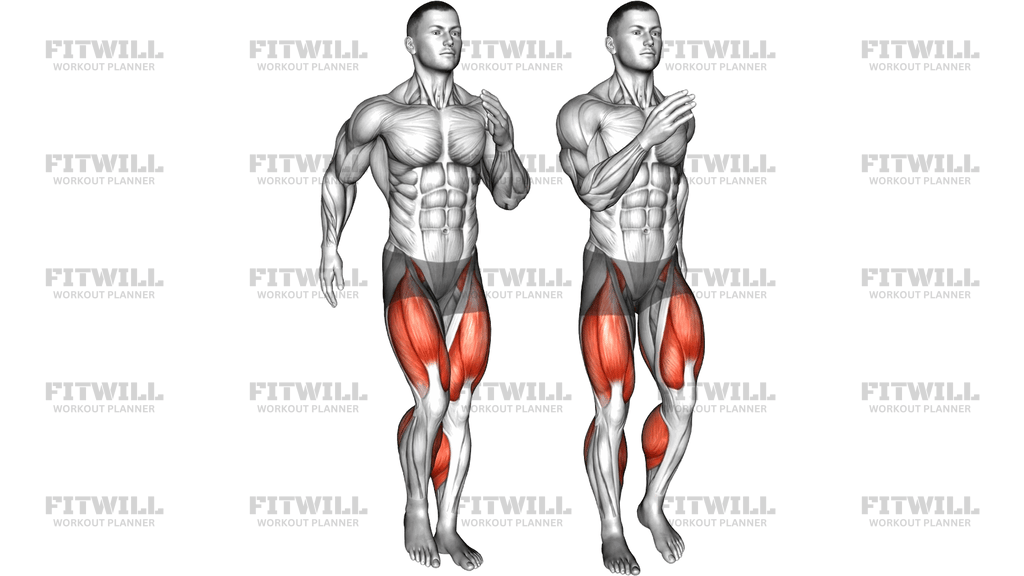
The Standing Alternate Leg Lift is a body weight exercise performed from an upright stance with the hands placed lightly behind the head. From this position, you lift one leg at a time — raising the knee or the straightened leg up in front of you — then lower it and immediately repeat with the opposite side. It is a simple movement on the surface, but because you are balancing on one leg for half of every repetition, it quietly demands a lot from your trunk and stance leg.
The main work is done by the hip flexors, the group of muscles at the front of the hip that pull the thigh upward. The quadriceps, particularly the rectus femoris, assist because they cross both the hip and the knee. Meanwhile, the abdominals and obliques work isometrically to keep your ribcage and pelvis from twisting or collapsing as each leg drives up. The standing position also trains the glutes and smaller hip stabilizers of the support leg, which have to keep you level and upright.
Setup matters more here than people expect. Standing tall with a braced torso and the hands behind the head gives you a reference point: if your elbows, shoulders, or hips start rotating as you lift, you know you are borrowing momentum instead of using the hip flexors. Keeping the spine neutral and the weight distributed over the whole foot of the standing leg protects the lower back and makes the targeted muscles do the actual work.
To execute the movement well, exhale as you drive one knee or leg up to about hip height, pause briefly at the top, and lower the leg under control rather than letting it drop. Alternate sides for your desired number of repetitions while keeping the torso steady. The lift should feel like it happens at the hip joint, not like a swing or a bounce.
This exercise fits well into warm-ups, home workouts, and core or lower-body circuits where no equipment is available. It is also a useful low-impact option for older trainees or anyone rebuilding single-leg balance after time away from training. Because the difficulty scales easily with knee height, tempo, and pauses, it stays useful from beginner to intermediate levels.
As for safety, the most common issue is arching the lower back as the leg rises, which shifts stress away from the hips and onto the spine. Keep the brace firm, lift only as high as you can without tilting the pelvis, and hold a wall or chair for balance if you wobble. Slow, controlled reps will always beat fast, sloppy ones here.
[ Workout Log & Planner ]
Put your next workout in Fitwill
Keep your plan and training log ready when you are.


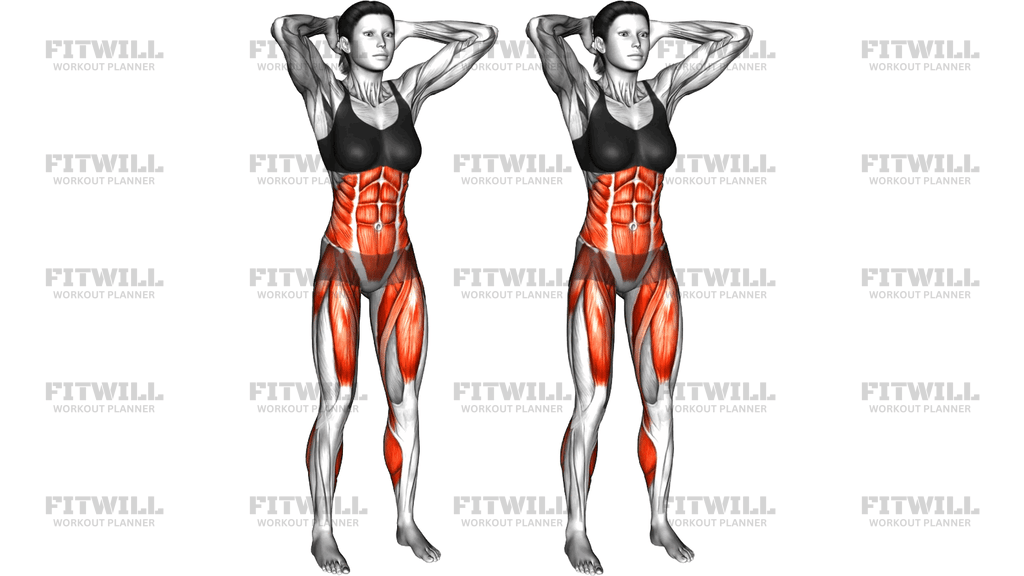
Instructions
- Stand upright with your feet hip-width apart and your weight spread evenly across both feet.
- Place your hands lightly behind your head with your elbows flared out to the sides, without pulling on your neck.
- Brace your abdominal muscles, keep your chest tall, and shift your weight slightly onto one leg to prepare for the first lift.
- Exhale and lift the opposite knee (or straight leg) up in front of you toward hip height, bending purely at the hip.
- Pause for a beat at the top with the thigh raised, keeping your torso vertical and your elbows from collapsing inward.
- Lower the leg slowly and with control until your foot returns to the floor.
- Immediately repeat the lift with the other leg, continuing to alternate sides for the planned number of reps.
- Breathe steadily throughout: exhale on the lift, inhale as you lower.
- After the final repetition, settle back onto both feet, release your hands from behind your head, and reset your posture before the next set.
Tips & Tricks
- If your lower back arches as the leg rises, you are lifting past your current hip and core control — reduce the height until your pelvis stays level.
- Do not interlock your fingers and yank your head forward; the hands behind the head are for position, not pulling, and the neck should stay relaxed.
- Watch for the hips twisting toward the lifting leg. Point both hips forward the whole time and let the obliques resist the rotation.
- Slow the lowering phase to a two- or three-second count. Most people get value from the descent, not just the lift.
- Keep the standing knee soft rather than locked out. A slightly bent knee keeps the hip stabilizers engaged and the balance steadier.
- If you wobble noticeably, stand beside a wall or chair and rest one fingertip on it for balance rather than shortening the range.
- Adding a one- or two-second pause at the top of each lift makes the hip flexors work harder without needing any added load.
- Keep the lifted foot dorsiflexed (toes pulled up) — this small cue helps you lift from the hip instead of flicking the leg with momentum.
Frequently Asked Questions
Which muscles does the Standing Alternate Leg Lift work the most?
The hip flexors at the front of the hip do the primary lifting work, with the quadriceps assisting. The abdominals and obliques stabilize the torso, and the glutes and hip stabilizers of the standing leg keep you balanced.
Is the Standing Alternate Leg Lift suitable for beginners?
Yes, it is a low-impact body weight movement that beginners can learn quickly. Start with a modest knee height and hold a wall or chair for balance if single-leg standing feels unsteady.
Should I lift a bent knee or a straight leg?
A bent-knee lift is easier and keeps the emphasis on the hip flexors with less demand on the hamstrings' flexibility. A straight-leg lift is a harder progression and stretches the hamstrings of the lifting leg, so choose based on your control and mobility.
How high should I raise each leg during the Standing Alternate Leg Lift?
Aim for roughly hip height, or whatever height you can reach without your lower back arching or your pelvis tilting forward. Range that you can control is more productive than forcing the knee higher.
Why do my lower back and not my hips feel this exercise?
That usually means your pelvis is tilting forward and your spine is arching as the leg rises. Brace your abdominals harder, reduce the lift height, and slow the tempo until the effort shifts back to the front of the hip.
Can I use the Standing Alternate Leg Lift as a warm-up?
Yes, it works well as a warm-up because it raises the heart rate slightly, mobilizes the hips, and activates the core and stabilizers before squats, lunges, or running.
How many repetitions should I do?
For core and hip conditioning, 10 to 20 controlled lifts per side works well, depending on your level. If your form breaks down or your balance gets sloppy, end the set rather than pushing through.
What can I substitute if I cannot balance on one leg?
Perform the same lifting motion while standing next to a wall with one hand on it, or try seated or lying leg raises, which remove the balance demand while still training the hip flexors.
Is it safe to do the Standing Alternate Leg Lift every day?
Because it uses only your body weight, it is generally fine to include most days of the week, especially at low volumes. If your hip flexors feel persistently sore, add a rest day or reduce the repetitions.