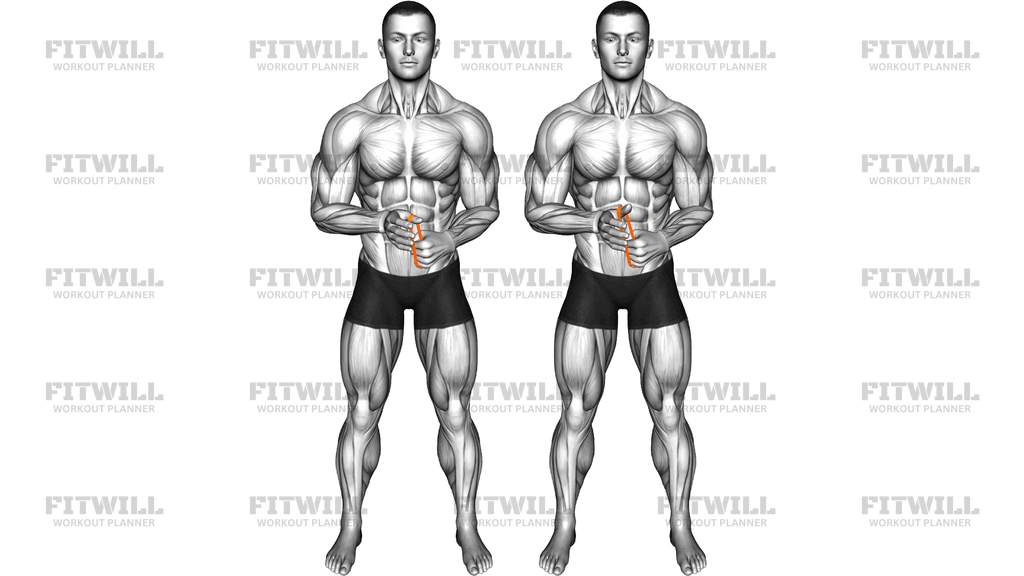
Resistance Band Fingers Extension
Resistance Band Fingers Extension is a small, focused exercise for the back of the hand and forearm. You loop a small resistance band around your fingers and spread them apart against the band's pull, then slowly let them close. Most hand and forearm training works the gripping muscles on the palm side, so this movement fills an important gap by strengthening the muscles that open the hand, mainly the extensors on the top of the forearm and the small muscles between the hand bones.
This exercise is especially useful for anyone who grips heavily during training. Climbers, rowers, lifters, and people who spend long hours typing or using a mouse all spend most of their day with the fingers flexed. Working the opposite motion helps balance the hand, supports elbow health under heavy gripping loads, and can ease the tight, overworked feeling that builds up on the inside of the forearm.
The setup is simple but worth getting right. Loop a small continuous band around the outside of your fingers near the fingertips, roughly at the middle to top segments, so the band sits snug and pulls your fingers together. Keep your wrist in a neutral position with your forearm relaxed at your side, and let the band provide resistance only across the finger joints rather than bending the wrist. If the band is too thick, your fingers will jerk apart; if it is too thin, you will finish reps without much effort.
To perform the movement, spread your fingers wide against the band until they are fully opened, hold for a brief moment, then close them slowly while keeping tension on the band. The closing phase matters as much as the opening: lowering your fingers under control instead of letting the band snap them shut is what keeps the small hand muscles working through the whole rep. Breathe normally and keep your shoulders loose, since it is easy to unintentionally tense the upper body during such a concentrated movement.
Because the band offers light resistance and the range of motion is short, this exercise works best with higher repetitions, typically 15 to 25 per set. It fits well at the end of a pulling or grip session, or as a quick reset break during a workday. Do not expect soreness or heavy fatigue here; the goal is steady, controlled work for small muscles that respond better to consistent volume than to maximum effort.
[ Workout Log & Planner ]
Put your next workout in Fitwill
Keep your plan and training log ready when you are.


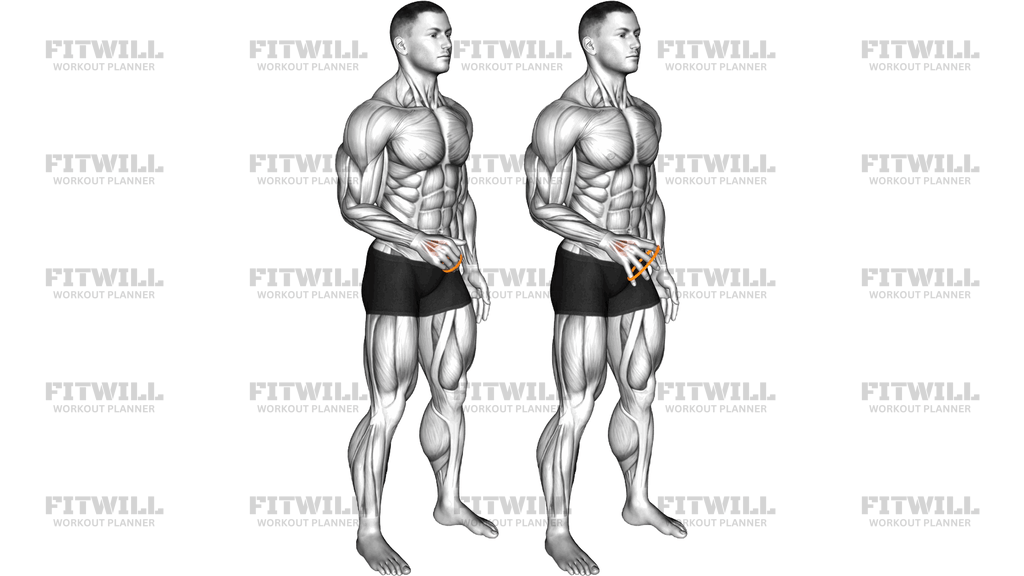
Instructions
- Hold a small loop resistance band so it wraps around the outside of all five fingers, sitting near the top or middle segments of the fingers.
- Stand or sit tall with your working forearm relaxed at your side and your wrist straight, letting the band pull your fingertips gently toward each other.
- Keep your shoulder and elbow still throughout the set; only your fingers should move.
- Spread your fingers apart as wide as you comfortably can against the band's tension.
- Pause for one second at the fully opened position with your fingers spread and the band stretched.
- Close your fingers slowly and with control until they come back together, keeping some tension in the band rather than letting it go slack.
- Exhale as you spread your fingers open and inhale as you close them.
- Complete 15 to 25 controlled repetitions, then switch the band to your other hand.
- After the set, slide the band off your fingertips and gently open and close your hand a few times to reset before the next set.
Tips & Tricks
- Place the band closer to your fingertips for an easier rep and further down toward the knuckles for more resistance; adjust before adding a thicker band.
- If the band keeps slipping off your pinky during reps, reposition it so it sits over the first knuckle of every finger, not just loosely across the tips.
- A common mistake is bending the wrist backward to help the fingers open; check that your wrist stays in line with your forearm for the whole set.
- Do not rush the closing phase. Letting the band snap your fingers shut removes most of the training effect from the small muscles on top of the hand.
- Keep your thumb involved. Some people spread only four fingers and leave the thumb relaxed against the band; push your thumb outward too.
- Your forearm and hand may cramp early on because the muscles are untrained in this direction. Reduce the band tension and shorten your sets rather than pushing through a cramp.
- If you grip heavily in your training, do this exercise after your workout, not before, so fatigued finger extensors do not compromise your hold on bars or weights.
- Stop if you feel sharp pain at the knuckles or elbow. Mild working effort is normal; joint pain usually means the band is too strong or positioned too low on the fingers.
Frequently Asked Questions
Which muscles does Resistance Band Fingers Extension work?
It primarily targets the finger extensors and the muscles on the top of the forearm, along with the small muscles inside the hand that spread the fingers. The thumb muscles assist as you push the thumb away from the band.
Where exactly should the band sit on my fingers?
Loop it around the outside of all five fingers near the top or middle segments, roughly at the first knuckle. Placing it lower, over the base of the fingers, increases the difficulty.
Is Resistance Band Fingers Extension good for beginners?
Yes. The resistance is light, the range of motion is short, and there is little risk of poor mechanics as long as the wrist stays neutral. Beginners should simply start with a thin band and moderate reps.
How many repetitions should I do?
Aim for 15 to 25 controlled reps per hand for two to three sets. Because the muscles involved are small, higher reps with a light band work better than low reps with heavy tension.
Why do my forearms burn so quickly during this exercise?
The forearm extensors are rarely trained in this direction, so they fatigue fast at first. This is normal and improves with consistent practice; drop to a thinner band if the burn turns into cramping.
Can I use this exercise if I climb or lift heavy?
It is one of the most practical add-ons for heavy-grip sports. Doing it after climbing or pulling sessions balances all the finger flexion work and helps keep the forearm muscles in better condition.
What can I substitute if I do not have a small loop band?
You can use a longer resistance band folded and tied into a loop, or simply open and close your hand against the pressure of your opposite palm. The loop band is preferable because it provides even resistance in every direction.
Should I feel anything in my wrist or elbow?
You may feel mild effort along the top of the forearm running toward the elbow, which is expected since these muscles originate there. Sharp pain at the knuckles or outer elbow is not; use a lighter band and keep the wrist straight.
Can I train both hands at the same time?
Yes, you can place one band on each hand and work both sides simultaneously. Many people find it easier to control the movement and timing one hand at a time when first learning it.