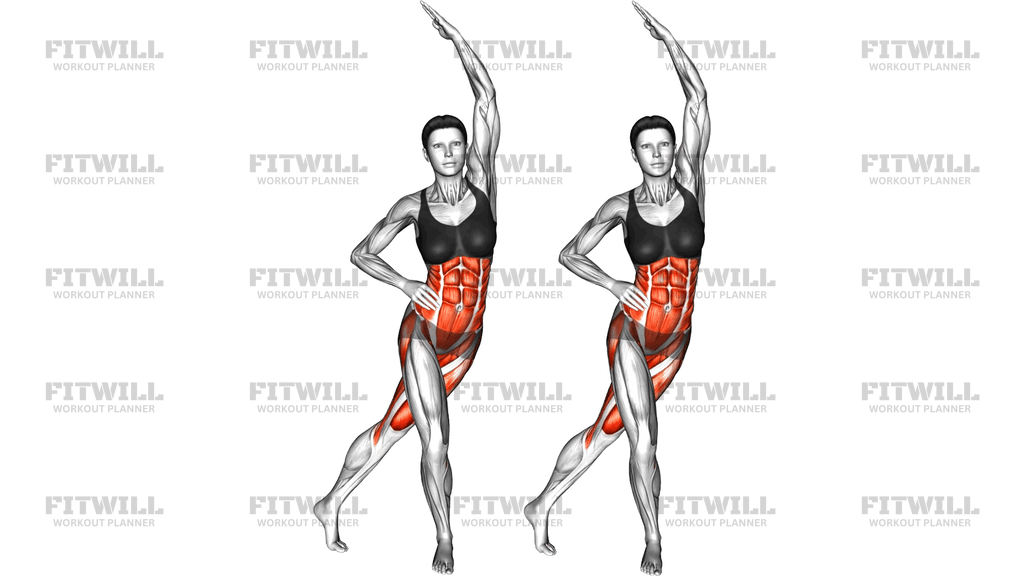
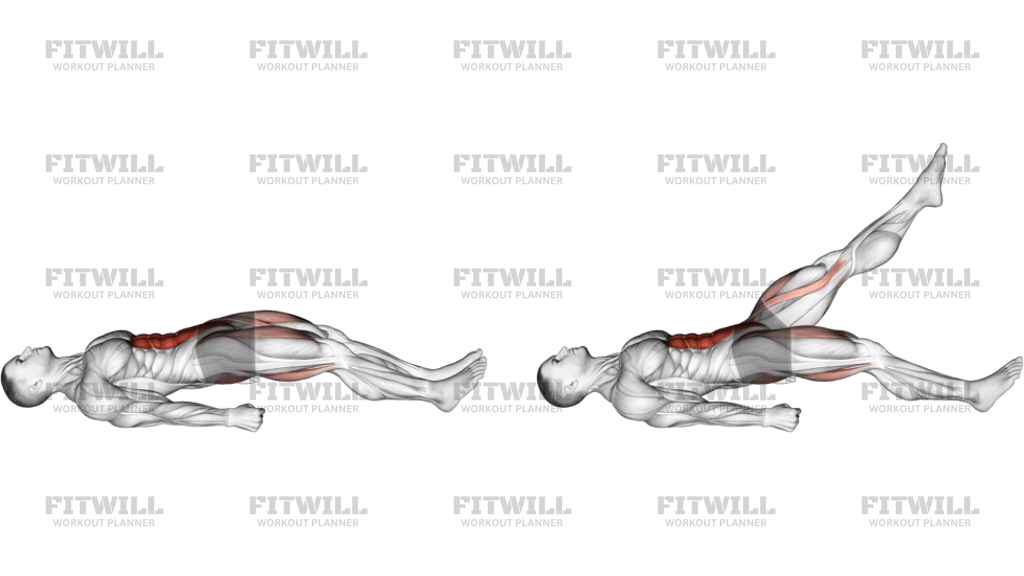
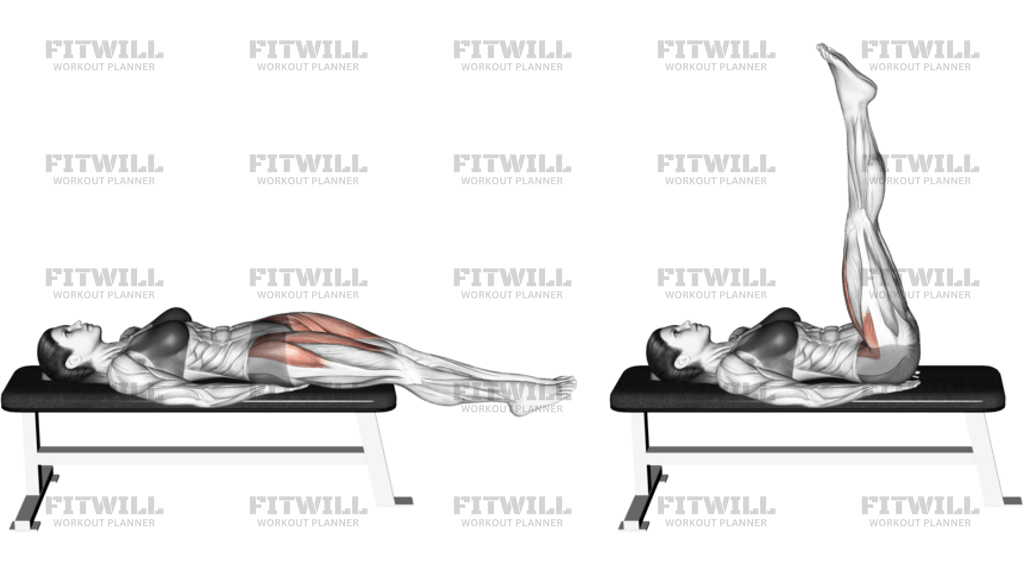
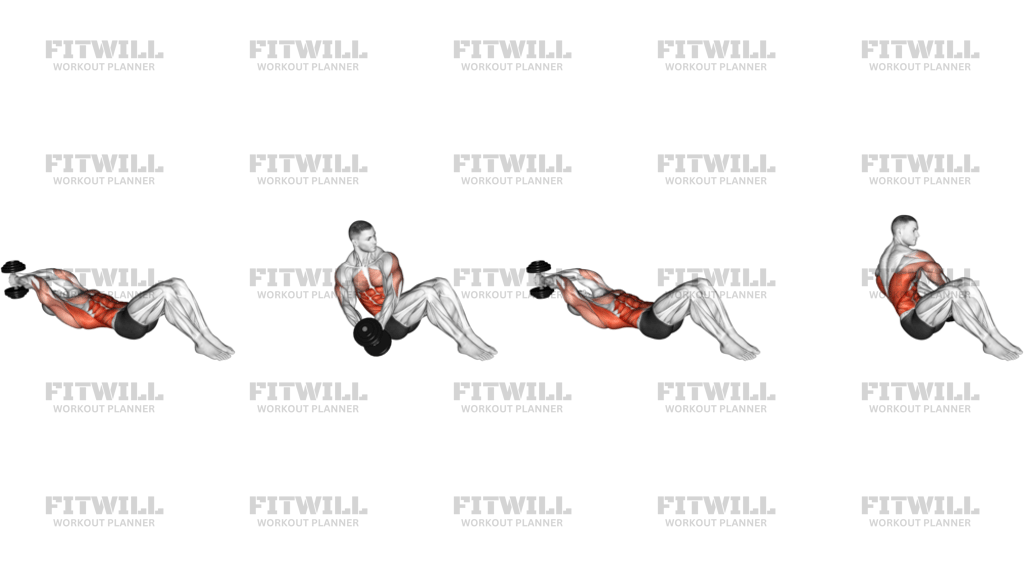
Alternate Leg Lift Tap Arms Circle
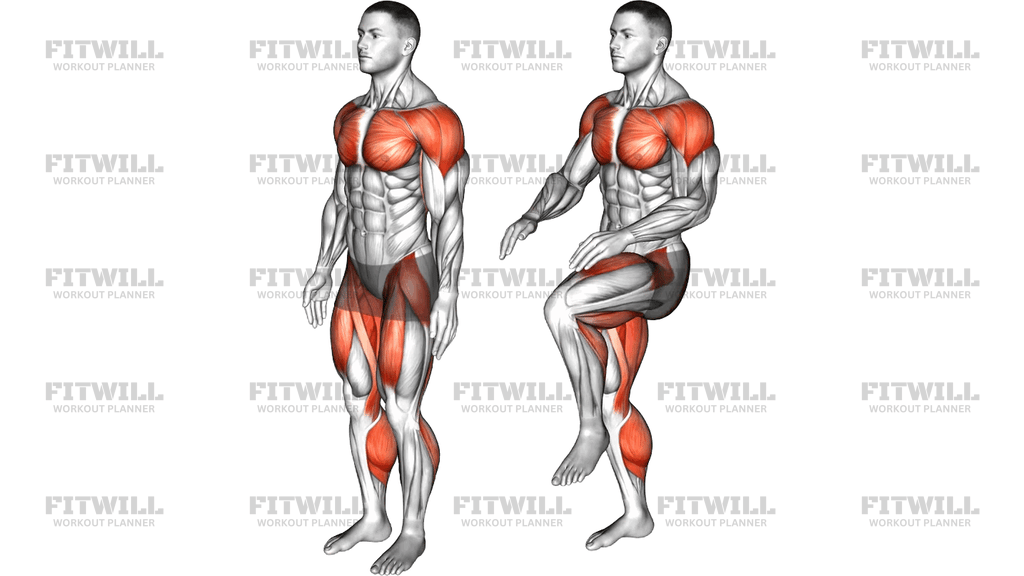
Alternate Leg Lift Tap Arms Circle is a standing body weight drill that pairs a single-leg lift with a reaching arm action on the opposite side of the body. From a tall stance, you drive one knee or straight leg up while the opposite arm sweeps down from overhead to tap the top of the raised leg, then continues through a full circular path back to the start. Each rep crosses the midline of the body, which forces your trunk to stabilize while one limb loads and the other moves.
This movement earns its place in warm-ups, core circuits, and movement-prep blocks because it hits several systems at once. The lifting leg challenges the hip flexors and lower abs, the circling arm works the shoulder through a large range under light load, and the standing leg has to hold you steady on a single base of support. Because the tap happens on the opposite side, your obliques and deep core also work to keep the ribs and pelvis from twisting as the limbs cross.
It suits a wide range of trainees. Beginners can use it to learn single-leg balance and hip hinge-free knee driving without any equipment, while more advanced lifters use it as a low-fatigue activation drill before squats, deadlifts, or running sessions. It also works well in circuit training or as active recovery between harder sets, since the pace can be scaled from slow and deliberate to brisk and continuous.
Setup matters more than it looks. A narrow, hip-width stance with soft knees and a braced trunk gives you a stable base; a wide stance or locked knees lets you lean and swing instead of lift. Keep the torso upright and ribs stacked over the pelvis rather than rounding back as the leg rises, because that rounded posture hides the abdominal work and strains the lower back.
Execution should feel smooth rather than rushed. Lift the leg to roughly hip height or as high as you can without losing posture, meet it with the opposite hand at the top, and let the arm travel a complete circle back overhead as the leg lowers. The arm circle is not decoration; it teaches the shoulder to move through its full range while the trunk resists rotation, which is exactly the coordination most people lack.
If balance is a limitation, stand near a wall or rack and touch it lightly with one hand until single-leg control improves. Stop the set when your lifting knee starts drifting inward or your torso begins collapsing forward, since those are the first signs of fatigue in this pattern.
[ Workout Log & Planner ]
Put your next workout in Fitwill
Keep your plan and training log ready when you are.


Instructions
- Stand tall with your feet hip-width apart, knees soft but not bent, and your arms relaxed at your sides.
- Brace your abdominals lightly and lift your chest so your ribs sit stacked over your pelvis; shift your weight slightly toward the balls of your feet so you can react to balance shifts.
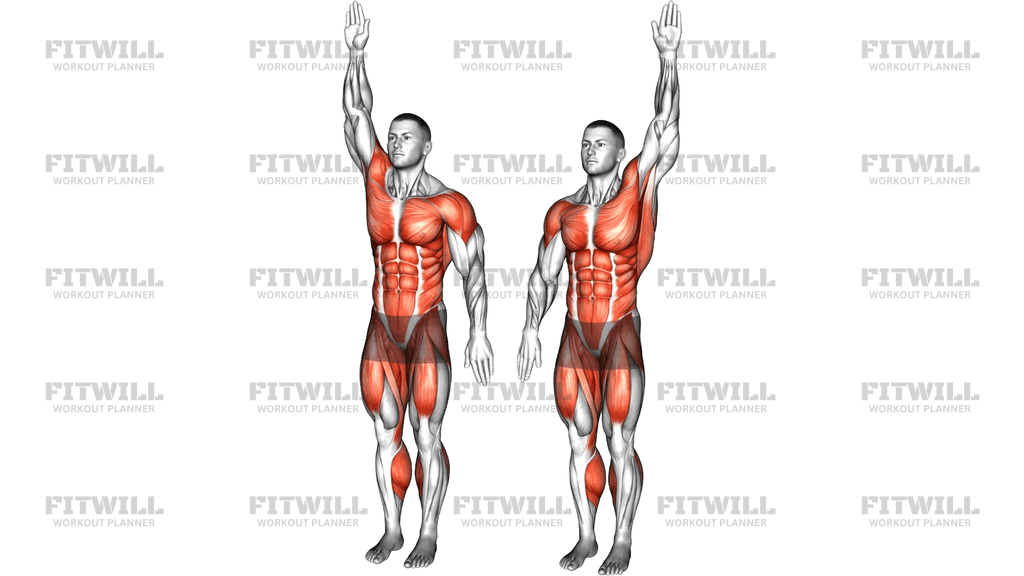
- Raise one arm straight overhead with the palm facing inward, keeping the shoulder relaxed and the elbow long rather than locked.
- Shift your weight onto the leg on the same side as the raised arm, then drive the opposite knee up toward hip height, or raise that leg straight out in front of you if your hips allow.
- As the leg reaches its top position, sweep the raised arm down and forward to tap the knee, shin, or top of the foot with your hand.
- Continue the hand through a full circle — down past your hip, out to the side, and back up overhead — while lowering the leg under control to the floor.
- Exhale as you lift the leg and tap, then inhale as the arm circles and the leg returns.
- Reset your posture briefly so you are standing evenly again, then repeat the pattern on the other leg with the opposite arm.
- Keep alternating sides for your target number of reps or time, pausing the set if your torso starts leaning back or your knee drifts out of line.
Tips & Tricks
- If your lower back rounds every time the knee rises, stop the lift at the height where your spine stays neutral — the tap point is wherever your posture allows, not a fixed target.
- A common error is hopping off the standing leg as the hand taps. Press the big toe into the floor and keep the standing knee soft to stay planted.
- If your shoulder grinds or pinches during the circle, shrink the circle radius and keep the thumb slightly up; a smaller, cleaner arc beats a wide, forced one.
- Do not let the tapping arm cross way past the midline of your body. If your torso starts twisting to reach the leg, lift the knee slightly lower instead.
- Keep the lifting knee pointing straight ahead or very slightly out. A knee that collapses inward signals the hip stabilizers on the standing leg are tiring.
- Slow the lowering phase of the leg down before you speed anything up — most people rush the return and lose the abdominal benefit entirely.
- If balance is the limiting factor, brush a wall or rack with two fingertips rather than widening your stance, which changes the pattern you are training.
- Keep your gaze fixed on one spot at eye level. Looking down at your foot as you tap is a fast way to wobble off balance.
- Breathe with the rep instead of holding your breath through the tap; breath-holding makes the trunk rigid in the wrong way and spikes tension in the neck.
Frequently Asked Questions
What muscles does Alternate Leg Lift Tap Arms Circle work?
The main work comes from the hip flexors of the lifting leg and the lower abs that control pelvic position. The front of the shoulder moves the arm through the circle, while the glutes and hip stabilizers on the standing leg keep you balanced.
Should I lift a bent knee or a straight leg in Alternate Leg Lift Tap Arms Circle?
Either works — a bent knee raise is easier on the hips and keeps the tap simple, while a straight-leg lift demands more hip flexor and hamstring flexibility. Start with the knee raise and progress to the straight leg only when your torso stays upright through the top.
Why does the arm tap on the opposite side of the lifting leg?
The opposite-hand pattern crosses the midline of the body, which forces the obliques and deep core to resist rotation while one leg bears all your weight. It also mimics natural walking and running coordination, making it useful as movement prep.
Is Alternate Leg Lift Tap Arms Circle good for beginners?
Yes, as long as the range stays honest. Beginners should lift to knee height rather than forcing the foot up to the hand, and can stand near a wall for light support until single-leg balance settles.
How high should I raise my leg before tapping it?
Aim for roughly hip height, or just short of it. If reaching the leg rounds your back or pulls your shoulders forward, the leg has gone higher than your core can control — lower the lift instead of leaning to meet it.
Can I use Alternate Leg Lift Tap Arms Circle as a warm-up?
It is an excellent warm-up drill because it raises the heart rate slightly, mobilizes the shoulders and hips through large ranges, and primes single-leg balance before squats, lunges, or running. Keep the pace moderate and the reps higher rather than loading it.
What is the most common mistake in Alternate Leg Lift Tap Arms Circle?
Leaning the torso backward as the knee lifts, which turns a core exercise into a lower-back hinge. Brace the abdominals, keep the ribs stacked over the pelvis, and cut the leg height until you can stay tall.
What can I substitute if I cannot balance through the arm circle?
Try a standing knee raise with a simple opposite-hand tap and no circle, or perform the drill while barely touching a wall with two fingertips. A seated or lying opposite knee-to-elbow variation trains a similar cross-body pattern with far less balance demand.
How many reps of Alternate Leg Lift Tap Arms Circle should I do?
For warm-ups, 10 to 15 controlled reps per side works well; in a circuit, 30 to 45 seconds of continuous alternating is enough. Stop the set when your standing leg starts wobbling or your torso leans, since form breaks there first.
Is this exercise safe for people with lower back issues?
The movement is generally back-friendly when the trunk stays upright and the leg height is limited to what the core can control. If any lift reproduces back discomfort, reduce the range, keep the knee bent, or check with a qualified professional before continuing.