Forward Bend Back Stretch
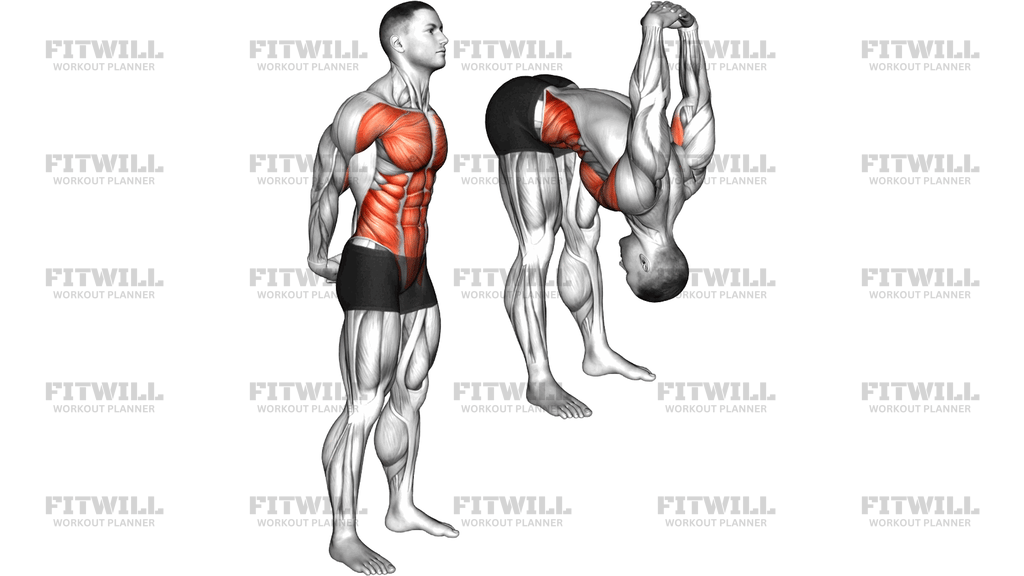
The Forward Bend Back Stretch is a standing stretch where you fold forward at the hips while your hands are clasped behind your back, letting your arms travel up and over toward the floor as your torso drops. This combination does two jobs at once: the forward fold lengthens the entire back line of the body, and the lifted, clasped arms open the shoulders and chest in the opposite direction. It's a bodyweight movement that needs nothing more than a few feet of clear floor space.
This stretch is especially useful for people who spend long hours sitting. Sitting rounds the upper back, closes the chest, and stiffens the muscles along the spine, and this movement addresses all of that in one position. It also works well as a finisher after back or pulling workouts, since it gently lengthens the lats, lower back, and shoulder tissues that get heavily loaded during rows and pull-ups.
To set it up, stand with your feet about hip-width apart with a soft bend in the knees. Reach both arms behind you and interlace your fingers at the base of your spine. From there, hinge forward from the hips, keeping your back relatively long rather than curling immediately, and allow your clasped hands to lift away from your body so your arms travel toward the floor over your head. Your head hangs heavy, your neck stays relaxed, and your weight sits mid-foot rather than in the toes.
The setup detail that matters most is the clasped-hands position behind the back. If you clasp too low or let the arms bend, the shoulders never get the opening effect and the fold turns into an ordinary toe-touch. Keep the elbow relatively straight on the lifting arm, draw the shoulder blades gently together, and let the hands rise as the torso lowers. If your shoulders are tight, you can hold a small towel between your hands instead of interlacing your fingers.
Execution should be slow and breath-driven. Fold down over several seconds, let the arms drift up only as far as comfortable, and pause at your deepest position for 20 to 40 seconds while breathing steadily. Never bounce or jerk to deepen the stretch, and never force the arms overhead if you feel pinching in the shoulder joint. On the way up, engage your core and rise one vertebra at a time, keeping the hands clasped until you are fully standing.
Because it is gentle and self-regulated, this stretch suits nearly anyone from beginners to experienced lifters. Its main safety considerations are moving into the fold slowly, avoiding the urge to straighten the legs fully at the bottom, and coming out of the stretch with control so you don't stand up quickly with a rounded back. Done consistently, it improves shoulder mobility, eases tension along the spine, and helps restore the upright posture that everyday habits tend to erode.
[ Workout Log & Planner ]
Put your next workout in Fitwill
Keep your plan and training log ready when you are.


Instructions
- Stand tall with your feet hip-width apart, weight spread evenly across both feet, and a slight bend in your knees.
- Reach both arms behind your back and interlace your fingers at your lower back, drawing your shoulder blades gently toward each other.
- Inhale to lengthen your spine, then hinge forward from the hips, leading with your chest rather than rounding first.
- Let your clasped hands lift away from your body as you fold, so your arms travel up and over toward the floor behind you.
- Keep your knees softly bent and your weight balanced mid-foot; let your head hang heavy and relax your neck completely.
- Stop at the point where you feel a solid stretch through your back, shoulders, and the backs of your legs, without straining.
- Breathe slowly and deeply, exhaling as the fold deepens slightly with each breath, and hold the end position for 20 to 40 seconds.
- To release, brace your core, keep your back long, and roll or hinge up one vertebra at a time, keeping your hands clasped until you are upright.
- Unclasp your hands, shake out your arms and shoulders, and reset your stance before repeating if desired.
Tips & Tricks
- If your shoulders are too tight to interlace your fingers comfortably, hold a small towel between both hands and walk your grip closer as mobility improves.
- The most common mistake is rounding the spine immediately and turning this into a toe touch. Lead with the chest so the fold comes from the hips and the back stays long.
- Avoid locking the knees at the bottom. Straight legs pull on the hamstrings and the lower back at the same time, which often causes the fold to stall.
- If you feel pinching at the front of the shoulders, lower your arms slightly and widen the clasp rather than pushing through discomfort.
- Let gravity do the work of lifting the arms. Forcing the hands toward the floor with active pulling tends to tense the very muscles you're trying to release.
- Keep your neck fully relaxed and let the head hang. Holding the head up partially defeats the stretch on the upper back and traps.
- Shift your weight slightly into your heels if you feel yourself tipping forward; this keeps the hips hinging instead of the body collapsing toward the toes.
- Exhale as you fold and use each exhale to soften a little deeper. Holding your breath while stretching makes the muscles guard against the lengthening.
- Come up slowly and with a braced core. Standing up quickly from a deep fold with a rounded back is where most lower-back tweaks happen in this stretch.
Frequently Asked Questions
What muscles does the Forward Bend Back Stretch target?
It primarily lengthens the muscles along the spine and the lats, while the clasped, lifting arms open the chest and front shoulders. The backs of the legs also get a secondary stretch from the forward fold.
Is the Forward Bend Back Stretch suitable for beginners?
Yes. It is a bodyweight stretch with no equipment, and you control the depth entirely, so beginners can fold only partway and still get the benefit. Using a towel between the hands makes the shoulder position easier at first.
Why are the hands clasped behind the back instead of reaching for the floor?
The behind-the-back clasp stretches the chest and front of the shoulders while the torso folds, so you train the back and front of the body in the same hold. Reaching for the floor would only stretch the back line.
Should my knees be straight or bent during the Forward Bend Back Stretch?
Keep a soft bend in the knees, especially when you're newer to the stretch. Straightening them fully stacks tension on the hamstrings and lower back and often makes the fold less comfortable without adding benefit.
How long should I hold the Forward Bend Back Stretch?
Aim for 20 to 40 seconds per hold, breathing steadily the whole time. If you're doing it after a workout, two to three reps work well.
What is the most common mistake in this stretch?
Collapsing into a rounded spine and dropping the arms instead of keeping the clasp and the long back. If the hands sink toward the floor behind you, the shoulder-opening part of the stretch disappears.
Can I do the Forward Bend Back Stretch with tight hamstrings?
Yes, just fold less deeply and keep the knees more bent. The stretch is still effective through the back and shoulders even at a partial fold.
What can I use instead of interlacing my fingers if my shoulders hurt?
Hold a small towel or stick between both hands behind your back, which shortens the required shoulder range. You can also keep the hands unclasped on the lower back and simply fold, then add the clasp as mobility improves.
Is it safe for my lower back?
For most people, yes, as long as you fold from the hips, keep the knees soft, and rise back up slowly with a braced core. If you have a current back injury or feel sharp pain, skip the deep fold or check with a qualified professional first.