Alternate Forward Kick
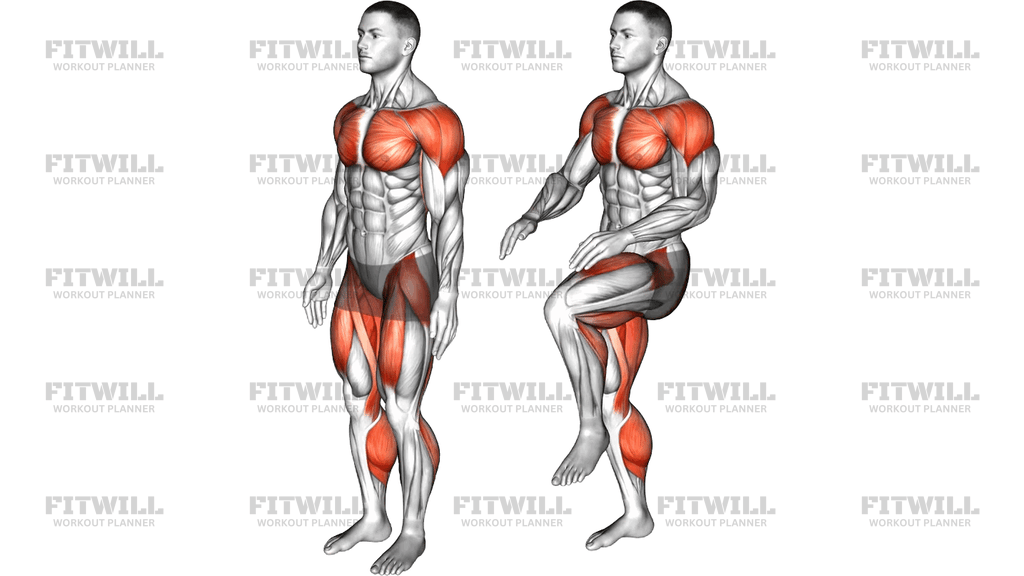
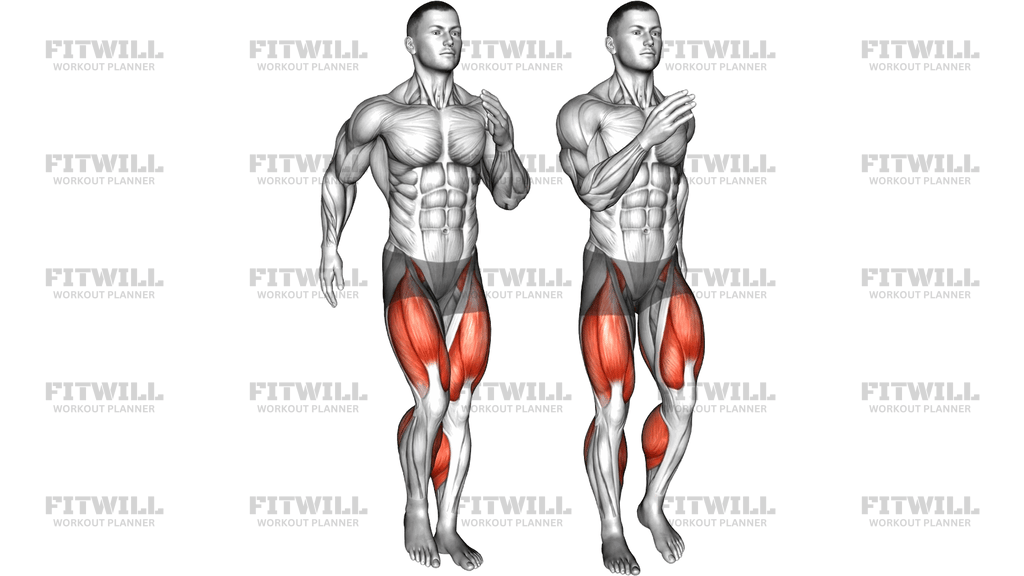
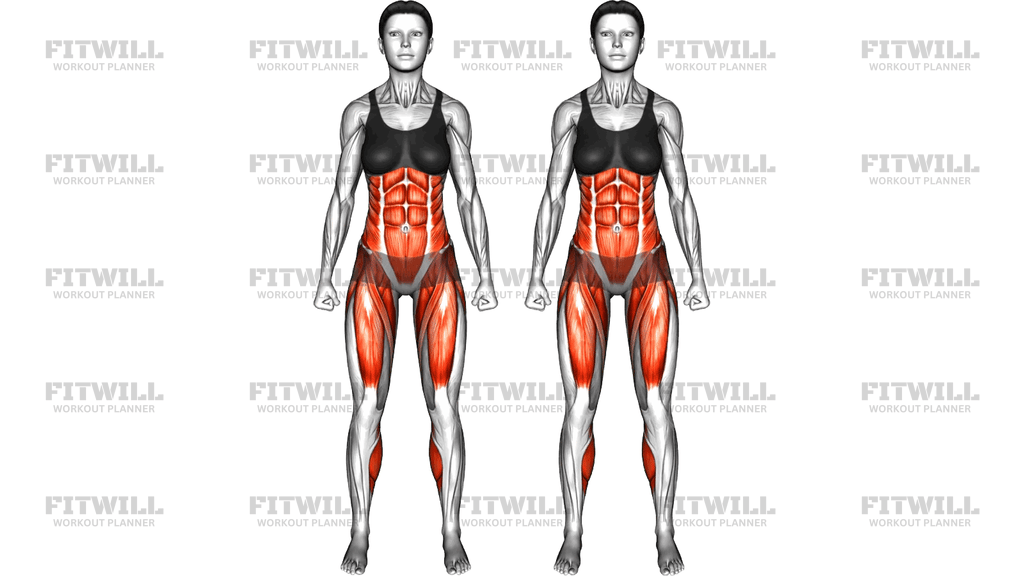
The Alternate Forward Kick is a standing body weight movement where you lift one leg straight out in front of you, lower it under control, and immediately repeat with the other leg, alternating sides for reps or time. It looks deceptively simple, but because you are balancing on one leg while driving the other forward, it challenges the hip flexors, the muscles across the front of the thigh, and the deep core all at once. The highlight areas in the muscle map tell the story: this is a front-of-the-hip and abdominal exercise first, with the calves and standing leg working hard to keep you steady.
This movement fits well into warm-ups, dynamic mobility routines, kickboxing-style conditioning, and core circuits. Because it requires no equipment and very little space, it is a practical choice for home training, hotel room workouts, or as an activation drill before squats and deadlifts. Martial artists and kickers use it as a low-impact way to groove the hip path before throwing full-power kicks, while general trainees benefit from the balance and single-leg stability demand.
The setup matters more than most people expect. Stand tall with your feet roughly hip-width apart, weight evenly distributed, and your ribs stacked over your pelvis. If your lower back arches as the leg rises, the hip flexors are doing the work by pulling your spine into extension instead of moving the thigh. Bracing the abs lightly and keeping the pelvis neutral is what turns this from a sloppy leg swing into a targeted hip flexor and lower ab exercise.
Execution should be crisp but not rushed. Drive one knee toward waist height and extend the leg so the foot travels forward and slightly upward, as if kicking a ball at shin-to-hip height. Pause for a beat at the top, then lower the leg with control rather than letting it drop. The alternate rhythm is part of the training effect: switching sides smoothly keeps your center of gravity shifting and forces the standing hip and trunk to stabilize each rep.
A common thread in good form is keeping the movement in the hip joint, not the spine. The torso should stay upright and quiet; if you find yourself leaning back as each leg rises, reduce the height of the kick. Start with a height you can reach without losing posture, even if that is just a low shin-level kick, and earn more range over time. Hold onto a wall or chair at first if balance is the limiting factor, and progress to hands-free once you can keep the kicking leg smooth and the standing leg planted.
[ Workout Log & Planner ]
Put your next workout in Fitwill
Keep your plan and training log ready when you are.


Instructions
- Stand tall with your feet hip-width apart, arms relaxed at your sides or hands lightly supporting a wall or chair for balance.
- Shift your weight onto one foot and distribute the pressure across the whole standing foot, with the knee soft rather than locked.
- Brace your abdominal muscles gently and keep your ribs stacked over your pelvis so your lower back stays neutral.
- Lift one leg and drive the knee up toward waist height, then extend at the knee so the foot kicks forward to about shin or hip height.
- Squeeze the front of the hip at the top of the kick for a brief pause, keeping the toes relaxed rather than pointed with tension.
- Bend the knee and lower the kicking leg back to the floor under control, resisting the urge to let it drop.
- Exhale as the leg rises, and inhale as you lower it back down.
- Immediately repeat the kick with the opposite leg, keeping the alternating rhythm smooth.
- Keep your torso upright throughout; the only joint that should travel significantly is the hip of the moving leg.
- Complete your desired reps or time on the alternating pattern, then reset your stance and brace before the next set.
Tips & Tricks
- If your lower back arches as the leg rises, the kick has gone past your available hip range. Lower the height of the kick and tighten your abs instead of chasing height.
- Leaning backward is the most common compensation in the Alternate Forward Kick. It usually means the hip flexors are being bypassed by a spine hinge, so imagine a wall behind your shoulders and stay tall.
- Keep the standing knee slightly bent. A locked knee makes balance harder and shifts stress away from the ankle stabilizers that this drill trains.
- Do not swing the leg for momentum. A controlled kick with a one-second pause at the top trains the hip flexors far more than a fast flick.
- Point the toes gently forward rather than clenching the whole foot; excessive ankle tension often travels up and tightens the thigh unnecessarily.
- Start with a wall for support if you wobble. Balance usually fails before strength in this movement, and supported reps still train the hip drive.
- Watch for the hips twisting toward the kicking side. Keep both hip bones facing forward so the kick stays in the sagittal plane.
- If your hip crease pinches at the top, reduce the range and work there without pain rather than forcing the knee higher.
- Use this as a warm-up drill before lower body lifting by performing slow, lower-height kicks, or as a conditioning move with continuous alternations for time.
Frequently Asked Questions
What muscles does the Alternate Forward Kick work?
The main movers are the hip flexors at the front of the hip, with the quads assisting the knee extension and the lower abs bracing to keep the pelvis neutral. The calves and ankle stabilizers of the standing leg work continuously to keep you balanced.
Is the Alternate Forward Kick good for beginners?
Yes, as long as the kick height is kept modest and the emphasis stays on control. Beginners can hold a wall or chair with one hand, which removes the balance struggle while the hip flexors still do the work.
How high should I kick during the Alternate Forward Kick?
Kick only as high as you can while keeping your torso upright and your lower back neutral. For most people that starts around shin to knee height and progresses toward hip height as hip flexibility and control improve.
Why do I lean back when I kick forward?
Leaning back is a compensation that shortens the working distance for the hip flexors when the front of the hip or the core is not strong enough through the full range. Reduce the kick height, brace your abs, and think about staying tall through the spine.
Can the Alternate Forward Kick replace leg raises for abs?
It trains the lower abs and hip flexors in a similar way but from a standing position, adding balance demand that lying leg raises do not have. It complements floor work well, but it is not an exact substitute because the trunk is not loaded against gravity the same way.
Should I hold onto something while doing the Alternate Forward Kick?
Yes, if balance is your limiting factor. Light fingertip support on a wall lets you focus on the hip drive and pelvic control, and you can progress to hands-free once each rep is smooth.
Is the Alternate Forward Kick a cardio or strength exercise?
Performed slowly, it is a strength and control drill for the hips and core. Done continuously with fast alternations for longer sets, it doubles as light conditioning, which is why it appears in kickboxing-style workouts.
How many reps should I do?
For warm-ups or technique work, 8 to 12 controlled kicks per side is enough. For conditioning, alternate continuously for 20 to 40 seconds per set, keeping the same form standard throughout.
Can I do the Alternate Forward Kick every day?
Yes, in most cases it is low enough in load to be used daily as a mobility and activation drill, provided the kicks stay controlled and pain-free. If you feel a pinch at the front of the hip, reduce the range and give the area a rest day.