Sitting Single Straight Leg Raise A Chair
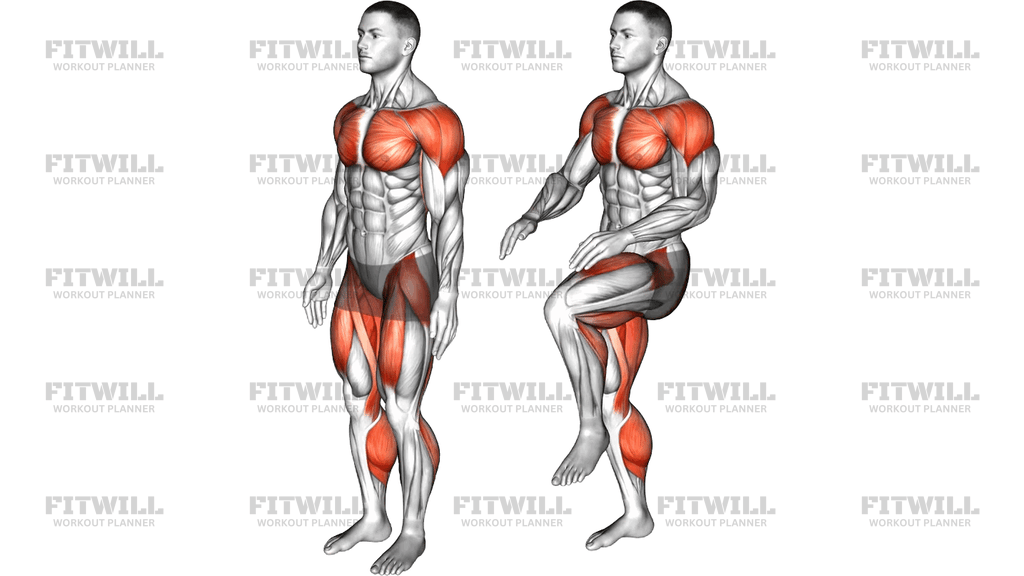
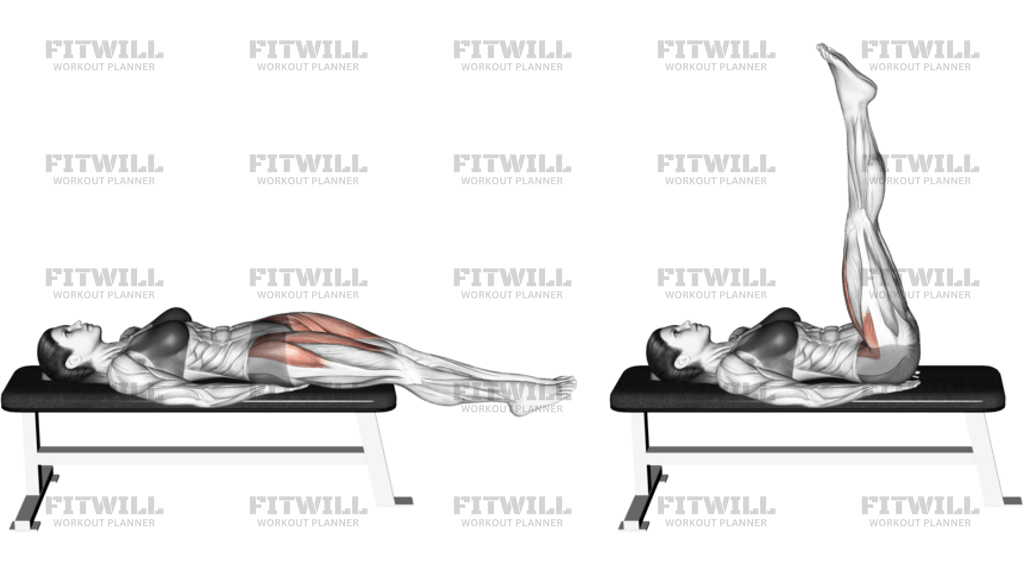
The Sitting Single Straight Leg Raise A Chair is a simple seated movement where you sit upright on a chair with hands resting on your hips, extend one leg straight out in front of you, and lift it from a lowered position up toward hip height before lowering it back down with control. Because the knee stays locked straight the whole time, the hip flexors have to work through a longer lever than they would in a bent-knee knee raise, which makes the movement noticeably harder than it looks.
The main muscles at work are the hip flexors at the front of the hip, particularly the iliopsoas, along with the rectus femoris of the quadriceps, which helps both lift the leg and hold the knee straight. Your lower abs and deep core stay engaged to keep your torso upright and stop your lower back from arching as the leg travels up. The hands-on-hips position gives you a useful self-check: if your torso starts twisting or your hip hikes up, you will feel it immediately through your hands.
This exercise suits a wide range of people. Beginners can use it to build basic hip flexor strength without any equipment beyond a sturdy chair. It is also useful for older adults working on the leg strength needed for stairs and walking, for runners and cyclists who want stronger hip flexion, and for anyone rehabilitating or reconditioning after long periods of sitting who needs a low-load way to wake up the front of the hip.
Setup matters more than most people expect. Sitting tall on the front half of the chair seat keeps your pelvis neutral and gives the hip room to flex. Slouching back into the chair shortens the working range and encourages your lower back to do the job your hip flexors should be doing. Keep both Sit bones planted and the support leg flat on the floor so the base stays quiet throughout the set.
To execute it well, brace your trunk lightly, extend the working leg until the knee is straight, and raise the whole leg in a smooth arc until it is roughly level with your hip or just slightly below. Pause briefly at the top, then lower the leg slowly rather than letting gravity drop it. The lowering phase is where much of the strength benefit lives, so treat it as part of the rep.
A few practical points keep the exercise safe and effective. Move only into a range you can hold without your torso rocking backward, and stop the lift if you feel pinching at the front of the hip. Slow the tempo down before adding reps, and if one side is noticeably weaker, start each set with that side so it gets your freshest effort.
[ Workout Log & Planner ]
Put your next workout in Fitwill
Keep your plan and training log ready when you are.


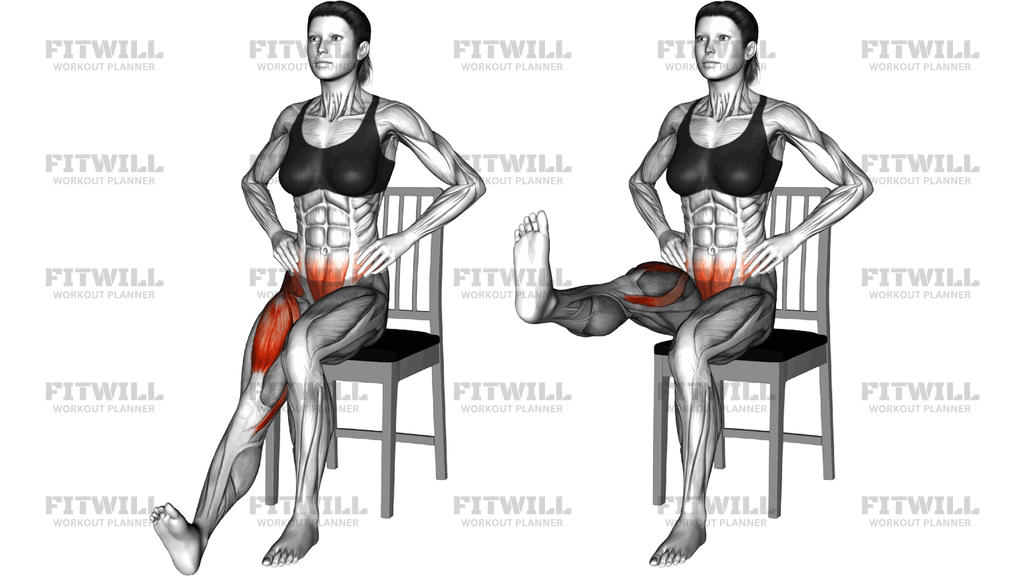
Instructions
- Sit on the front half of a sturdy chair with both Sit bones planted, feet flat on the floor, and your spine tall.
- Place both hands on your hips with your elbows out to the sides, and take a light brace through your stomach.
- Extend your right leg straight out in front of you so the knee is fully straight and the heel hovers just above the floor.
- Exhale and raise the straight leg in a smooth arc toward hip height, keeping the knee locked and the toes pulled slightly back.
- Stop the lift at the highest point where your torso stays upright and your Sit bones remain firmly on the seat.
- Hold the top position for one to two seconds and feel the front of the hip doing the work.
- Inhale and lower the straight leg slowly under control until the heel is just above the floor again.
- Complete all reps on one side, then extend the left leg and repeat for the same number of reps.
- Between reps, keep your posture tall and resist the urge to lean back or grip the seat with your thighs.
- Once the set is finished, rest briefly, shake out the hips, and reset your seated posture before the next set.
Tips & Tricks
- If you feel pinching at the front of the hip, lift the leg slightly less high; a smaller arc with a straight knee is still a strong hip flexor stimulus.
- Slouching backward as the leg rises is the most common fault here. Sit tall and imagine a string lifting the crown of your head toward the ceiling.
- Keep the support foot flat and still. If it slides forward or you press it down hard, your torso is compensating for the effort of the lift.
- Do not let the knee bend mid-rep to make the lift easier. If the knee keeps softening, lower the leg a little less high and rebuild from there.
- Make the lowering phase last two to three seconds. Dropping the leg back down wastes most of the strength benefit of the straight-leg position.
- Use your hands on your hips as a diagnostic tool. If one side of your pelvis lifts or your elbows twist, you are hiking the hip instead of flexing it.
- A slow tempo beats extra height. One controlled rep with a two-second pause at the top does more than three quick swings of the leg.
- Start with your weaker side first so the stronger side never sets the rep count for both legs.
- If your quadriceps cramp, which is common at first, briefly bend and straighten the knee between reps and continue with a slightly shorter range.
Frequently Asked Questions
Which muscles does the Sitting Single Straight Leg Raise A Chair work?
The primary muscles are the hip flexors at the front of the hip, especially the iliopsoas. The rectus femoris of the quadriceps assists by holding the knee straight, and the lower abs stabilize your torso throughout the lift.
Why does the leg have to stay straight instead of bent?
A straight knee makes the leg a longer lever, so the hip flexors and the rectus femoris must produce much more force to lift the same limb. Bending the knee shortens that lever and makes the exercise substantially easier.
Is the Sitting Single Straight Leg Raise A Chair good for beginners?
Yes. It requires only a sturdy chair and your body weight, and the range can be adjusted simply by lifting the leg less high. Beginners should start with slow, controlled reps and prioritize posture over height.
How many reps and sets should I do?
Start with two to three sets of eight to twelve controlled reps per leg. If you cannot reach eight clean reps with the knee straight, reduce the lifting height before switching to a bent-knee variation.
Why do my hands stay on my hips during the exercise?
Hands on the hips let you feel whether your pelvis and torso stay still. If you notice your hips twisting or one side lifting as the leg rises, that is a cue you are compensating instead of pure hip flexion.
My hip clicks or pinches at the top of the lift. What should I do?
Reduce the height of the lift so the movement stays comfortable, and slow the tempo. If the pinching persists or comes with pain rather than just a click, stop and consult a qualified professional before continuing.
What can I use if I do not have a chair?
Any stable seat works, such as a bench or the edge of a sturdy bed. Avoid soft sofas or chairs with wheels, because the base needs to stay completely fixed while you lift.
How is this different from a seated knee raise?
A seated knee raise bends the knee, which shortens the lever and shifts more work toward the deep hip flexors alone. The Sitting Single Straight Leg Raise A Chair keeps the knee extended, loading the hip flexors and the quadriceps together through a harder range.
Should I hold my breath during the lift?
No. Exhale as the leg rises and inhale as you lower it. A steady breathing rhythm helps your core brace naturally and keeps tension out of your neck and shoulders.
Is this exercise safe for older adults?
Generally yes, because it is low load and performed from a supported seated position, and it trains the hip strength used in walking and stairs. Anyone with a recent hip surgery or significant joint pain should get clearance from a health professional first.