Dumbbell Lying Straight Arm Press On Floor
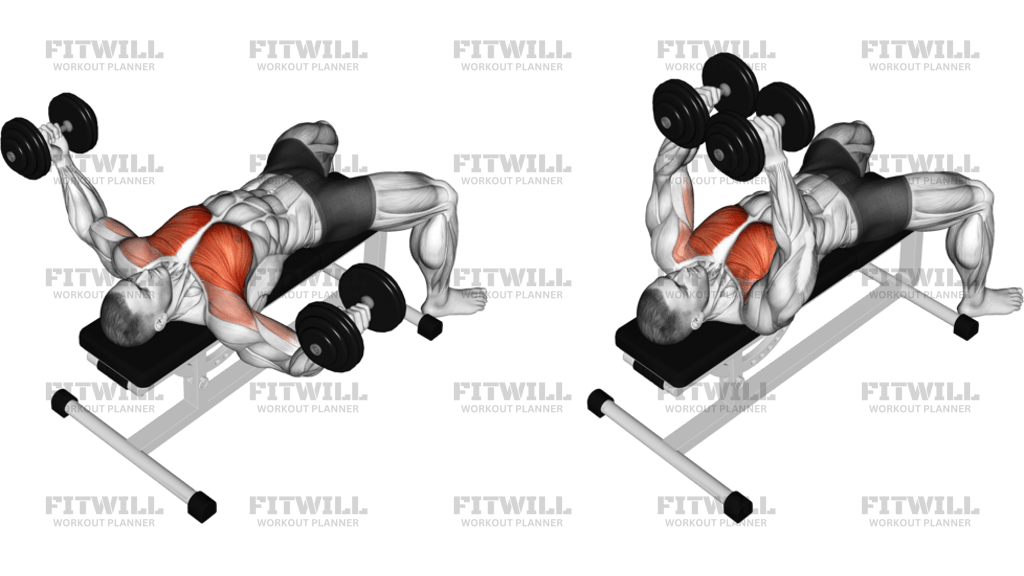
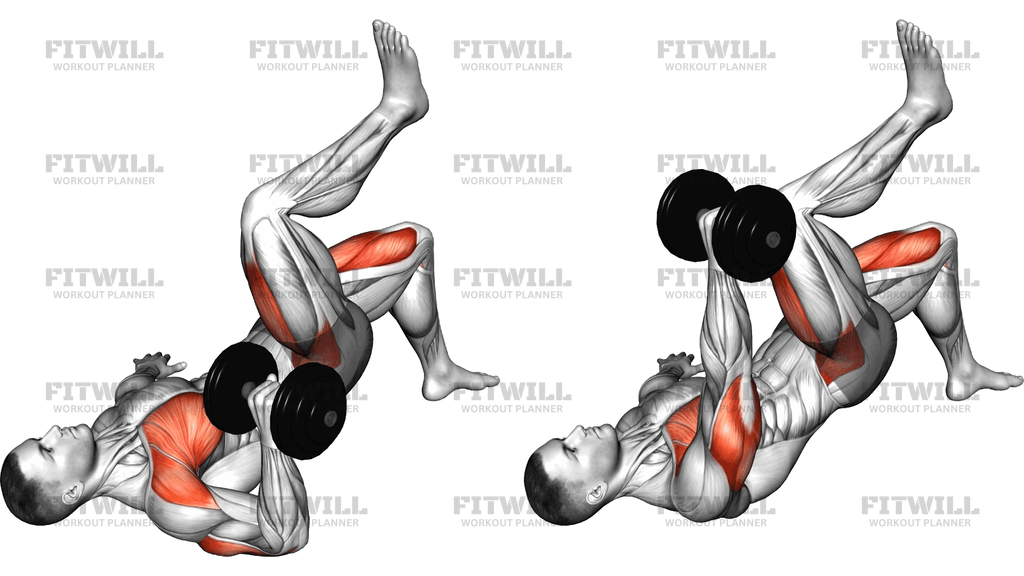
The Dumbbell Lying Straight Arm Press On Floor is a chest-focused pressing exercise performed lying on your back on the floor with your knees bent and feet flat. You hold a single dumbbell with both hands, keep your elbows locked straight the entire time, and press the weight from a position above your lower chest up toward the ceiling until your arms are vertical over your shoulders. Because the elbows never bend, the movement comes almost entirely from the shoulders, which changes it from a traditional press into a smooth hinging and reaching action for the upper body.
The main muscles worked are the pectorals, particularly the lower and mid fibers of the chest, which extend the shoulder as the arms travel from the torso line up to vertical. The front delts assist throughout, and the serratus anterior works hard at the top of the press as you reach the dumbbell toward the ceiling. The triceps stay involved isometrically to hold the elbows straight, and the core stabilizes your ribs and trunk against the arching pull of the weight.
The floor is what makes this exercise special. Unlike a bench version, the floor stops your upper arms from dropping too far, so the shoulder joint never travels into an overextended position. That makes the setup much friendlier for people with cranky shoulders, and it removes any temptation to let the weight drift behind your head. Lying on the floor also forces your ribs to stay down and your trunk to stay honest, since there is no bench edge to arch over.
To execute it well, think of your arms as rigid levers. Pick a weight you could comfortably hold at arm's length, because a straight-arm position places all of the load directly through the shoulder. Press the dumbbell in a smooth, shallow arc rather than a straight vertical line, and finish each rep by actively reaching taller, as if trying to push the dumbbell through the ceiling. Lower it slowly back to the start above your lower chest and touch down lightly between reps if you need a brief reset.
This movement fits well as a warm-up before heavier pressing, as a finishing movement to feel the chest and serratus without heavy loading, or as a main exercise in minimal-equipment home workouts where a single dumbbell and a bit of floor space are all you have. It is also a useful teaching tool for learning scapular control, since reaching at the top and controlling the descent both depend on moving the shoulder blade deliberately rather than letting it slump.
Keep the weight modest and the tempo controlled. The straight-arm position is safe at light loads but becomes stressful on the shoulder joint as the dumbbell gets heavier, so progress by refining the reach and slowing the lowering phase before adding significant weight.
[ Workout Log & Planner ]
Put your next workout in Fitwill
Keep your plan and training log ready when you are.


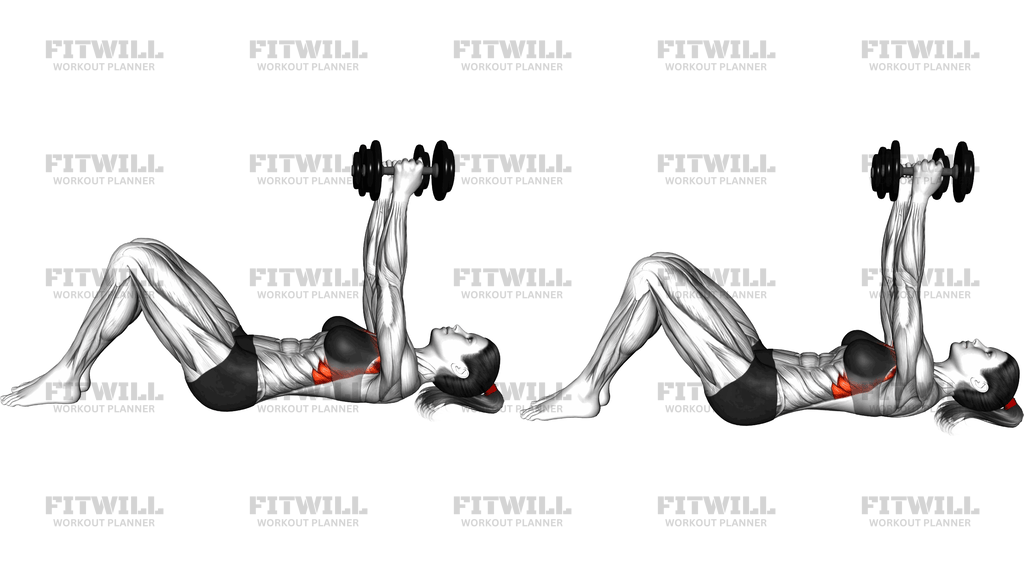
Instructions
- Lie on your back on the floor with your knees bent and your feet flat on the floor about hip-width apart.
- Hold one dumbbell with both hands, gripping the handle so your fingers overlap, and rest it directly above your lower chest with your arms fully extended.
- Point the dumbbell toward the ceiling and check that your elbows are completely straight before you begin.
- Brace your trunk and gently press your lower back toward the floor so your ribs stay down and your trunk does not arch.
- From the start position above your lower chest, press the dumbbell up and slightly back in a smooth arc until your straight arms are vertical over your shoulder line.
- At the top, push actively through the dumbbell and reach a little taller to spread your shoulder blades apart.
- Lower the dumbbell under control along the same arc, taking about two to three seconds, until it returns to the starting point above your lower chest.
- Exhale as you press up and inhale as you lower the weight, keeping your breathing steady throughout the set.
- When you finish, guide the dumbbell down to rest on your chest or hips, then roll it to one side or sit up with it in both hands before standing.
Tips & Tricks
- The most common mistake is bending the elbows, which quietly turns the exercise into a regular press. If your elbows keep bending, the dumbbell is too heavy for a straight-arm position.
- Watch for your lower back peeling off the floor as the arms move. Fix it by exhaling at the top of each press and imagining you are gently squashing the floor with your lower back.
- Do not let the dumbbell drift toward your head. The path stays in front of the torso, from above the lower chest to vertical over the shoulders, which is exactly what the floor setup is designed to protect.
- Choose a weight based on what your shoulders can hold at arm's length, not what your chest can press. Straight-arm loading is far less forgiving than bent-arm pressing.
- Move slower on the way down than on the way up. Rushing the descent is where momentum takes over and the chest stops doing the work.
- Keep your wrists straight and stacked over your forearms. A bent-back wrist under a straight arm puts unnecessary strain on the joint.
- Press your feet firmly into the floor and squeeze your glutes lightly. This anchors your pelvis and makes the arching problem largely disappear.
- The reach at the top matters as much as the press. If you stop the rep the moment your arms become vertical, you miss most of the serratus anterior work.
- If you feel pinching at the front of the shoulder, reduce the arc rather than pushing through it. A slightly shorter, pain-free range beats a full range performed with discomfort.
Frequently Asked Questions
Which muscles does the Dumbbell Lying Straight Arm Press On Floor work?
The chest is the primary mover, especially as the arms travel from the torso up to vertical. The front delts assist, the serratus anterior works at the top reach, and the triceps hold the elbows straight isometrically.
Why are the arms kept straight instead of bent like a normal press?
Straight arms remove the elbow and triceps from the pressing action, so the chest and front delts move the weight through the shoulder instead. It shifts the exercise closer to a pullover-style movement while keeping the pressing intent.
Is this exercise suitable for beginners?
Yes, it is one of the more beginner-friendly chest exercises because the floor limits the range and prevents the shoulders from overextending. Start with a light dumbbell and focus on keeping the elbows locked and the lower back down.
Why perform the Dumbbell Lying Straight Arm Press On Floor on the floor instead of a bench?
The floor acts as a built-in safety stop, blocking the arms from traveling behind the torso and into an overextended shoulder position. It also makes the exercise accessible with nothing more than a dumbbell and open floor space.
Should I use one dumbbell or two?
The standard setup uses a single dumbbell held with both hands, which keeps the load centered and makes the straight-arm position easier to control. Two lighter dumbbells can be used later if you want to train each side independently.
What is the most common mistake with this movement?
Bending the elbows is the biggest one, because it converts the exercise into a regular press and removes the straight-arm challenge. Arching the lower back off the floor and lowering too quickly are the next most frequent issues.
Where exactly should the dumbbell start and finish on each rep?
Each rep starts with the straight arms holding the dumbbell above your lower chest and finishes with the arms vertical over your shoulder line. The path is a shallow arc, not a straight vertical line.
What can I substitute if I do not have a dumbbell?
A straight-arm cable pullover, a resistance band pullover, or a bodyweight floor slide all train a similar chest and shoulder extension pattern. Choose whichever lets you keep the elbows straight and the ribs down.
How often can I include this exercise in my routine?
At light weights it works well as a warm-up before pressing sessions most days of the week. As a main working exercise with more load, two to three sessions per week with a day of recovery between them is a sensible rhythm.
Is the straight-arm position safe for the shoulders?
At light to moderate loads with a controlled tempo, the floor-supported range keeps the shoulder in a safe zone. Keep the weight conservative, stay within a pain-free arc, and stop if you feel pinching at the front of the shoulder.