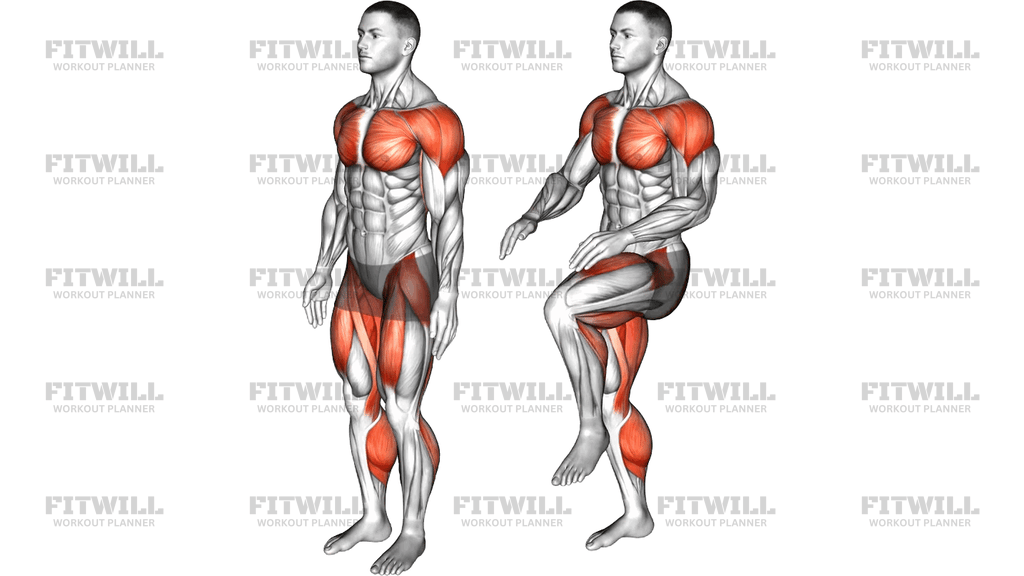
Standing Alternate Knee Raise
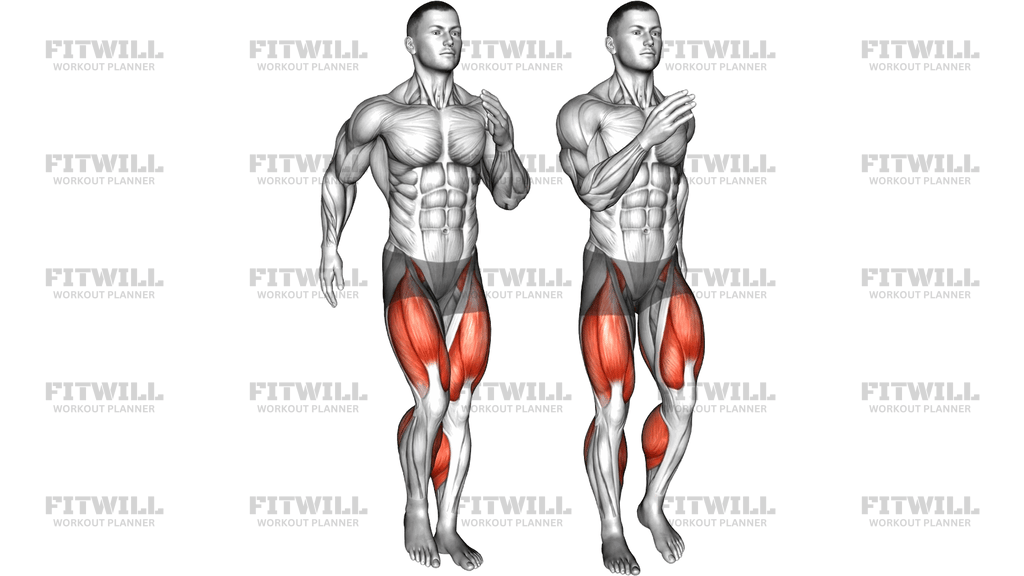
The Standing Alternate Knee Raise is a simple bodyweight movement where you stand tall, lift one knee up toward your waist, lower it, and repeat with the other leg in an alternating rhythm. Because you stay on your feet with your hands resting lightly on your hips or at your sides, it requires no equipment and almost no space, which makes it one of the easiest hip-flexor and core drills to slot into a warm-up, a mid-day movement break, or the conditioning block of a home workout.
The main work comes from the hip flexors, especially the iliopsoas and rectus femoris, which drive the knee upward each rep. Your lower abs and obliques work to keep your torso upright and stop you from leaning back or twisting as each leg lifts, and the standing leg's calf, quad, and hip stabilizers are quietly challenged to keep you balanced from rep to rep. That balance demand is what separates this from lying leg raises — you are training control through a standing, single-leg stance every time one foot leaves the floor.
Setup matters more than it looks. A narrow but stable stance, a tall spine, and a light brace of the abdominal wall give the hip flexors a fair chance to do the lifting without your lower back compensating. If you start the set slouched or leaning on one hip, the movement quickly turns into a pelvis-tilting exercise that irritates the lower back instead of training the hips. Take a few seconds before each set to stack your ribs over your pelvis and set your weight evenly across both feet.
To execute it well, think about driving the knee up and slightly forward to roughly hip height while keeping your torso still, then lowering the foot back to the floor under control rather than letting it drop. The tempo should feel deliberate: one second up, a brief pause at the top if you want more challenge, and a smooth return. Breathing is straightforward — exhale as the knee rises, inhale as it lowers. Keep your eyes on a fixed point ahead of you if you wobble; that single cue cleans up most balance issues on the standing leg.
This exercise suits beginners learning to control their hips and trunk, older adults who want a low-impact way to keep the hip flexors strong for walking and stair climbing, and anyone building a no-equipment routine at home. It is also a common warm-up choice before squats, lunges, or running because it raises the heart rate while taking the hip joints through a functional range. For a conditioning option, speed the alternation up into a light marching rhythm; for strength and control, slow the tempo down and pause at the top of each raise.
The main safety point is to keep the movement in front of your body and avoid throwing the leg up with momentum. If you feel pinching at the front of the hip or strain in the lower back, reduce the height of the knee lift and tighten your brace. People with acute hip or lower back issues should get clearance from a professional before loading this pattern with high reps.
Fitwill
Log Workouts, Track Progress & Build Strength.
Achieve more with Fitwill: explore over 9600 exercises with images and videos, access built-in and custom workouts, perfect for both gym and home sessions, and see real results.
Start your journey. Download today!




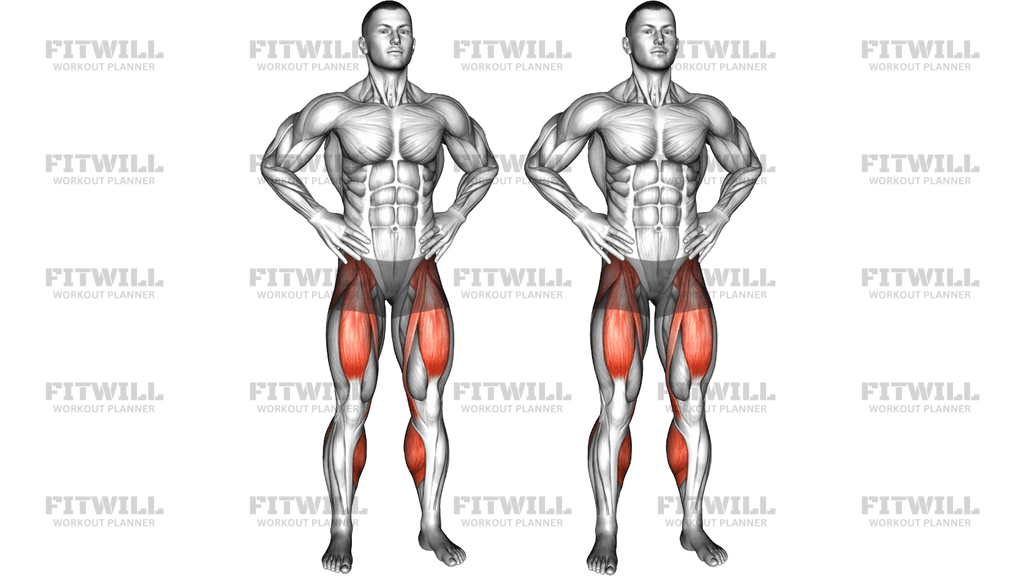
Instructions
- Stand with your feet roughly hip-width apart, weight spread evenly across both feet, and let your arms hang at your sides or rest your hands lightly on your hips.
- Lengthen your spine so your ribs stack over your pelvis, and gently brace your abdominal wall as if preparing for a light push.
- Shift your weight slightly onto your left foot so your right leg is free to move without your torso swaying.
- Exhale and drive your right knee up and slightly forward until it reaches about hip height, keeping your torso tall and your shoulders relaxed.
- Pause for a beat at the top with the knee lifted, making sure your lower back has not arched or your chest has not fallen forward.
- Inhale and lower your right foot back to the floor under control, placing it down softly rather than letting it drop.
- Repeat the same lifting motion with your left knee, keeping the pace even between legs.
- Continue alternating legs for your target number of reps or time, resetting your stance and brace if you notice yourself leaning or rushing.
- Finish the set by standing on both feet, shaking out your hips, and checking that your lower back feels neutral rather than strained.
Tips & Tricks
- If you keep rocking side to side, narrow your focus to a fixed point on the wall ahead of you and shorten the knee lift slightly until the sway stops.
- Leaning backward as the knee rises is the most common fault here — it means the abs have stopped bracing. Cue yourself to pull the bottom ribs down toward the pelvis before each rep.
- Do not let the foot slam back to the floor; a controlled two-count lowering phase keeps the hip flexors working through the full range instead of just the lift.
- Lifting the knee with a straight leg turns this into a quad-dominant swing. Let the knee bend so the hip flexors actually do the lifting.
- If you feel a pinch at the front of the hip, reduce the height of the raise and think about lifting the knee toward the opposite shoulder rather than straight up.
- Keep the hands on the hips light — pressing down on your thighs to assist the lift quietly removes most of the training effect.
- For a conditioning version, march the alternation faster while keeping the torso quiet; if your form gets noisy, that is your signal to slow back down.
- Alternate which leg starts each set so both sides get the same quality of work when you are training for reps or time.
- Tired calves or a wobbling standing leg are normal at first; hold onto a wall or chair with one hand for the first few sessions and wean off support as your balance improves.
Frequently Asked Questions
What muscles does the Standing Alternate Knee Raise work?
The hip flexors, particularly the iliopsoas and rectus femoris, do the lifting, while the lower abs and obliques stabilize your trunk. The standing leg's calves and hip stabilizers also work to keep you balanced.
Is the Standing Alternate Knee Raise good for beginners?
Yes, it is one of the most beginner-friendly hip and core drills because it needs no equipment and the range is easy to scale. New lifters can hold a wall or chair for balance and lift the knee to a comfortable height.
How high should I raise each knee during the Standing Alternate Knee Raise?
Aim for roughly hip height as a reference, but only as high as you can go without leaning back or arching your lower back. A shorter, controlled lift beats a high, sloppy one.
Why do I lean backward when I lift my knee?
That usually means your abdominal brace has relaxed and your body is compensating for the weight of the leg. Slow the tempo down, shorten the lift, and focus on keeping your ribs stacked over your pelvis.
Can I do the Standing Alternate Knee Raise as a warm-up?
It works well before squats, lunges, or running because it takes the hips through a functional range while gently raising your heart rate. Keep the pace moderate and the reps low, around 10 to 20 per side.
What can I use instead of the Standing Alternate Knee Raise if I need a substitution?
Marching in place with the same controlled knee lift is the closest swap, while lying leg raises or standing knee raises in a Roman chair train similar hip-flexor patterns with different stability demands.
Should I hold my breath during the Standing Alternate Knee Raise?
No — exhale as the knee drives up and inhale as it lowers. Continuous breathing keeps the brace natural and prevents unnecessary tension in the neck and shoulders.
Is it safe to do Standing Alternate Knee Raises with lower back discomfort?
The movement should stay pain-free; if you feel strain, reduce the knee height and tighten your brace, since excessive arching is usually the culprit. Persistent discomfort warrants guidance from a qualified professional before continuing.
How many reps of the Standing Alternate Knee Raise should I do?
For control and warm-up purposes, 10 to 15 controlled raises per side works well. For conditioning, march for 20 to 40 seconds while keeping the torso as quiet as possible.