Sitting Foot Extensors Stretch On A Chair
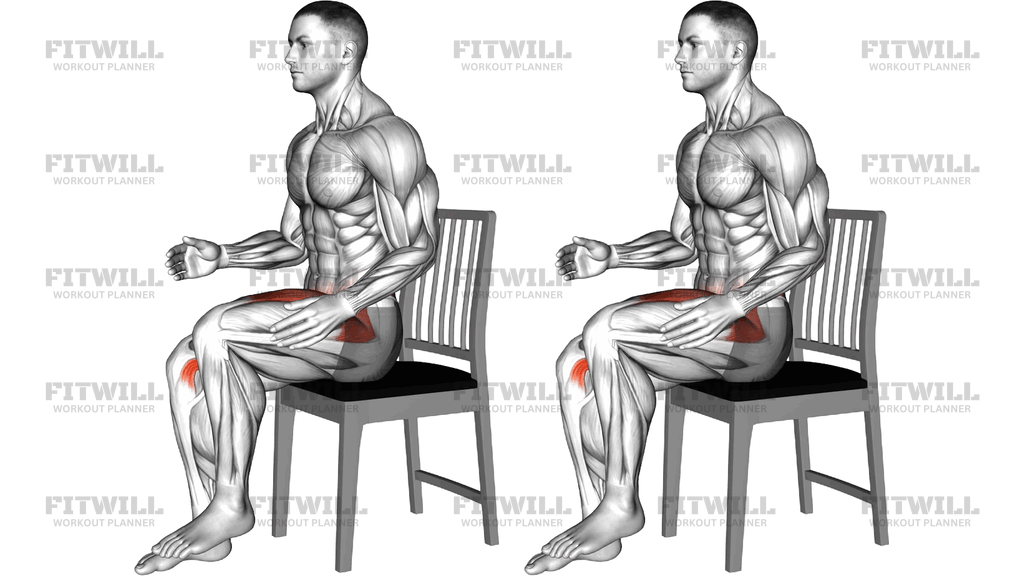
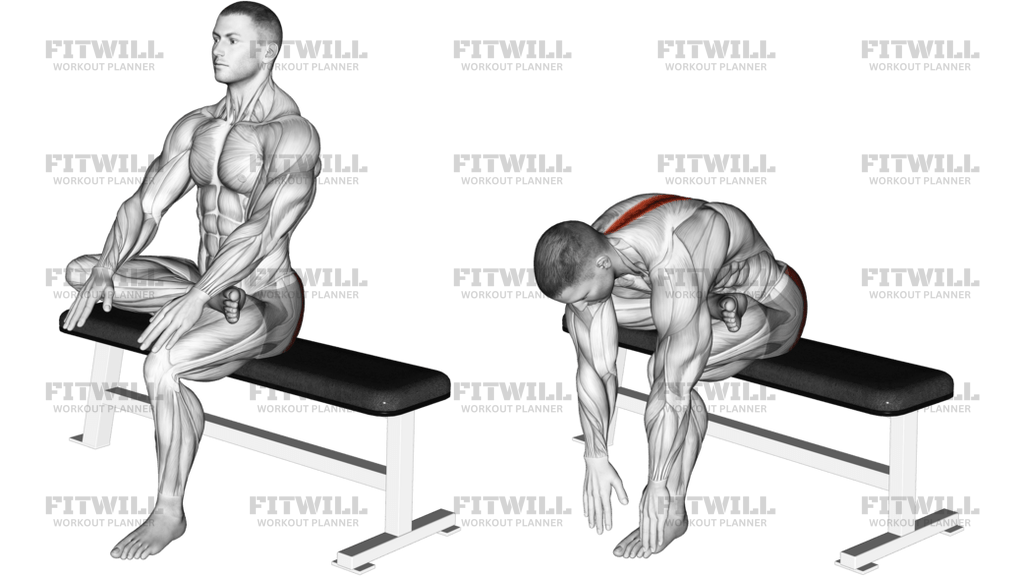
The Sitting Foot Extensors Stretch On A Chair is a seated mobility drill that targets the muscles along the front of your shin and the top of your foot — the foot and toe extensors, with the tibialis anterior being the main player. You sit upright on a standard chair, slide one leg forward until it straightens, then slowly point your toes down and slightly inward toward the floor. That pointing action lengthens the extensor muscles that lift your foot and toes, creating a clean, isolated stretch along the shin and instep.
This is one of the most overlooked areas in most stretching routines. The tibialis anterior and its neighbors work hard every time you walk, run, climb stairs, or hike, controlling how your foot lands and lowering it gently with each step. Runners, hikers, and people who spend long hours standing or wearing stiff shoes often accumulate tightness here without ever addressing it. Because the stretch is done seated with the leg supported by its own position, it puts almost no load on the knee or ankle, which makes it accessible to nearly anyone.
The chair setup is what makes this stretch so controllable. Sitting with your torso tall and both sitting bones planted lets you focus entirely on the ankle joint instead of fighting for balance. The straightened knee positions the lower leg so that when you point the foot, the stretch lands precisely on the front-of-shin muscles rather than being diluted by the calf or hip. If you were standing or lunging to reach the same position, you would likely lose that precision.
To execute it well, the movement comes only from the ankle. Keep your thigh relaxed and your knee straight but never locked hard back. Let the toes follow the foot as it points away from you, and if you want a little more, you can gently curl the toes under. You should feel a pulling sensation along the outside and front of the shin and across the top of the foot — never sharp pain at the ankle joint itself. Hold, breathe, and release slowly rather than snapping the foot back.
This stretch fits naturally into a pre-run warm-up when done in shorter, dynamic repetitions, or into a post-workout and evening routine with longer holds. It is also a common choice in rehab-adjacent settings for people managing shin discomfort or stiff ankles, though it is a general mobility drill, not a treatment. Because it needs nothing but a sturdy chair, it is easy to do at a desk, at home, or while traveling — just make sure the chair will not slide out from under you.
[ Workout Log & Planner ]
Put your next workout in Fitwill
Keep your plan and training log ready when you are.


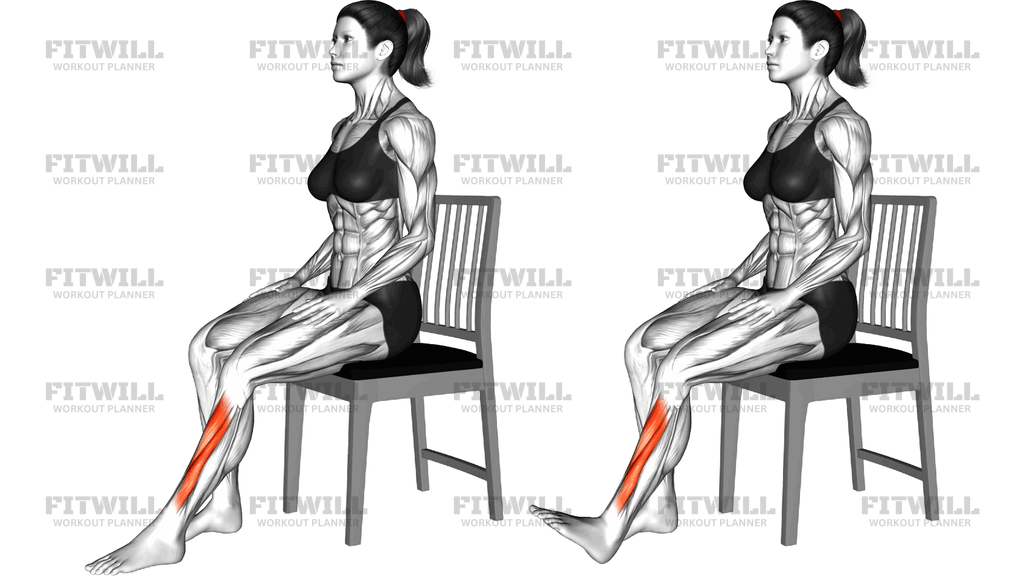
Instructions
- Sit sideways-free on a sturdy chair with your back tall, both sitting bones planted evenly, and your hands resting on your thighs for stability.
- Extend one leg forward in front of you until the knee is straight, letting the heel hover just above or rest lightly on the floor with the foot relaxed.
- Keep your torso upright and your shoulders relaxed — avoid leaning forward or rounding your lower back as you set up.
- Take a breath in, then as you exhale, slowly point your toes away from you and down toward the floor, letting the ankle fully plantarflex.
- Allow the toes to follow the foot; for a deeper stretch, gently curl the toes under as if tucking them toward the sole.
- Continue pointing until you feel a clear pull along the front and outer side of your shin and across the top of the foot, then stop there.
- Hold the end position for 20 to 30 seconds while breathing steadily, keeping the knee straight but not jammed back.
- Release the point slowly by letting the foot rise back to a relaxed, neutral angle — do not snap the ankle back.
- Complete the desired number of reps or holds, then switch legs and repeat on the other side, matching the duration and intensity.
- If both sides feel tight, finish with a second round on each leg after the first set has released.
Tips & Tricks
- The most common mistake is bending the knee during the stretch — a soft bend is fine, but a significantly bent knee slackens the front-of-shin muscles and kills the stretch, so straighten the leg before you point the foot.
- Do not force the ankle past the first sharp or pinching sensation; a stretch should feel like pulling along the shin, not compression at the front of the ankle joint.
- If pointing straight down feels like a cramp in the top of the foot, back off slightly and reduce how far you curl the toes — the toe tuck is an add-on, not the requirement.
- Keep your weight even on both sitting bones; shifting toward the working leg changes the hip angle and makes it harder to isolate the ankle.
- Warm muscles stretch more comfortably, so if you are doing this first thing in the morning, do a few gentle ankle circles before pointing the foot.
- Avoid locking the knee hard backward — keep the leg straight with a sense of length rather than jamming the joint into full extension.
- Breathe out as you point the foot; holding your breath tends to tense the whole leg and reduce how far the ankle can comfortably move.
- If the chair has wheels or sits on a slippery floor, brace it against a wall or use a fixed chair — a sliding seat is the main safety risk in this setup.
Frequently Asked Questions
Which muscles does the Sitting Foot Extensors Stretch On A Chair target?
It primarily stretches the tibialis anterior and the other foot and toe extensors that run down the front of the shin and across the top of the foot. The outer lower-leg muscles get some lengthening as well when the foot points down and slightly inward.
Why do I point my toes down to stretch the front of the shin?
The extensor muscles on the front of the shin lift the foot and toes, so lengthening them requires the opposite action — pointing the foot down in plantarflexion. The more you point, the more the tibialis anterior lengthens.
Is the Sitting Foot Extensors Stretch On A Chair suitable for beginners?
Yes. It is seated, uses no load, and the range is entirely self-controlled, so beginners can start with a modest point and build up. The chair provides stability, which removes any balance demands.
Should my knee be fully straight during this stretch?
A straight knee gives the best stretch because a bent knee relaxes the front-of-shin muscles. Keep it straight but comfortable — do not jam the joint into hard extension.
How long should I hold the Sitting Foot Extensors Stretch On A Chair?
For general flexibility, hold for 20 to 30 seconds and repeat two to three times per leg. Before activity, shorter holds of 10 to 15 seconds with a few repetitions work well.
I feel a cramp in the top of my foot when I point my toes — what should I do?
Ease off the intensity and stop curling the toes; point only until you feel a mild pull. Cramping usually means the tissue is being pushed too fast, so shorten the range and build up gradually over sessions.
Can I do this stretch if I have no chair available?
You can perform the same ankle-pointing action sitting on the floor with one leg extended, or lying down. The chair version is simply the most convenient and supportive option for most settings.
Is a pinching feeling at the front of the ankle normal?
A mild pulling sensation along the shin and top of the foot is what you want, but pinching or sharp pain at the ankle joint means you have gone too far. Reduce how far you point the foot and keep the motion smooth.
How often should I do the Sitting Foot Extensors Stretch On A Chair?
Daily use is fine since it is a gentle, unloaded stretch, and it is especially useful after running, hiking, or long periods of standing. Consistency matters more than intensity for improving ankle mobility.