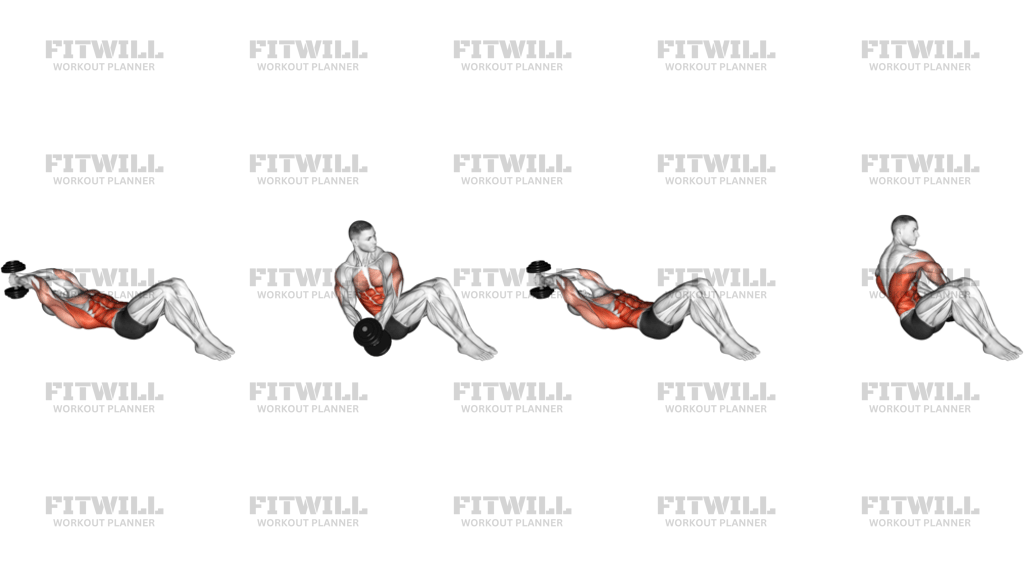
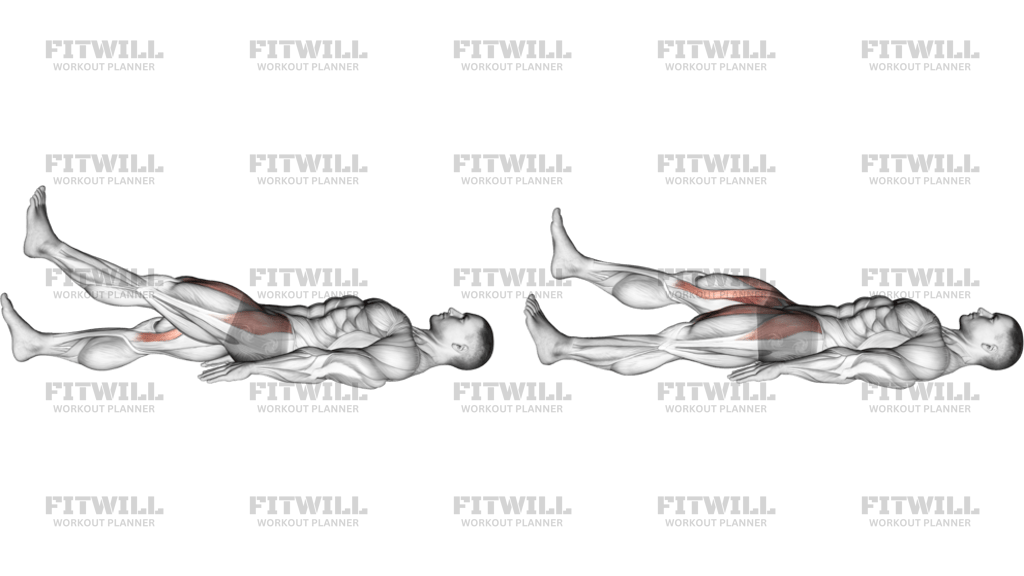
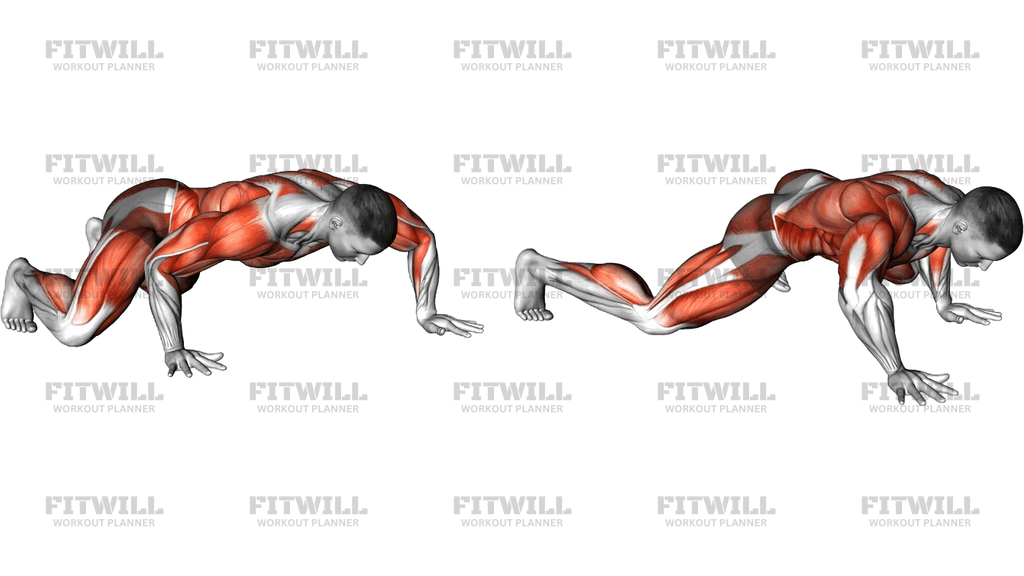
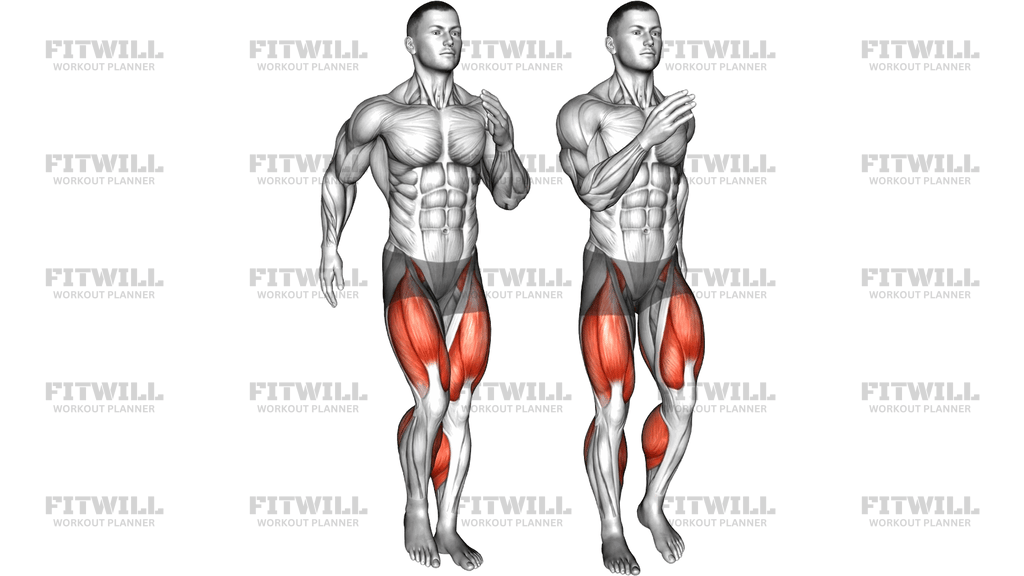
Walking Knee Raise Sky Reach On Spot
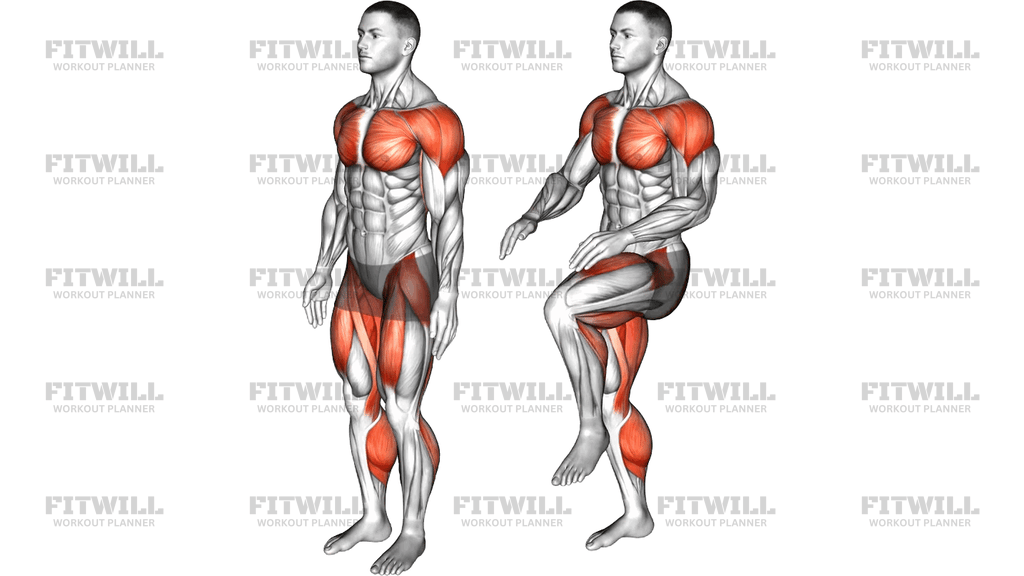
Walking Knee Raise Sky Reach On Spot is a standing, body-weight movement where you march in place, driving one knee up toward hip height while your hands reach overhead toward the sky, then switch legs in a steady rhythm without traveling forward. It combines a strong knee drive with a full overhead reach, so the hips and trunk do most of the work while the shoulders and calves join in to keep the motion smooth and upright.
The main demand falls on the hip flexors, which lift the thigh each rep, and on the deep core, which has to hold your ribcage and pelvis steady every time one leg leaves the floor. Because you're balancing on a single leg at the top of each raise, the standing hip and the small stabilizers around your ankle and foot stay busy throughout. The reaching arms lengthen the movement and encourage tall posture, which makes it harder to slouch or lean back as you tire.
This is a natural warm-up drill. It raises your heart rate quickly, opens up the hips after sitting, and primes the knee-driving pattern used in running, sprinting, and step-based training. It's equally useful as a low-impact cardio interval on its own: performed at a controlled tempo it builds hip strength and single-leg balance, and performed briskly it becomes a light conditioning exercise you can do in a small space with no equipment.
Setup matters more than it looks. Standing tall with feet hip-width apart, a soft bend in the standing knee, and your weight centered over the whole foot gives you a stable base for the knee drive. If you start with your weight back on your heels or your lower back already arched, the overhead reach will pull you further into a lean and you'll feel it in your lower back instead of your hips and abs.
To execute it well, think of two things happening together: the knee drives up to about hip height while the hands, clasped or open, sweep up and reach overhead past the raised knee. Pause briefly at the top, lower the leg with control, and switch sides. The rhythm should feel like marching with intention rather than hopping from foot to foot. Keep your torso vertical and your gaze forward, and let the reach come from the shoulders, not from arching your back.
A few practical points keep this safe and effective. Move at a tempo you can sustain without your lower back taking over, and reduce the knee height before you reduce your posture. If balance is a challenge on a given day, stand near a wall or chair for a light touch of support. Because it needs no equipment and stays in one spot, this movement fits easily into warm-ups, desk-break routines, and home cardio circuits alike.
[ Workout Log & Planner ]
Put your next workout in Fitwill
Keep your plan and training log ready when you are.


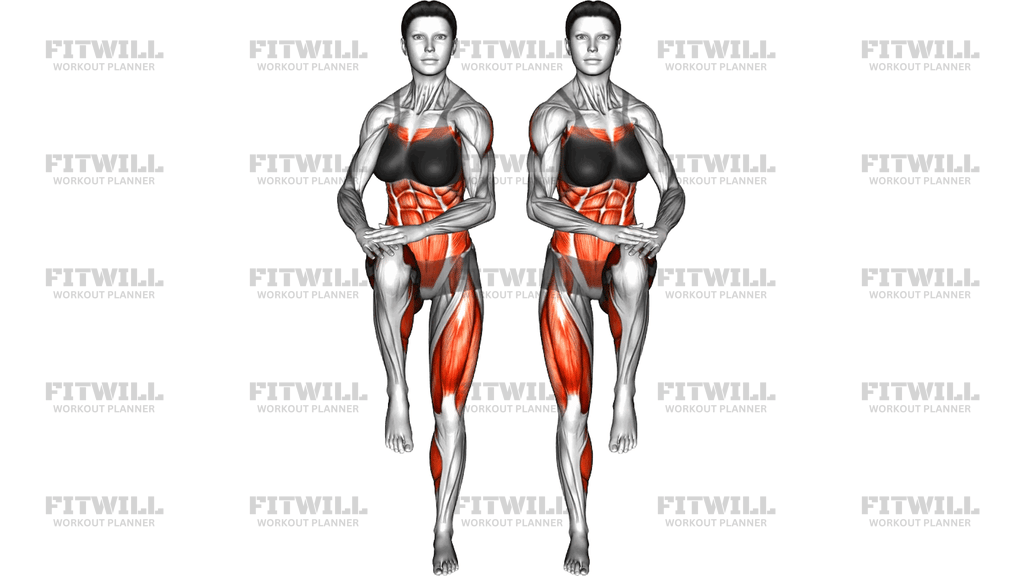
Instructions
- Stand tall with your feet hip-width apart, arms relaxed at your sides, and your weight spread evenly across both feet.
- Clasp your hands together in front of your thighs and soften your knees slightly so you're ready to move rather than locked out.
- Brace your abs lightly and imagine a string pulling the crown of your head toward the ceiling to set a tall, neutral spine.
- Shift your weight onto your left leg and drive your right knee up toward hip height while sweeping your clasped hands up overhead, reaching toward the sky past the raised knee.
- Pause for a beat at the top with the thigh roughly parallel to the floor, torso upright, and shoulders relaxed away from your ears.
- Lower the right leg back to the floor under control, letting your hands travel back down in front of you as the foot lands.
- Immediately repeat the drive-and-reach on the left leg, continuing to alternate legs while staying in the same spot.
- Exhale as you drive the knee up and reach, and inhale as you lower the leg and reset between sides.
- Keep the rhythm steady and even on both legs; if form slips, slow down or lower the knee height before stopping.
Tips & Tricks
- The most common mistake is arching the lower back during the overhead reach. Keep your abs braced and let the ribs stay stacked over the pelvis so the reach comes from the shoulders, not the spine.
- If you find yourself bouncing or hopping between reps, slow the tempo and focus on landing each foot quietly and flat before lifting the other knee.
- Aim the knee toward hip height, not the chest. Driving the knee too high usually forces a backward lean, which shifts work away from the hip flexors and into the lower back.
- Keep the standing knee soft the whole time. A locked standing knee makes balance harder and reduces the stabilizing work in the hip and ankle.
- Press your hands actively upward at the top of each reach rather than just letting them float up; the added intent helps your posture stay tall.
- If you wobble at the top of the knee raise, shorten the pause slightly and look at a fixed point ahead of you instead of down at your feet.
- Watch for the tendency to let the clasped hands drop behind the head as you tire. Keep the arms extended in line with the ears or slightly in front.
- Breathe on every rep. Holding your breath through several knee raises is a sign the pace is too fast for your current control.
- On a hard floor, a thin mat underfoot can soften the landing, but the movement works fine on any stable, non-slip surface.
Frequently Asked Questions
Which muscles does Walking Knee Raise Sky Reach On Spot work the most?
The hip flexors do the primary work of lifting the thigh, with the deep core stabilizing your trunk. Your glutes, quads, calves, and shoulders assist with balance, knee extension, and the overhead reach.
How high should I raise my knee during the sky reach?
Aim for roughly hip height, with the thigh close to parallel to the floor. If reaching that height forces your torso to lean back, lower the knee until you can stay upright.
Is Walking Knee Raise Sky Reach On Spot suitable for beginners?
Yes. Start with a lower knee drive and a slower tempo, and stand near a wall or chair for a light fingertip touch if balance feels shaky. The movement scales easily by adjusting height, speed, and duration.
Why do I reach my arms overhead during this exercise instead of pulling the knee in with my hands?
The overhead reach encourages tall posture and adds shoulder involvement, while forcing your core to control the trunk as your arms and leg move in opposite directions. Pulling the knee in with the hands would change it into a different, more compression-focused variation.
Can I use this as a warm-up before running or leg training?
Yes, it's a natural fit. The knee-drive pattern directly mirrors the marching and sprinting mechanics used in running, and 30 to 60 seconds of steady reps raises your heart rate and loosens the hips before heavier work.
What's the most common mistake with this movement?
Leaning the torso backward while reaching overhead. This usually happens when the knee is driven too high or the core relaxes. Keep your ribs down over your pelvis and let the reach come from the shoulders.
How long should I perform Walking Knee Raise Sky Reach On Spot?
For a warm-up, 30 to 45 seconds of controlled alternating reps is plenty. As a conditioning interval, work up to 60 to 90 seconds while keeping the same upright posture and knee height throughout.
What can I substitute if standing balance is difficult for me?
Try the same knee raise and reach while holding the back of a sturdy chair or standing beside a wall with one hand lightly touching it. You can also perform the drill with a lower knee height until single-leg control improves.
Is it safe for my knees and lower back?
Performed with a soft standing knee, an upright torso, and a knee height you can reach without leaning back, the movement is generally gentle on both areas. If you feel pinching or discomfort, reduce the range of motion and slow the tempo rather than pushing through it.