Standing Switching Vertical Stacked Hand
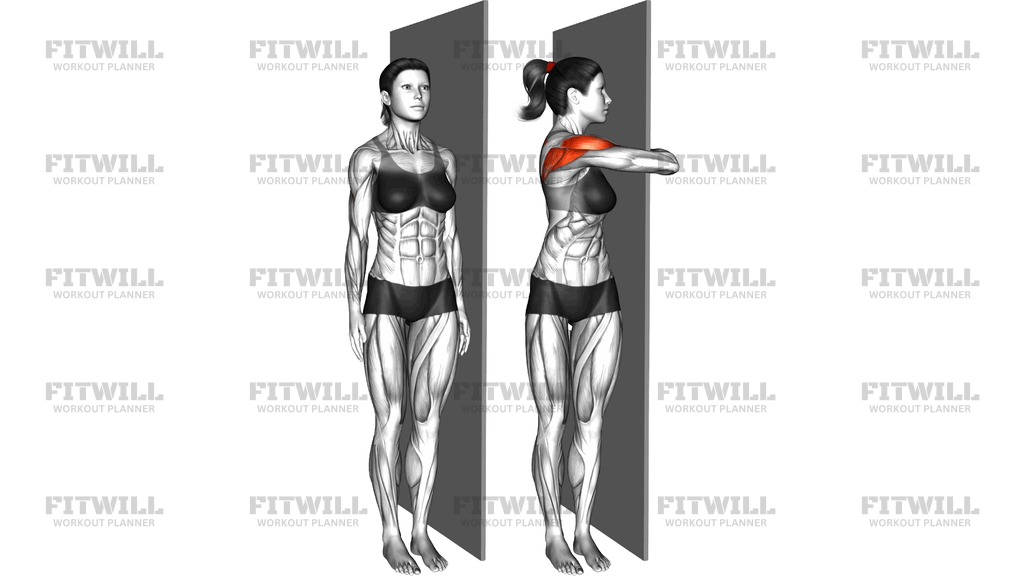
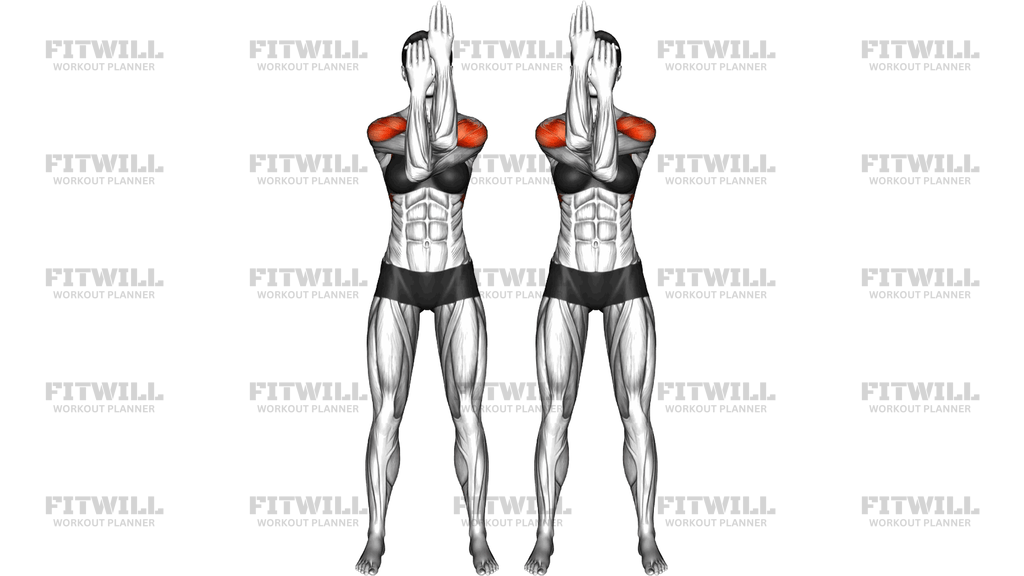
The Standing Switching Vertical Stacked Hand is a bodyweight shoulder drill performed standing, where you raise both forearms in front of your face, stack one hand vertically on top of the other with palms facing away, and then switch which hand sits on top without letting the arms drift apart. It looks deceptively simple, but holding that tight vertical stack while switching sides demands real control through the shoulder blades, the rotator cuff, and the muscles that keep the upper arm tracking smoothly in the shoulder socket.
This drill is especially useful as a warm-up before pressing, pulling, or overhead work. Because it is done standing with no external load, it lets you check whether both shoulders move symmetrically and whether one side tends to flare, rotate, or lose the stacked position. Lifters who spend long hours at a desk often find one side stacks cleanly while the other wants to swing outward, which is exactly the kind of asymmetry this movement exposes early.
The primary work happens in the deltoids and the rotator cuff group, which stabilize the humeral head as you raise and reposition the hands. The upper traps and the muscles between the shoulder blades control the scapular position, while the forearms and wrists stay active to keep the palms facing forward throughout. Your core contributes more than you might expect, since the arms are held high in front of the face and any sway in the torso instantly shows up as a wobble in the stacked hands.
Setup matters because there is no equipment to hide behind. Stand tall with feet about hip-width apart, ribs stacked over the pelvis, and lift the forearms so the elbows point down and the hands sit in front of the face at roughly eyebrow height. The vertical alignment of the two hands, one directly above the other, is the whole point of the exercise. If the stack drifts forward, the shoulders take over incorrectly, and if it drifts wide, you lose the range that challenges the rotator cuff.
To execute it well, keep the switch slow and deliberate: the top hand peels away, arcs over, and lands on the other side of the stack while the bottom hand stays put. Each switch should take two to three seconds. Ten to fifteen controlled switches per side make a solid set, and the drill fits at the start of a session, between sets of pressing, or as a standalone mobility break during the day.
The most common faults are shrugging the shoulders toward the ears, letting the elbows flare out to the sides, and rushing the switch so momentum replaces control. If you keep the elbows tucked under the wrists, the shoulders relaxed away from the ears, and the palms pressed forward as if pushing against a pane of glass, the Standing Switching Vertical Stacked Hand becomes a precise and repeatable way to prime the shoulders for heavier work.
[ Workout Log & Planner ]
Put your next workout in Fitwill
Keep your plan and training log ready when you are.


Instructions
- Stand upright with your feet hip-width apart, weight balanced evenly across both feet, and your arms relaxed at your sides.
- Raise both forearms in front of your face so your elbows point down toward the floor and your hands sit at roughly eyebrow height, palms facing away from you.
- Stack one hand directly above the other, keeping a small gap of a few centimeters between them so they do not touch, forming a vertical line in front of your face.
- Draw your shoulders down away from your ears and brace your midsection lightly so your torso stays still.
- Slowly lift the top hand, arc it over the outside of the stack, and place it on the opposite side so it becomes the new bottom hand, keeping both palms facing forward the entire time.
- Pause briefly at the end of each switch and confirm the hands are still vertically aligned before starting the next repetition.
- Exhale gently as each hand switches position and inhale as you settle into the stacked hold.
- Complete 10 to 15 switches, then reverse direction if you have been leading with the same hand, and rest before the next set.
- Lower your arms slowly to your sides at the end of the set rather than dropping them, keeping tension in the shoulders until the hands pass waist height.
Tips & Tricks
- If your elbows flare outward as the hands switch, cue yourself to keep the elbows pointing at the floor; the forearms should stay vertical like two pillars in front of your face.
- Shrugging is the most common fault in this drill. If your upper traps start burning before your shoulders do, consciously press your shoulder blades down and slightly forward.
- Keep a genuine gap between the hands. Letting them touch or lean against each other removes the stabilization demand that makes the exercise worthwhile.
- Watch yourself in a mirror from the front once or twice; most people discover one hand drifts several centimeters off the vertical line during the switch, usually on the stiffer side.
- If your wrists collapse backward as the palms press forward, spread the fingers wide and imagine pushing the palms through a pane of glass to keep the wrists active.
- Do not rush the switch. A two to three second switch per hand keeps the rotator cuff engaged; anything faster turns the drill into arm swinging.
- If standing feels unstable or you sway, narrow your stance slightly rather than widening it, and imagine your head suspended from above so the torso stays quiet.
- Breathe steadily throughout. Holding your breath while the arms are raised tends to increase neck and trap tension.
- If one shoulder consistently loses the stack, perform an extra set on that side only, starting with the weaker side when fresh.
Frequently Asked Questions
Which muscles does the Standing Switching Vertical Stacked Hand work?
The deltoids and rotator cuff do most of the stabilizing work, with support from the upper traps and the muscles around the shoulder blades. The forearms and core stay active to keep the palms forward and the torso still.
Is the Standing Switching Vertical Stacked Hand good for beginners?
Yes, it is a low-load drill that requires no equipment, so beginners can learn it safely. Start with slower switches and fewer repetitions, and focus on keeping the hands in a clean vertical stack before adding volume.
How high should my hands be during the stacked position?
The hands should sit in front of your face at roughly eyebrow height, with the elbows pointing down. This height keeps the shoulders working in the mid-to-upper range without forcing an overhead position.
Why do my hands keep drifting apart during the switch?
This usually means the shoulders are rotating to compensate for limited mobility or that you are rushing the movement. Slow the switch down, keep the elbows tucked under the wrists, and reduce the range slightly until the vertical line holds.
Should my hands touch each other in the stack?
No, keep a small gap of a few centimeters between them. Touching or leaning the hands together removes the stabilization demand on the shoulders and makes the drill much easier than intended.
When is the best time to use the Standing Switching Vertical Stacked Hand in a workout?
It works best as a warm-up drill before pressing, pulling, or overhead lifts, or as an active break between sets. It is also a useful standalone shoulder reset during long desk-bound days.
Can I substitute another exercise for the Standing Switching Vertical Stacked Hand?
Arm circles, wall slides, and shoulder dislocates with a stick train similar shoulder mobility and control, but none replicate the vertical stack and switch. If you need a substitute, wall slides are the closest in demand on the shoulder blades.
How many reps and sets should I do?
Two to three sets of 10 to 15 switches per side is a practical starting point. Because the drill is unloaded, quality and symmetry matter far more than total volume.
Is it safe if one of my shoulders is currently painful?
If you have an active shoulder injury or sharp pain during the movement, stop and consult a qualified professional. Mild discomfort from stiffness is common, but the drill should never provoke sharp or pinching sensations.