Walking Knee Raise Sky Reach On Spot
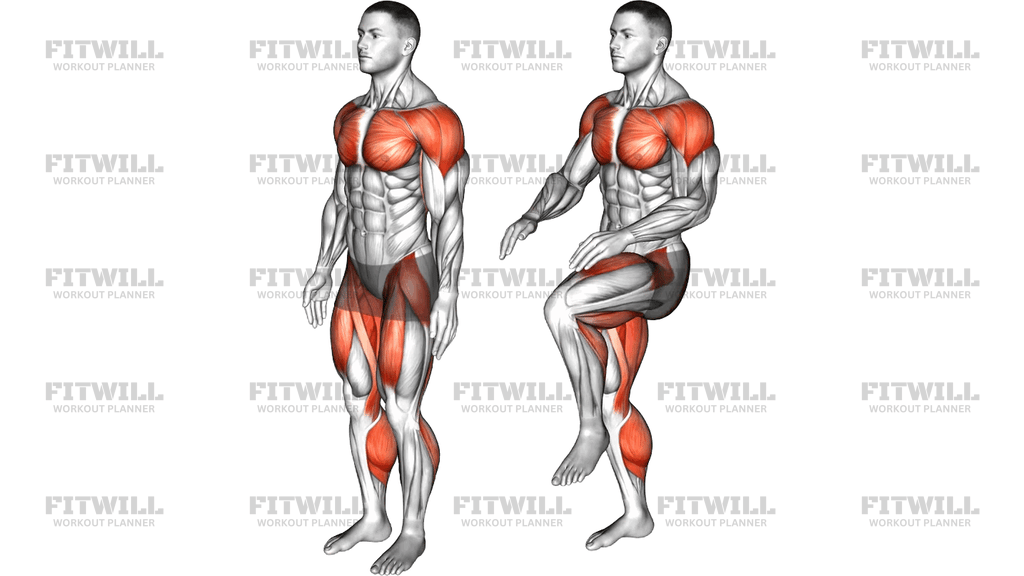
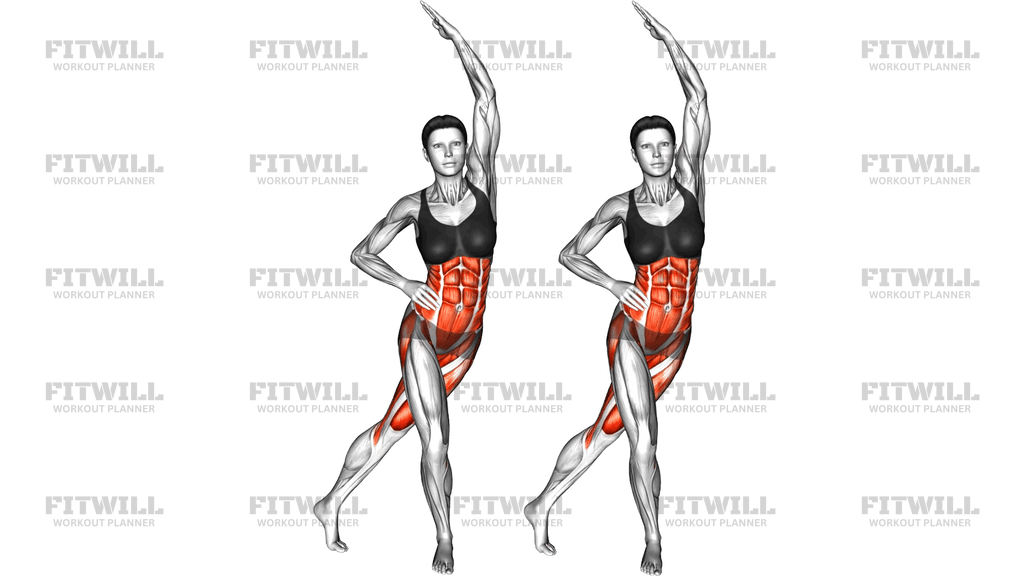
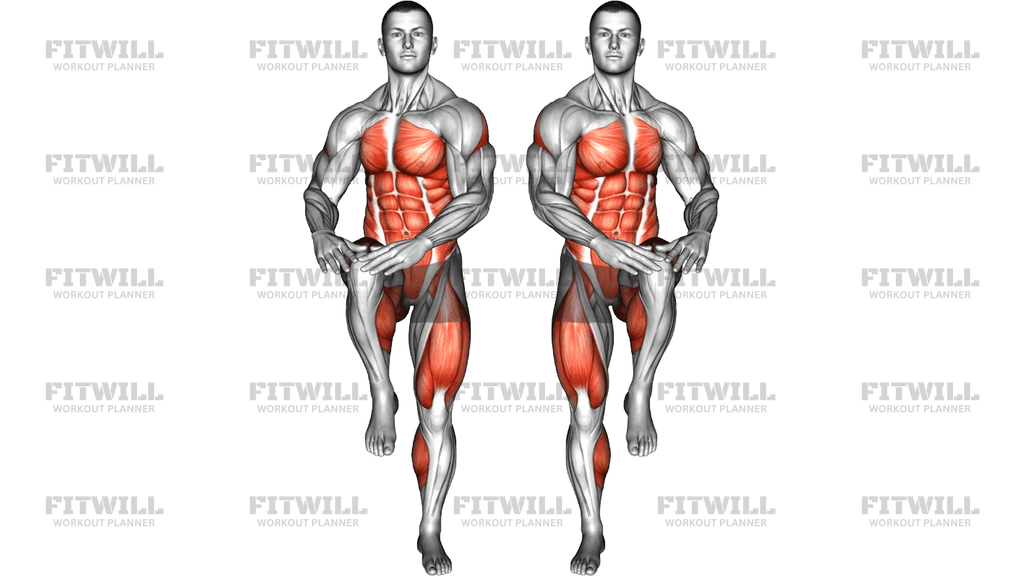
Walking Knee Raise On Spot is a standing body weight drill where you march in place, driving each knee up toward hip height while reaching your hands up toward the sky as the knee lifts. Because you stay over the same spot instead of traveling forward, all of your attention stays on the knee drive, the arm reach, and keeping your torso tall and balanced. It looks simple, but the combination of a lifted knee and an overhead reach demands real control through the trunk, the standing hip, and the ankle.
The main work comes from the hip flexors, which pull the thigh upward with each rep, and the lower abs and deep core, which keep your ribcage from flaring and your lower back from arching every time the knee comes up. The glutes on the standing leg stabilize your pelvis, while the shoulders and upper back get involved through the reach overhead. Because you alternate sides rhythmically, your heart rate climbs as well, making this a useful bridge between pure strength work and conditioning.
This movement suits a wide range of trainees. Beginners use it to learn single-leg balance and hip separation before progressing to hanging knee raises or weighted marches. Older adults and people returning from time off appreciate that it loads the hips and core without impact. More advanced lifters and field athletes use it as a warm-up primer or as part of a core circuit where the goal is crisp, repeated knee drives under fatigue.
Setup matters more than it appears to. Stand with your feet roughly hip width apart, weight spread across the whole foot, and your arms hanging relaxed at your sides. Brace your trunk as if preparing for a light push, then keep that brace through every rep. If you start slouched or loose, the knee drive will pull you into an arch and the reach will turn into a lean, which removes most of the benefit.
To execute it well, drive one knee up until your thigh is at least parallel to the floor while your opposite arm reaches straight up toward the ceiling, then lower the foot under control, switch sides, and keep alternating. Think tall spine, quiet shoulders, and a deliberate pull of the knee rather than a swing. Pause briefly at the top of each rep if you want more balance and core demand.
The most common faults are rushing the tempo, collapsing the chest as the arm reaches, and letting the standing knee lock back hard on each landing. Keep the working leg's foot landing softly beneath your hips, the reach vertical rather than behind your head, and your breathing steady: exhale as the knee rises, inhale as it lowers. If balance is shaky, slow the pace or stand near a wall until the pattern feels stable.
[ Workout Log & Planner ]
Put your next workout in Fitwill
Keep your plan and training log ready when you are.


Instructions
- Stand tall with your feet hip width apart, arms relaxed at your sides, and your weight spread evenly across both feet.
- Brace your abdominal wall lightly and lift your chest so your ribs stack over your pelvis before you start moving.
- Shift your weight onto one leg and keep that knee soft, not locked, so it can absorb each landing.
- Drive your opposite knee upward until your thigh is roughly parallel to the floor while your same-side arm reaches straight up toward the sky.
- Keep the reaching arm vertical, in line with your ear, and avoid letting your torso lean back as the knee rises.
- Pause for a beat at the top with the knee lifted and the arm extended, feeling your standing hip and core hold you steady.
- Lower the foot under control back to the floor beneath your hips, then immediately switch sides, lifting the other knee and reaching with the other arm.
- Exhale as the knee drives up, inhale as the foot lowers, keeping the breathing rhythm matched to the steps.
- Continue alternating on the spot for your chosen number of reps or time, staying in one place rather than drifting or walking forward.
- Finish the set by standing on both feet, resetting your brace, and shaking out your shoulders before the next set.
Tips & Tricks
- If you drift forward while marching, pick a fixed point on the floor and keep your feet landing on or behind it; the reach overhead makes backward lean more tempting than forward drift.
- A common mistake is reaching the hand behind the head instead of straight up, which arches the lower back; film yourself from the side once and check that the arm finishes in line with your ear.
- Drive the knee with the front of the hip rather than swinging the lower leg; if your shin swings loosely, slow the tempo and think about pulling the thigh up with the hip flexor.
- Keep the standing knee slightly bent the whole time; snapping it straight on every landing is a frequent cause of knee discomfort in this drill.
- If your torso collapses toward the raised knee, cue ribs down and lift the knee slightly less high until you can keep your chest tall at full range.
- Press down through the standing foot and grip the floor with your toes if you wobble; ankle stability is often the limiting factor before core strength is.
- Match the reach to the same-side knee only if balance is comfortable; beginners can start with the opposite arm reaching to make the pattern easier to coordinate.
- Keep the pace slow enough that you could pause at the top of every rep; speed without control turns this into sloppy marching and reduces the core demand.
- Place a light hand on a wall or chair back for the first few sessions if balance is poor, then progress to freestanding reps once the knee drive feels smooth.
Frequently Asked Questions
What muscles does Walking Knee Raise Sky Reach On Spot work?
The primary work comes from the hip flexors lifting the thigh, supported by the lower abs and deep core holding your trunk tall. The glutes stabilize the standing hip, the quads control the landing, and the shoulders contribute through the overhead reach.
Is the sky reach done with the same-side arm or the opposite arm?
Either works. Reaching with the same-side arm as the lifted knee creates a stronger balance challenge, while reaching with the opposite arm follows a natural marching pattern. Choose one and stay consistent within a set.
How high should I raise each knee?
Aim for your thigh reaching parallel to the floor, or as close as you can get while keeping your chest upright and your ribs down. Height that forces your lower back to arch defeats the purpose of the drill.
Is this exercise suitable for beginners?
Yes, it is one of the friendliest ways to train single-leg balance and hip control because there is no equipment and no impact. Beginners can reduce the knee height or rest a hand lightly on a wall until the pattern feels steady.
How is Walking Knee Raise Sky Reach On Spot different from a regular high-knee march?
The overhead reach adds a balance and trunk control demand that a plain march does not, because lifting both arms changes your center of mass while you stand on one leg. It also brings the shoulders and upper back into the movement.
Can I use this as a warm-up?
Absolutely. Two or three rounds of ten to twenty controlled reps raise your heart rate and open up the hips and shoulders before squats, lunges, or running. Keep the tempo moderate so you prime the pattern without fatiguing it.
Why do I lose my balance on every rep?
Balance losses usually come from a locked standing knee, a rushing tempo, or the reach drifting behind your head. Soften the standing knee, slow each rep down, and reach straight up in line with your ear.
What can I substitute if standing on one leg is uncomfortable?
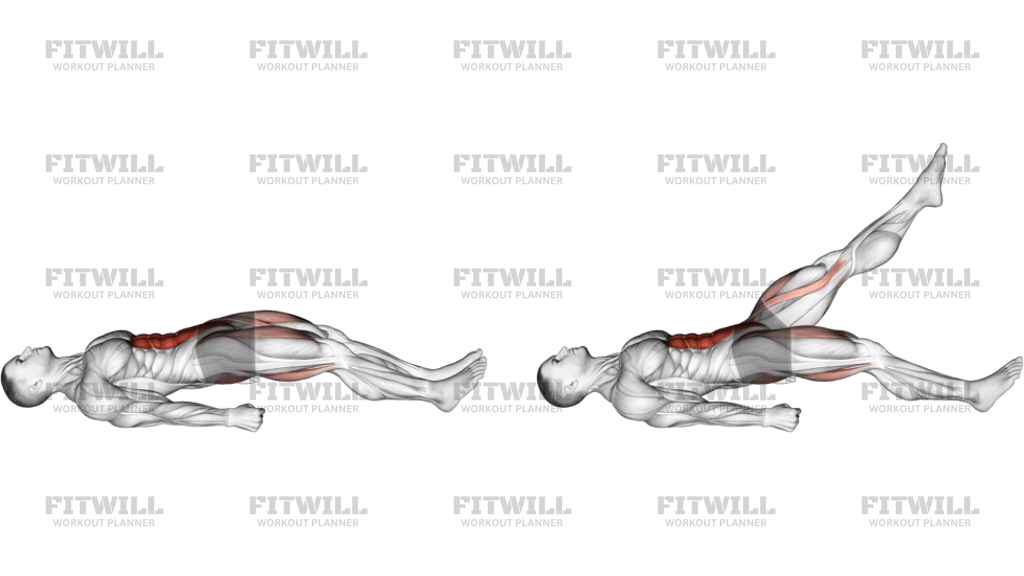
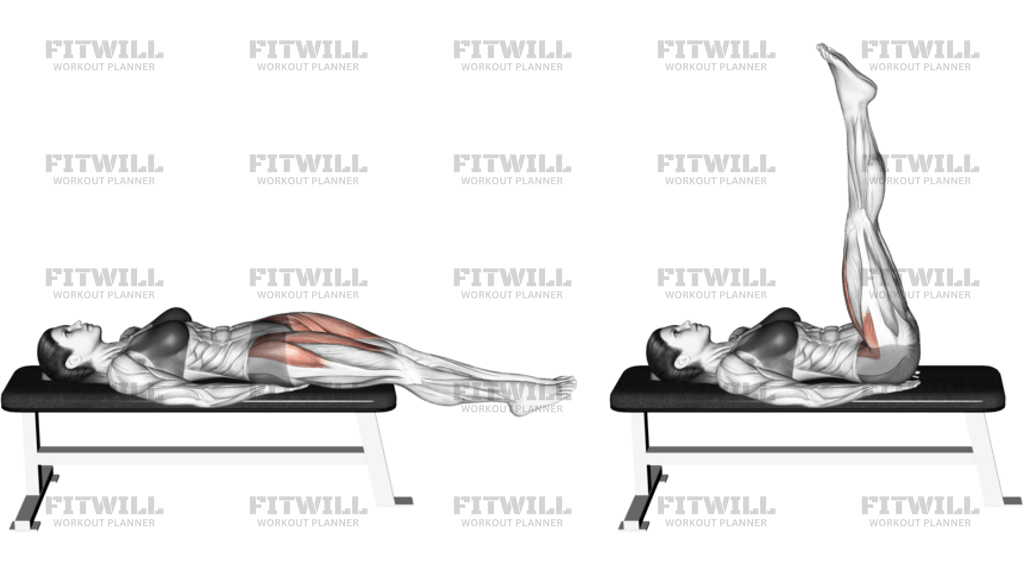
Seated knee lifts, standing marches while holding a stable support, or lying alternate leg raises all train the same hip flexion pattern with less balance demand. Progress back to the freestanding version as stability improves.
How many reps should I do?
For core and balance work, 10 to 20 controlled reps per side or 30 to 45 seconds of steady alternation works well. For a conditioning circuit, lengthen the duration but keep the knee drive and reach crisp rather than letting form degrade.
Is it safe for my knees and lower back?
For most people, yes, as long as you land softly with a slightly bent standing knee and avoid arching your lower back as the knee lifts. If either area gives you sharp pain during the movement, stop and choose a lower-load alternative.