Sitting Leg Hold
The Sitting Leg Hold is an isometric core exercise where you balance on your sitting bones, lean your torso back, and hold both legs extended off the floor in a static V-shaped position. Instead of moving through repetitions, you fight gravity by simply staying up, which builds endurance through the hip flexors and the entire abdominal wall. It looks simple, but holding a clean position for even twenty seconds is demanding.
This movement primarily trains the hip flexors, especially the iliopsoas and rectus femoris, which work hard to keep the thighs elevated and the knees straight. The rectus abdominis fires continuously to hold the torso at the leaned-back angle and keep the spine from collapsing toward the floor. Your quads also stay engaged to lock the knees out, and the adductors contribute to keeping the legs together.
Because the body forms a long lever with no external support, the Sitting Leg Hold doubles as a balance drill. You must find the sweet spot on your sitting bones where the weight of the legs and torso counterbalance each other. That balance component is what makes it valuable for anyone working on body control, from martial artists and gymnasts to runners who want a more stable trunk.
The setup matters more than most people expect. Sitting too far forward on the tailbone rounds the lower back and shifts stress away from the abs, while sitting too upright takes load off the hip flexors and makes the hold far easier than intended. Getting the torso angle right for your current strength level is the difference between a productive hold and a strained neck or aching low back.
To execute it well, lift the chest, keep the shoulders relaxed away from the ears, and extend the legs only as far as you can while keeping a long, neutral spine. Shorter holds with a strong position beat long, saggy holds every time. If a full V-sit with straight legs is too much, bend the knees or keep the hands lightly on the floor beside the hips for support and progress from there.
You will see this exercise in calisthenics progressions toward the L-sit and V-sit, in core finishers, and in rehab-adjacent programming where controlled isometric hip flexor work is useful. Start with short holds of ten to fifteen seconds, rest fully between sets, and stop the set as soon as your lower back starts arching or your torso starts sinking.
[ Workout Log & Planner ]
Put your next workout in Fitwill
Keep your plan and training log ready when you are.


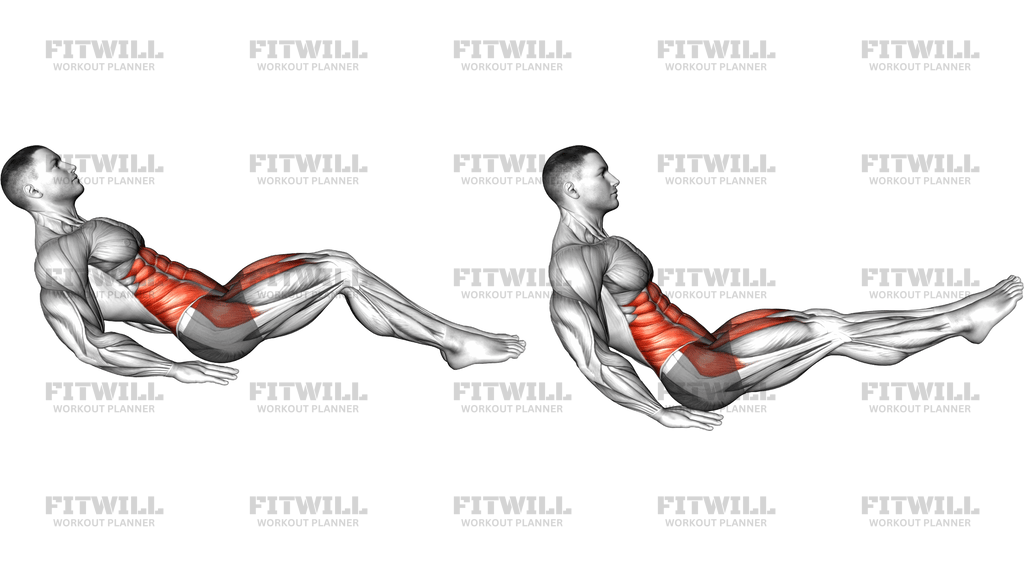
Instructions
- Sit on the floor or on an exercise mat with your legs bent in front of you and your hands resting lightly on the floor beside your hips.
- Lean your torso back to roughly a 45-degree angle, finding the balance point on your sitting bones rather than your tailbone.
- Lift your chest, draw your shoulders down and back, and brace your abdominals as if preparing to take a light punch to the stomach.
- Lift both feet off the floor and extend your knees until the legs are straight, or keep a slight knee bend if a full extension breaks your position.
- Hold the legs together at roughly hip height or slightly higher, so your body forms a wide V shape with the torso.
- Keep your arms alongside your legs or hovering just above the floor, reaching toward your feet without pulling on anything.
- Hold this static position while breathing steadily through your nose and mouth; do not hold your breath.
- Maintain a long spine throughout — if your lower back starts to round or your chest collapses, shorten the hold or bend the knees.
- When the hold time is up, lower the legs under control to the floor rather than dropping them, then rest briefly before the next set.
- Reset your torso angle and brace before each subsequent hold so every rep starts from the same strong position.
Tips & Tricks
- If your tailbone aches, shift your weight slightly forward onto the fleshier part of your sitting bones or place a thin pad or folded towel under your hips.
- A common mistake is holding the legs high while the lower back rounds into a C-shape; lower the legs a few inches until you can keep the spine long.
- Bent-knee versions are not cheating — extending the legs is a lever-length progression, so earn it before adding it.
- Keep your neck neutral by looking at a point on the floor a few feet ahead of you rather than craning your chin toward your chest.
- Time your holds rather than guessing; ten seconds of a tight position builds more than thirty seconds of sagging.
- If your quads cramp, that usually means the knees are not fully locked out and the muscle is working at a weak angle — extend the knees fully or reduce hold time.
- Breathe in shallow, rhythmic breaths during the hold; breath-holding raises tension in the neck and shoulders and shortens your sets.
- Place your hands lightly on the floor for balance only — the moment you push or pull with them, you change the exercise.
- Stop the set when your torso angle drops toward the floor; once the V collapses, the hip flexors are no longer doing the intended work.
Frequently Asked Questions
What muscles does the Sitting Leg Hold work?
The primary work comes from the hip flexors, particularly the iliopsoas and rectus femoris, which hold the legs up. The rectus abdominis works isometrically to keep your torso leaned back, and the quads help keep the knees straight.
How long should I hold the Sitting Leg Hold?
Start with 10 to 15 second holds for 3 to 5 sets, resting about 30 to 60 seconds between them. Once you can hold a clean position for 30 seconds, progress by straightening the legs or raising them slightly.
Can beginners do the Sitting Leg Hold?
Yes, with modifications. Keep the knees bent, hold the legs lower to the floor, or rest your fingertips lightly on the mat beside your hips for balance, then gradually reduce the support as strength improves.
Why does my lower back round during the Sitting Leg Hold?
That usually means the position is too demanding for your current hip flexor and abdominal strength, so your pelvis tilts and the spine curls. Lower the legs or bend the knees until you can keep a long, neutral spine throughout the hold.
How is the Sitting Leg Hold different from a V-sit?
They are closely related — the Sitting Leg Hold is essentially a held V-position, often with a slightly wider angle between torso and legs. As you raise the legs and close that angle, it becomes a stricter V-sit hold.
Should my hands be on the floor or in the air?
Hands lightly touching the floor beside your hips are fine for balance when learning. Once you can balance reliably, hover the hands alongside your legs so the core does all of the stabilizing work.
What can I use instead of the Sitting Leg Hold?
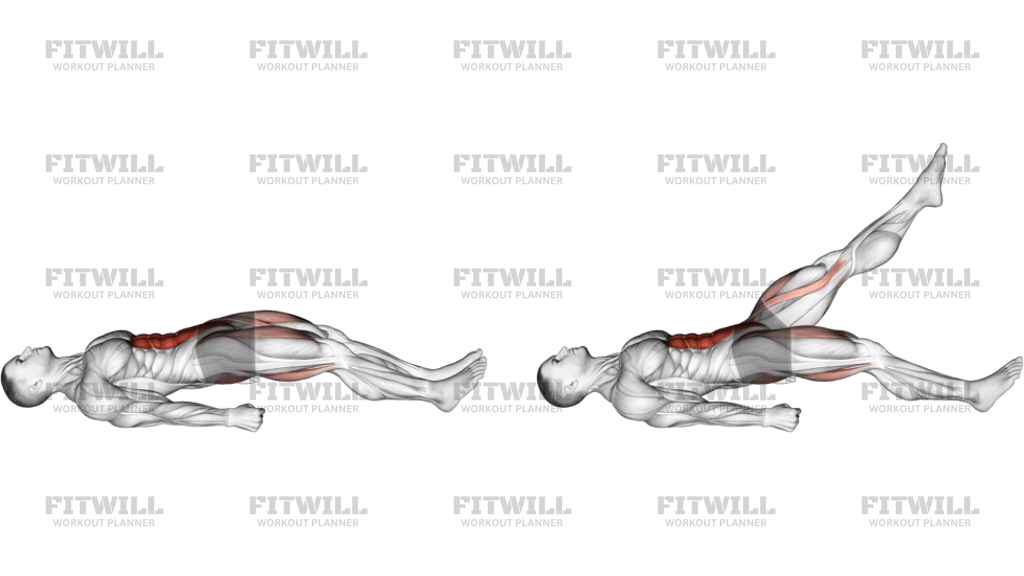
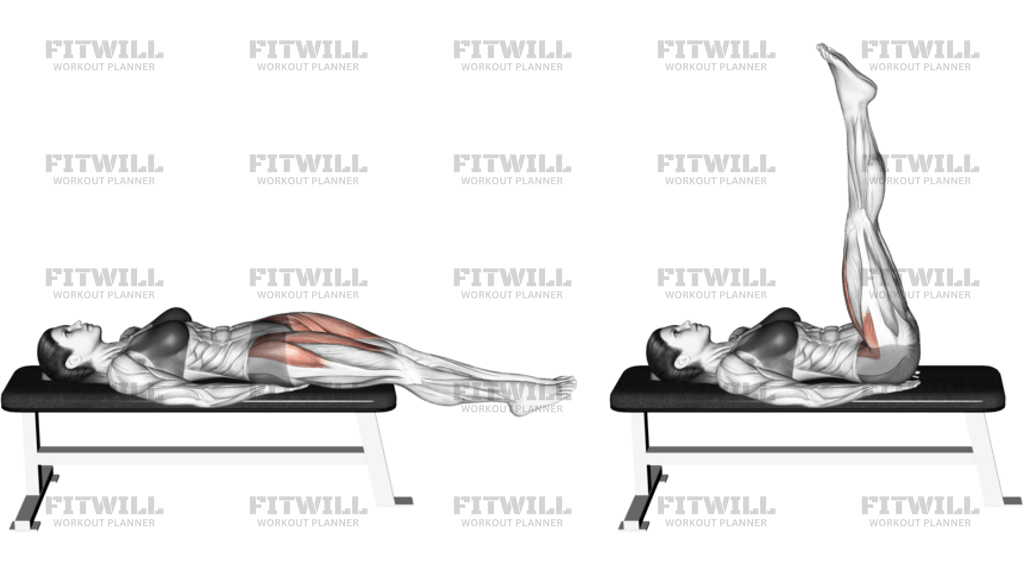
Hollow body holds, lying leg raises held just off the floor, or seated knee tucks train similar hip flexor and abdominal strength. The Sitting Leg Hold is unique in adding the balance challenge on the sitting bones.
Is it safe for people with tailbone or lower back sensitivity?
Sit on a padded mat or folded towel and keep the torso angle higher and the legs lower to reduce pressure and spinal load. If a hold produces sharp pain rather than muscular effort, stop and choose a supported variation instead.