Dumbbell One Arm Floor Fly
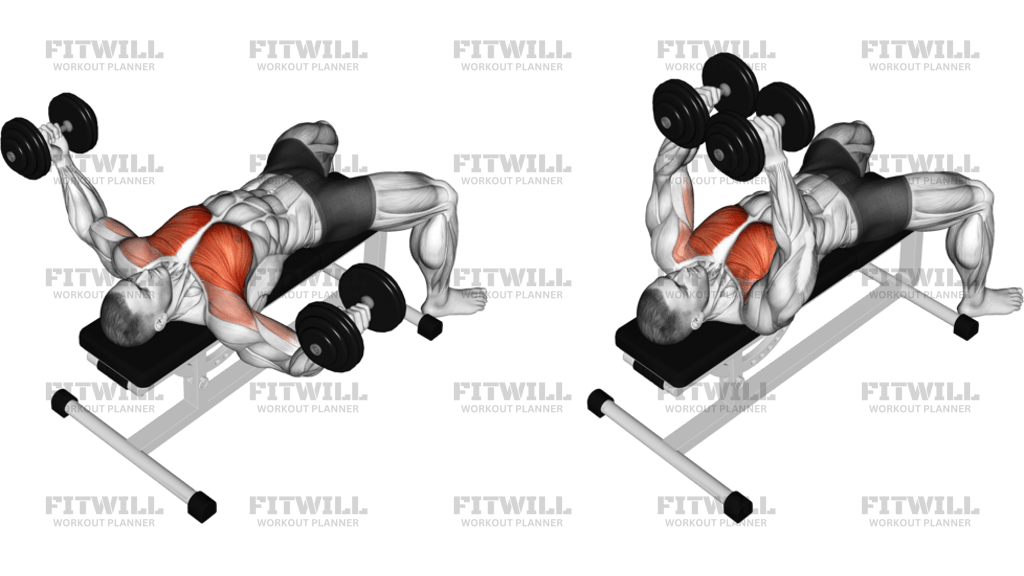
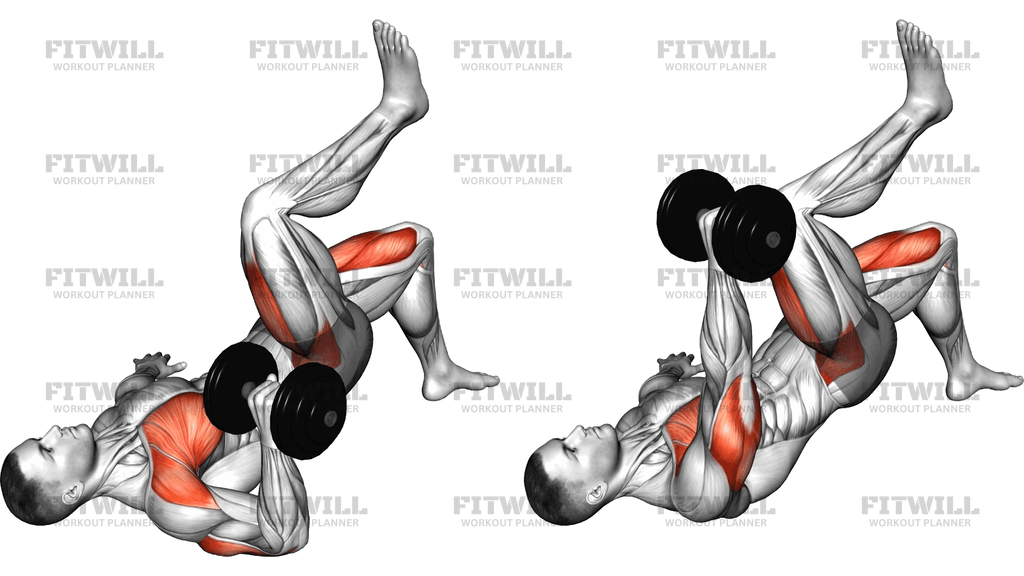
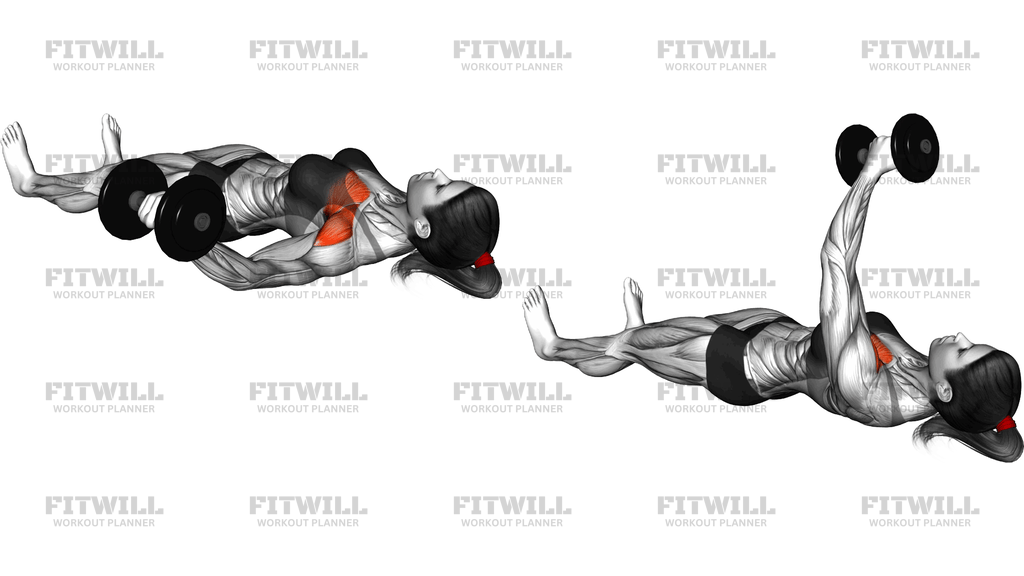
The Dumbbell One Arm Floor Fly is a chest isolation exercise performed lying flat on the floor with a single dumbbell in one hand. Instead of pressing, you keep a soft bend in your elbow and sweep the weight in a wide arc out to the side until your upper arm rests near the floor, then reverse the arc to bring the dumbbell back above your chest. Because only one side works at a time and there is no bench behind you, the movement demands more from your core than a standard fly.
The floor is the defining feature here. On a bench, a fly can drop your elbows below torso level, which stretches the shoulder capsule under load and is uncomfortable or risky for some lifters. The floor stops the arc at a safe depth, making this a smart choice for beginners learning the fly pattern, lifters with cranky shoulders, or anyone training at home with just a dumbbell and a bit of floor space.
The working side targets the pectoralis major, with the front of the shoulder assisting as the arm travels through the arc. The unspoken star is the anti-rotation demand: with a weight loaded on only one side of your body, your obliques and deep core have to brace to keep your torso from tipping toward the working arm. Your legs, bent with feet flat as shown, act as stabilizers that anchor the lower body.
To execute well, keep the elbow angle fixed throughout the set rather than letting the arm drift into a press. The dumbbell should trace a wide, deliberate semicircle, and the return should be powered by squeezing the chest, not by yanking with the arm or bouncing off the floor. Control matters far more than load on this exercise because the floor removes the range where a bench fly usually goes wrong, but the one-arm setup still punishes sloppy tempo.
Use this movement as a primary chest exercise in minimal-equipment sessions, as a finishing fly after presses, or as a teaching tool to learn how the chest feels through a full arc before progressing to bench variations. Start light, master the arcing path and the braced torso, and only add weight when you can keep your back and hips from rolling toward the working side.
Fitwill
Log Workouts, Track Progress & Build Strength.
Achieve more with Fitwill: explore over 9600 exercises with images and videos, access built-in and custom workouts, perfect for both gym and home sessions, and see real results.
Start your journey. Download today!




Instructions
- Sit on the floor with a dumbbell placed next to one hip, then lie back flat so your head, upper back, and hips are in contact with the ground.
- Bend both knees and plant your feet flat on the floor for stability, then pick up the dumbbell with your working hand using a neutral grip, palm facing inward, and press it straight up over your chest.
- Keep a soft, fixed bend of roughly 10 to 20 degrees in the elbow and brace your core so your torso stays flat against the floor.
- From the arm-vertical starting position, lower the dumbbell in a wide arc out to the side, as if drawing a semicircle away from your body.
- Descend until your upper arm touches or comes close to the floor, keeping the shoulder joint on top of the movement rather than sinking the shoulder blade.
- Pause briefly at the bottom, feeling the stretch across your chest, without letting the dumbbell crash down.
- Squeeze the chest to reverse the arc, pulling the dumbbell back up along the same path until it is directly above your shoulder.
- Exhale as you raise the dumbbell and inhale slowly as you lower it.
- Complete all reps on one side, then transfer the dumbbell to the other hand and repeat, or press the weight up first and lower it to the floor before switching if you are handling a heavier dumbbell.
Tips & Tricks
- The most common fault is turning the fly into a half press by straightening the elbow as the dumbbell comes up. Lock your elbow angle at the start and hold it for the whole set.
- If your torso rolls toward the working arm, you are either going too heavy or descending too far. Drop the weight and stop the arc slightly earlier so your shoulders stay flat on the floor.
- Keep the dumbbell path out to the side of the chest, not above your face. An arc that drifts toward the head shifts tension from the chest to the front of the shoulder.
- Let your bent legs do quiet work: pressing your feet into the floor helps counterbalance the off-center load so your hips stay square.
- Do not relax the arm at the bottom. A controlled touch of the floor is fine, but flopping the dumbbell down removes tension and invites shoulder strain.
- If grip strength is the limiting factor, use a dumbbell with a knurled but comfortable handle or wrap your non-working hand lightly around the working forearm for positional feedback.
- Start with your weaker arm first so both sides get the same quality of work before fatigue builds.
- Keep your wrist stacked over the elbow, neither flexed back nor collapsed forward, so the dumbbell stays balanced through the arc.
Frequently Asked Questions
Which muscles does the Dumbbell One Arm Floor Fly work?
The chest, especially the sternal portion of the pectoralis major, is the prime mover, with the front shoulder assisting. Because you train one side at a time while lying on the floor, your obliques and deep core also work hard to stop your torso rotating.
Why do this fly on the floor instead of a bench?
The floor limits how far your upper arm can travel, stopping the stretch at a depth that is gentle on the shoulder joint. It also makes the exercise accessible if you train at home with only a dumbbell.
Is the Dumbbell One Arm Floor Fly good for beginners?
Yes. The short range of motion and the clear feedback of the floor make it one of the safest ways to learn the fly pattern. Start with a light dumbbell and focus on the arcing path before adding load.
How much elbow bend should I keep during the movement?
Set a soft bend of about 10 to 20 degrees before you begin and keep it constant. If the elbow opens and closes during the set, you are pressing instead of flying and the chest stops being the limiting muscle.
Why does my torso want to roll toward the dumbbell?
With only one side loaded, your body naturally rotates toward the weight if your core is not braced or if the dumbbell is too heavy. Plant your feet, brace your midsection, and reduce the weight so your shoulders stay square to the floor.
Can I substitute the Dumbbell One Arm Floor Fly with a cable fly or band fly?
You can, and lying cable or band flies offer similar tension. The dumbbell floor version remains the most convenient choice because it needs no anchor point and the floor protects the shoulder at the bottom of the arc.
Should my arm touch the floor at the bottom of the rep?
A gentle touch or near-touch of the upper arm to the floor is the natural endpoint of the arc. Avoid slamming the dumbbell down or bouncing off the floor, as that releases tension and can irritate the shoulder.
How do I switch the dumbbell from one hand to the other safely?
The simplest method is to finish your reps, press the dumbbell up, hold it with both hands, lower it to your chest, and place it on the floor before resting and switching sides. Avoid passing a dumbbell hand to hand while your torso is twisting off the floor.
Is it a problem if I feel this more in my front shoulder than my chest?
Usually it means the arc has drifted toward your head or the elbow angle has changed. Keep the dumbbell traveling out to the side of the chest at nipple height and maintain the fixed elbow bend to refocus tension on the chest.