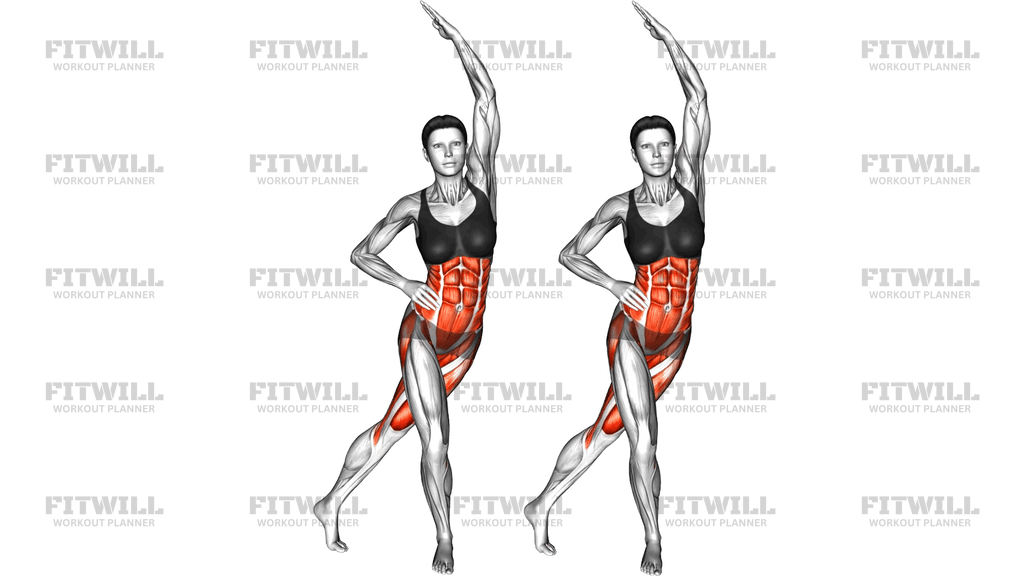
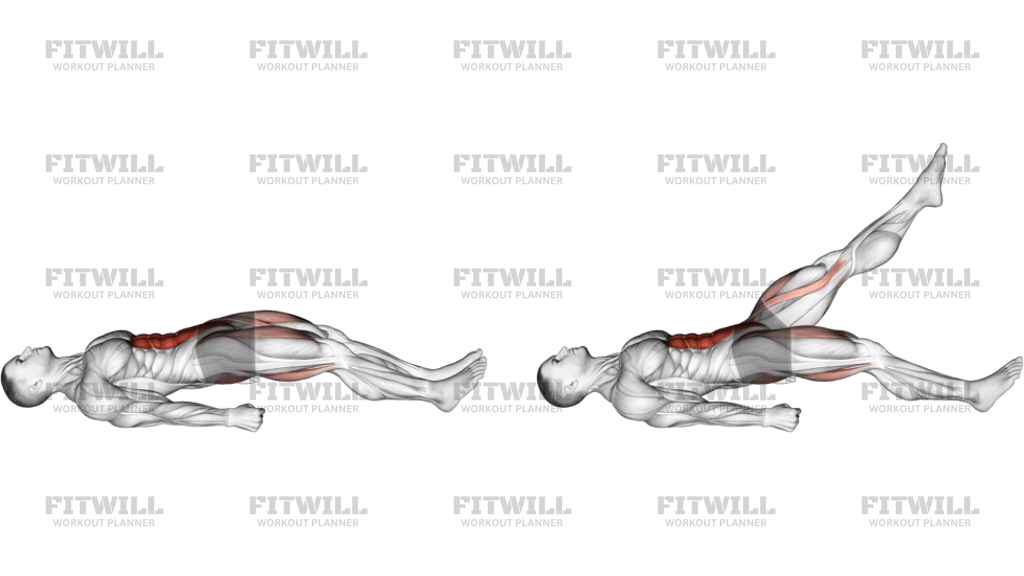
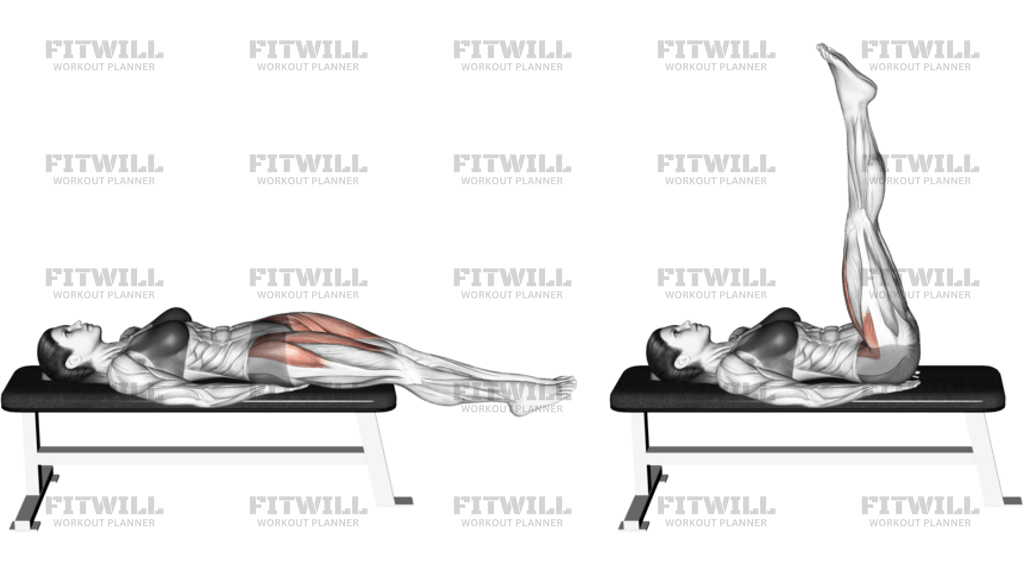
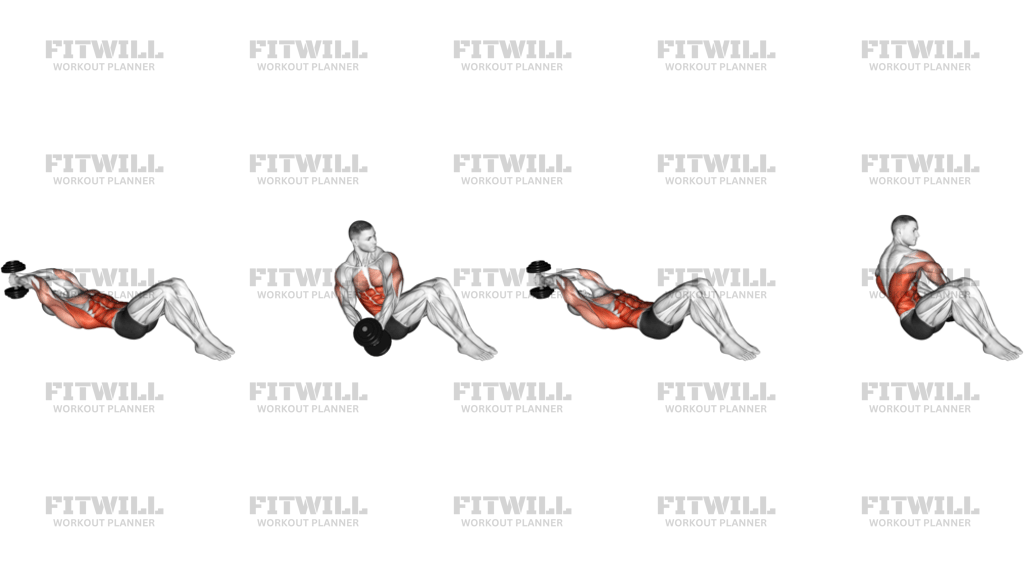
Alternate Front Toe Tap Walks
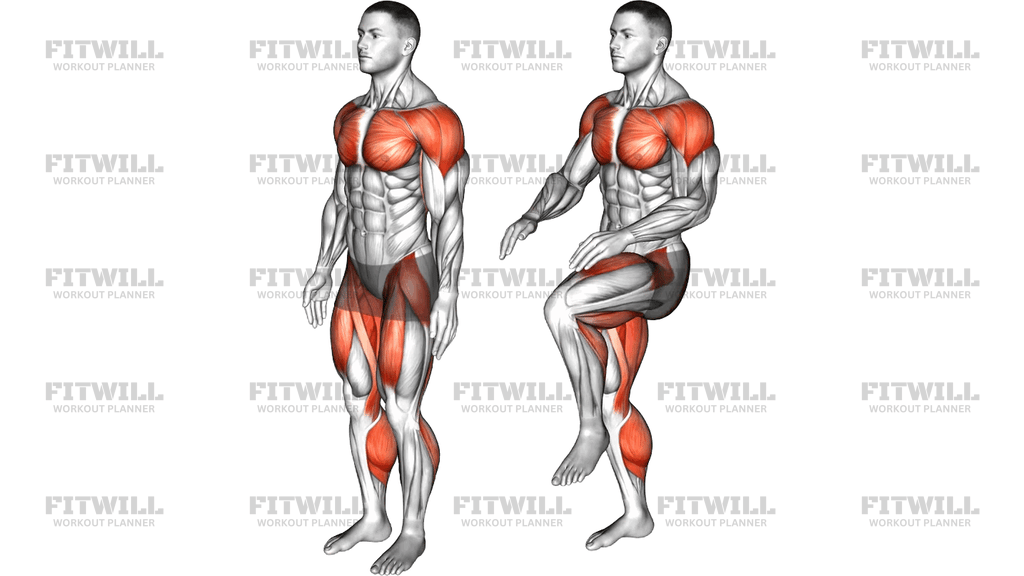
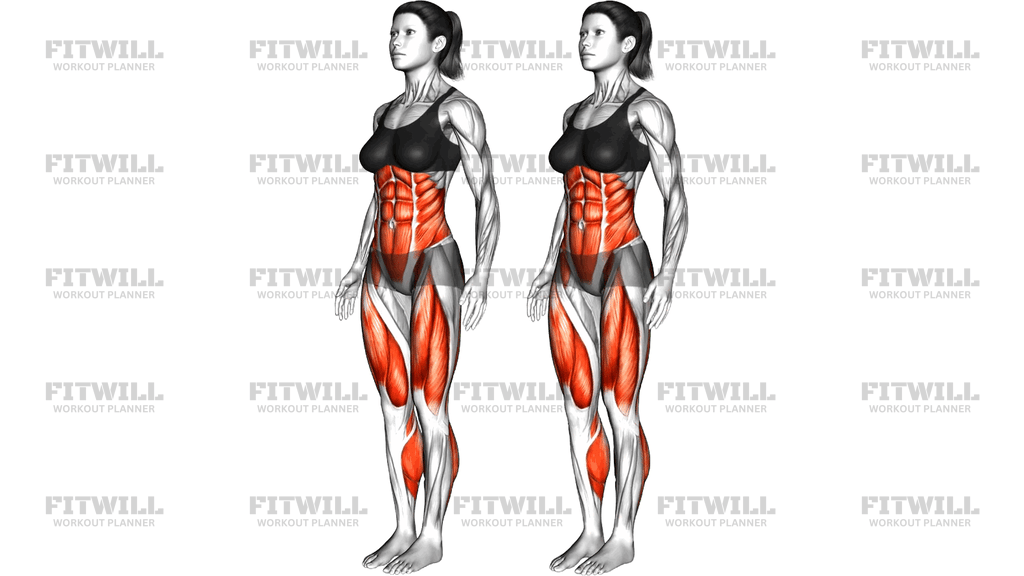
Alternate Front Toe Tap Walks are a standing body-weight drill where you tap one foot lightly onto the floor in front of you, switch legs, and keep the rhythm going as if you were walking with short, deliberate steps. The movement looks simple, but because you are balancing on one leg every time the opposite foot reaches forward, your trunk has to work the entire time to keep you tall and steady. The front-of-the-hip muscles lift the leg, the lower abdominals control your posture as the leg swings, and the ankle of the standing leg makes constant small corrections to stop you from wobbling.
This is a great low-impact option for anyone who wants to train balance and core control without jumping or loading the joints. It suits beginners who are new to single-leg stability, older adults who want a safe coordination drill, people returning from time off who need to rebuild confidence on one foot, and anyone warming up before squats, lunges, or running. Because the effort is moderate and repeatable, you can also string the taps together for a longer stretch of time and use the drill as light conditioning.
The setup matters more than it seems. A tall spine, relaxed shoulders, and a soft bend in the standing knee give you a stable base to tap from. If you lean back, arch your lower back, or let the standing knee lock out, the hip flexors and abs stop doing their job and the drill turns into a loose shuffle. Keeping the ribs stacked over the pelvis forces the deep trunk muscles to stay engaged with every tap.
To execute the movement well, stand with your feet under your hips and your arms hanging naturally at your sides. Lift one foot and reach it a short step ahead of you, touching only your toes to the floor with a light tap. Lift that foot back to the start and immediately reach the other foot forward the same way, continuing the alternating rhythm. Keep the taps light and quiet; the goal is control, not reach. A short, crisp tap in front of you does more for balance than a long stretch that pulls your torso out of position.
You will most often see Alternate Front Toe Tap Walks used as a dynamic warm-up, as active recovery between harder sets, or as part of a core and balance circuit. Coaches also use it to teach people how to brace while moving, which carries over directly to lunges and step-ups. Since no equipment is required, it works in a small space at home or in a busy gym.
From a safety standpoint, start near a wall or sturdy counter if you are unsure of your balance, and keep your taps close to your body at first. Speed is the last thing to add. If the front of your hip pinches or your standing ankle aches, shorten the tap height and distance, slow the tempo, and reset your posture before continuing.
[ Workout Log & Planner ]
Put your next workout in Fitwill
Keep your plan and training log ready when you are.


Instructions
- Stand tall with your feet directly under your hips, arms relaxed at your sides, and your gaze on a fixed point straight ahead at eye level.
- Shift your weight slightly onto one leg and allow the standing knee to bend just a few degrees so it can absorb small balance shifts.
- Draw your lower ribs down and gently tighten your abdominals so your pelvis stays level and your lower back is not arched.
- Lift one foot off the floor and reach it forward a short step in front of you, toes first, as if taking a slow controlled stride.
- Lightly tap your toes to the floor with minimal weight, keeping the tap close to your body rather than reaching far out.
- Lift the front foot straight back to the starting stance and immediately reach the opposite foot forward for the next tap.
- Continue alternating feet in a steady walking rhythm, staying tall through the trunk on every single-leg moment.
- Exhale as each foot reaches forward and inhale as it returns, keeping your breathing smooth rather than holding your breath.
- Work for a set time or a set number of taps per side, then stop, plant both feet, and reset your posture before the next set.
Tips & Tricks
- Keep the tap light and quick; planting your full weight on the front foot turns this into a lunge and removes the balance challenge from the standing leg.
- If you catch yourself leaning your torso back as each leg lifts, think about pulling your belly button toward your spine and shortening the tap distance by a few inches.
- Avoid locking the standing knee straight. A small bend lets your ankle and thigh make the constant corrections that build stability.
- Watch for the front foot turning outward or the toes slapping down. Aim the toes straight ahead and touch down with the ball of the foot first.
- Keep your pelvis level instead of hiking the hip of the lifting leg. Both hips should face forward the whole time.
- Start with slow, deliberate taps for control, then only speed up once you can complete a set without touching a wall or breaking posture.
- Fix your eyes on one spot instead of looking down at your feet. A stable visual target noticeably improves your balance in this drill.
- If your standing ankle tires or shakes early, that is normal at first. Shorten the set rather than widening your base or grabbing support mid-rep.
- Stay close to a wall or counter on your first sessions and hover a hand near it instead of gripping it, so the leg work still has to do the stabilizing.
Frequently Asked Questions
What muscles do Alternate Front Toe Tap Walks work?
The hip flexors of the moving leg do the lifting, while the lower abdominals and deep core stabilize your trunk on every tap. The standing leg's ankle stabilizers and calves work continuously to keep you balanced.
Are Alternate Front Toe Tap Walks good for beginners?
Yes, they are one of the safest ways to learn single-leg balance because the front foot keeps touching the floor. Beginners can start with short taps next to a wall and progress to longer reaches and faster tempos.
How far forward should I tap my toes in Alternate Front Toe Tap Walks?
Tap about the length of a short step in front of you, close enough that you stay tall and your weight stays over the standing leg. If you have to lean or shift your hips to reach the floor, the tap is too long.
Why does my lower back feel this exercise instead of my abs?
That usually means your ribs are flared and your lower back is arched as the leg lifts. Pull the ribs down over the pelvis and engage your abdominals before the first tap, and shorten the reach if the arch returns.
Can I use Alternate Front Toe Tap Walks as a warm-up?
Absolutely. They raise your heart rate gently, open up the hip flexors through a controlled range, and wake up the ankle stabilizers, which makes them a useful primer before lunges, squats, or running.
What can I substitute if I cannot balance on one leg yet?
Stand beside a wall or counter and let a fingertip rest on it for light support, or reduce the tap height so your toes barely leave the floor. Marching in place with a higher knee hold is another stepping stone.
How long should I perform Alternate Front Toe Tap Walks?
Start with 20 to 30 seconds of continuous alternating taps and build toward 60 seconds or a set number of taps per side. Stop when your posture breaks down rather than pushing through a wobbly rep.
Should my standing knee be straight or bent during the taps?
Keep it softly bent. A locked knee makes your balance brittle and shifts effort away from the ankle and thigh muscles that should be stabilizing.
Is it normal for my standing ankle to shake during this exercise?
Yes, mild shaking is common when the ankle stabilizers are being challenged in a new way. Slow the tempo and shorten your sets, and the control will come with practice.
Do Alternate Front Toe Tap Walks need any equipment?
No, they only need enough floor space for a short step in front of you. Supportive shoes are optional; some people prefer bare feet to feel the floor, others like the cushioning of a mat underfoot.