Knee Raise Side Reach
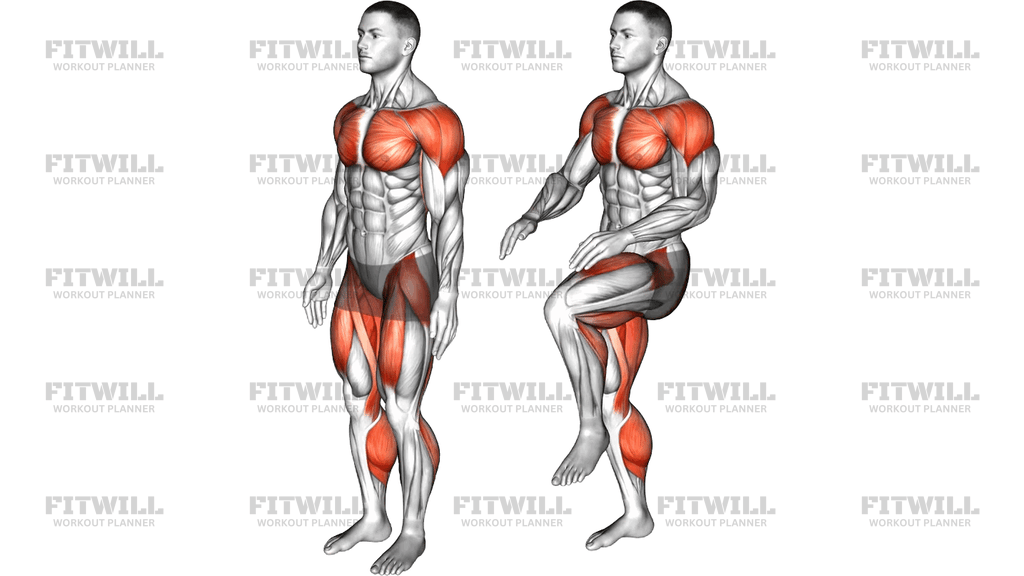
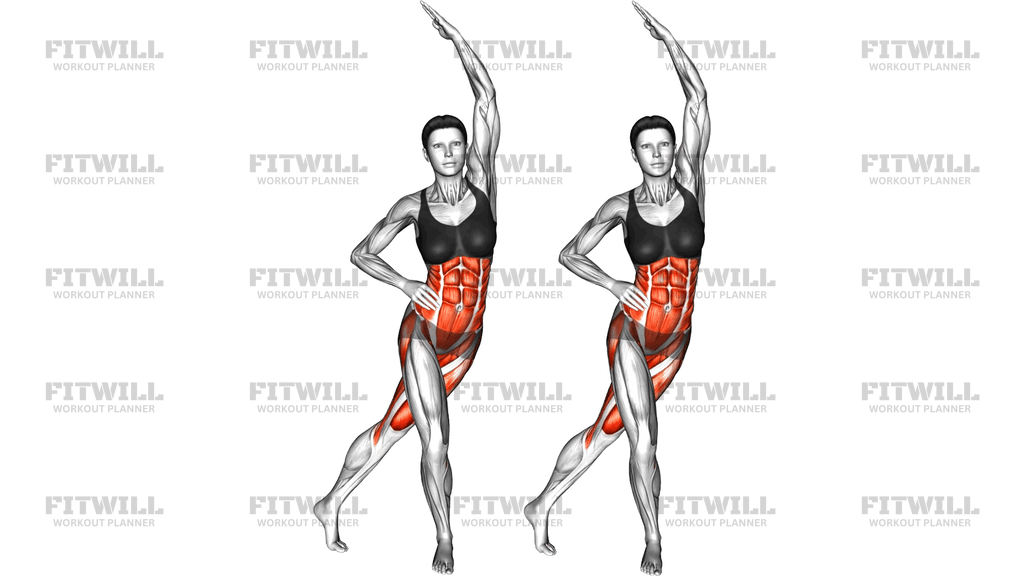
Knee Raise Side Reach is a standing body weight movement that combines a single-leg knee lift with an overhead lateral reach to the opposite side. You start tall with your feet roughly hip-width apart and your arms raised in a wide V above your shoulders. As you pull one knee up in front of your body, you bend sideways through your torso, reaching your arms up and over toward the opposite side, then return to the tall standing position and repeat on the other leg.
This exercise trains several things at once: the hip flexors of the lifting leg drive the knee up, the obliques and deep core control the side bend, and the standing leg has to stabilize your balance the entire time. Because the knee raise and the lateral reach happen together, your trunk has to resist rotation while it flexes sideways, which is a useful and realistic core demand for walking, running, climbing stairs, and changing direction.
It works well as a warm-up before lower body or core training, as a low-impact conditioning drill in a circuit, or as a standalone core activation move for people who want to avoid getting down on the floor. Beginners can pace it slowly and focus on balance; more experienced trainees can speed it up slightly or add a light pause at the top of each rep to increase the challenge.
Setup matters more than it looks. A tall spine, level shoulders, and feet planted firmly under your hips give you a stable base, and keeping your ribs stacked over your pelvis ensures the side bend comes from your waist rather than from collapsing forward or shrugging. If you lean or hitch your hip to lift the knee higher, you shift work away from the hip flexors and obliques and into compensation patterns.
To execute it well, drive the knee up to about hip height while the arms stay long and the reach comes from the whole torso pivoting at the waist. Exhale as you lift and reach, inhale as you lower the foot back down with control. Avoid letting the knee drift inward and avoid swinging the leg; the movement should feel deliberate on both the lift and the return.
The main practical points are balance and range. If you wobble, stand near a wall or hold a light support with one hand and reduce the reach depth. Stop at a side bend that you can control without twisting your hips, and keep the working knee tracking straight ahead rather than rotating across your body.
Fitwill
Log Workouts, Track Progress & Build Strength.
Achieve more with Fitwill: explore over 9600 exercises with images and videos, access built-in and custom workouts, perfect for both gym and home sessions, and see real results.
Start your journey. Download today!




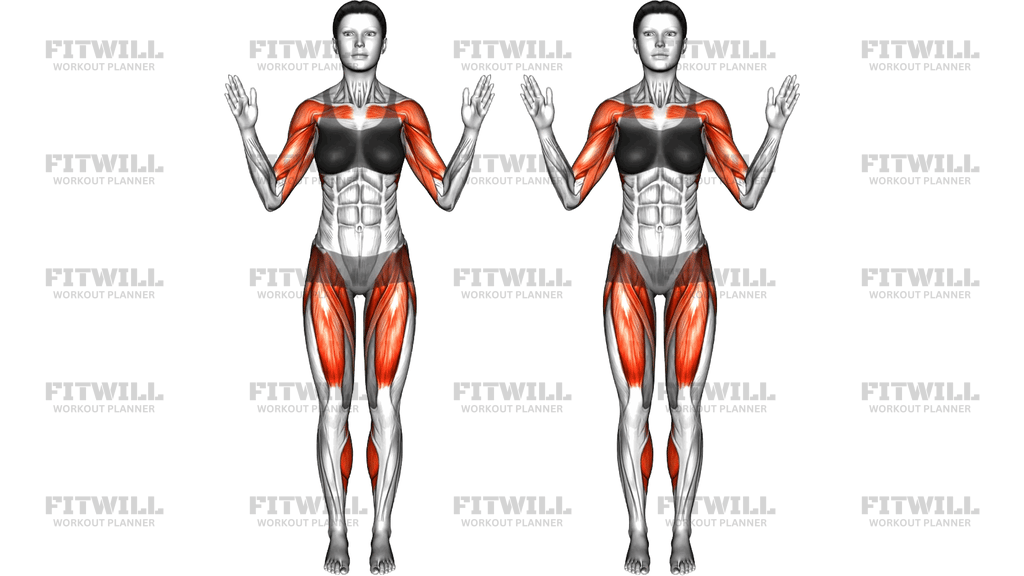
Instructions
- Stand tall with your feet about hip-width apart, weight spread evenly across both feet, and your arms raised into a wide V overhead with palms facing forward.
- Brace your abdominal muscles lightly, keep your ribs stacked over your pelvis, and set your gaze on a fixed spot ahead to help with balance.
- Shift your weight slightly onto your left foot so you are ready to lift the right leg without losing your base.
- Exhale and drive your right knee up in front of you to roughly hip height, keeping the foot under the knee rather than letting the leg swing.
- As the knee rises, bend your torso sideways to the left, reaching both arms up and over toward the left so your body forms a long arc from foot to fingertips.
- Pause for a moment at the top, feeling the contraction along the right side of your waist and the front of your right hip.
- Inhale and slowly lower your right foot back to the floor while your torso returns to upright and the arms come back to the wide V overhead.
- Complete the desired number of repetitions on the right side, then switch and lift the left knee while reaching to the right for the same number of reps.
- Between sets, reset your stance and posture from scratch rather than continuing from a slouched or uneven position.
Tips & Tricks
- A common mistake is letting the knee drift across the midline toward the opposite side; keep the knee tracking straight up in front of its own hip so the hip flexors do the lifting.
- If your side bend turns into a forward lean, cue yourself to stay in one plane: imagine your torso sliding sideways along a wall behind you rather than folding toward the knee.
- Do not chase height with a hip hitch. Lifting the pelvis on the working side fakes extra knee height and takes tension off the obliques.
- Keep your shoulders down away from your ears as you reach; many people shrug overhead, which turns this into a neck-tension exercise.
- Move slowly on the return. Dropping the foot quickly removes the balance and control benefits that make this drill worthwhile.
- If you lose your balance on one side, that is normal — most people have a weaker standing leg. Spend an extra set on that side or stand near a wall for light fingertip support.
- Keep the reach active through the fingertips rather than letting your hands flop; a long arm line encourages a cleaner lateral flexion through the waist.
- Breathe out on the lift and reach. Holding your breath is common here and tends to make the torso stiffen and tip forward.
- Place the foot down flat under your hip each rep instead of narrow, which keeps your base wide enough to control the side bend.
Frequently Asked Questions
What muscles does the Knee Raise Side Reach work?
The primary movers are the hip flexors of the lifting leg, especially the iliopsoas, with the obliques and deep core controlling the lateral reach. The quads assist in holding the knee up, and the standing leg muscles stabilize your balance throughout.
Is the Knee Raise Side Reach suitable for beginners?
Yes. It is low impact and requires no equipment, so beginners can start with slow repetitions and a smaller side bend. Standing near a wall for light support makes the balance demand manageable while you learn the pattern.
Why do the arms reach to the opposite side of the raised knee?
Reaching away from the lifted knee lengthens the side of the waist on the standing-leg side and creates a strong contraction through the obliques on the working side. It also counterbalances the knee lift, which helps you stay upright.
How high should I raise my knee?
Aim for about hip height, or slightly lower if that costs you your posture. A controlled knee at hip height with a straight torso beats a higher knee achieved by leaning back or hitching the hip.
Can I do the Knee Raise Side Reach as a warm-up?
Yes, it works well before running, leg training, or core work because it raises your heart rate mildly while mobilizing the hips and waist. Use slow, smooth reps for one to two minutes before moving into heavier training.
What is the most common mistake in this exercise?
Collapsing forward during the side bend instead of staying in the frontal plane. If your chest turns toward the floor or the knee, reset tall and reduce the reach depth so the movement stays purely lateral.
What can I substitute if standing balance is difficult?
Hold a sturdy chair back or wall with the hand on the same side as your standing leg and keep the other arm overhead. You can also perform the knee raise and the side reach as two separate, slower phases until your balance improves.
How many repetitions should I perform?
For activation or warm-up, 8 to 12 controlled reps per side is a good range. In a conditioning circuit, 30 to 45 seconds per side works well, provided the knee and torso path stay clean the whole time.
Is it safe for my lower back?
For most people, yes, as long as the side bend stays within a comfortable range and the torso does not twist or round forward. If you have a history of back issues, keep the reach shallow and stop at the first point of discomfort rather than pushing through it.